




Most refrigerator energy saving tips are rearranging deck chairs. Three things do most of the work: clean condenser coils, door seals that actually seal, and correct temperature settings (37°F fridge, 0°F freezer). Everything else on the internet’s usual list saves pennies. Here’s the short version that works, the myth that needs to die, and the Texas-specific problem nobody warns you about.
The big three (do these, skip the rest)
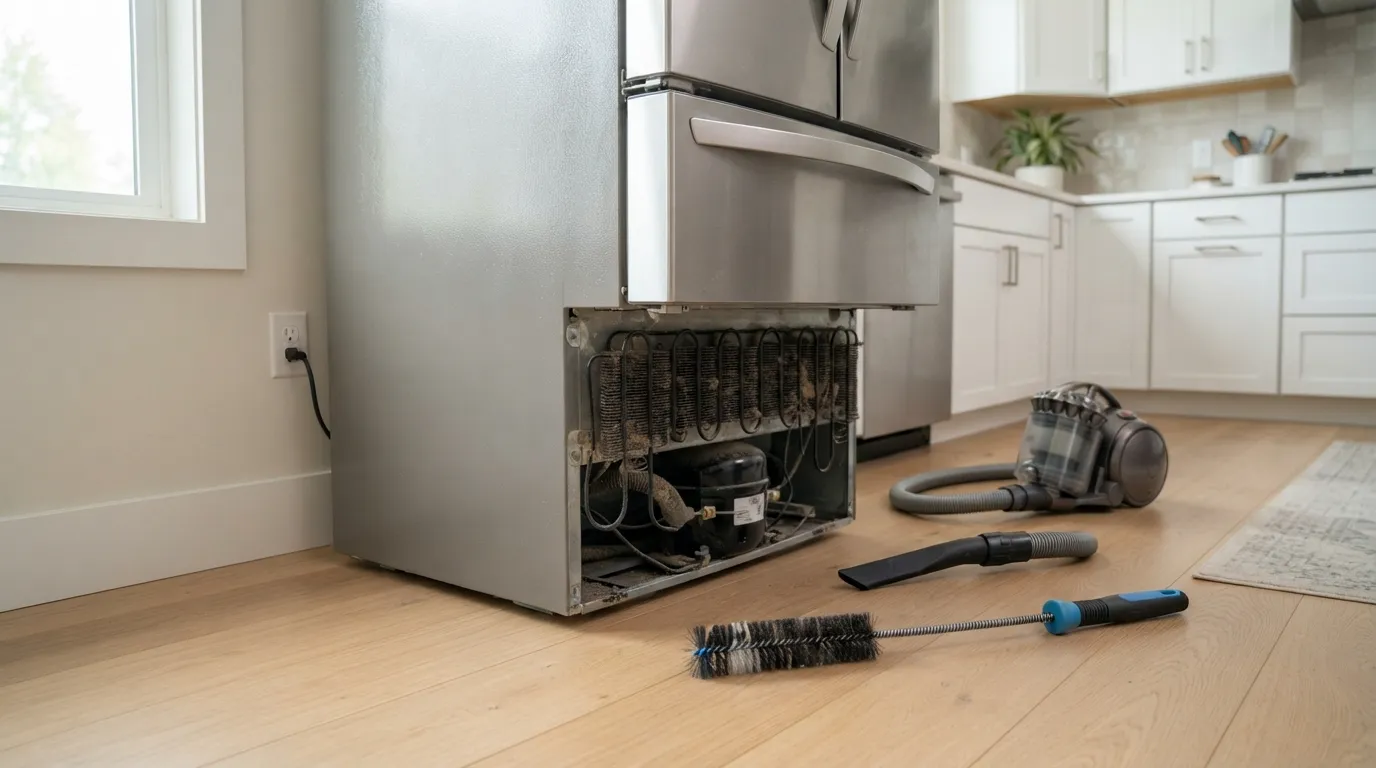
Clean the condenser coils twice a year. The coils (under or behind the fridge) shed the heat your refrigerator pulls out of the box. Coated in dust and pet hair, they can’t, so the compressor runs longer to do the same job. A $10 coil brush and a vacuum handle it in 15 minutes, and it’s the single highest-value maintenance task the machine has. In our dusty Central Texas summers, twice a year isn’t overkill; it’s the minimum.
Test the door seals with a dollar bill. Close the door on a bill and pull. Drag means the gasket grips; a bill that slides out free means cold air is leaking 24 hours a day, and the compressor pays for it. Run the test at a few spots per door. Wipe sticky gaskets with warm soapy water; a gasket that’s cracked or flattened is a modest, worthwhile repair.
Set 37°F and 0°F, and stop guessing. Colder isn’t safer, it’s just more expensive. Every degree below the target range costs energy for zero food-safety benefit. If your dial reads 1–5 instead of degrees, a $10 fridge thermometer settles it in an afternoon.
That’s the whole high-value list. Full drawers hold temperature slightly better than empty ones, and letting leftovers cool a bit before they go in helps at the margin. Fine. But if the coils are furry and the seals leak, none of it matters.
Does turning off the refrigerator save energy?
No, and it’s the worst tip in circulation. A refrigerator you switch off overnight has to re-chill the entire box (and everything in it) when it comes back on, which claws back most of the “savings.” Meanwhile the USDA’s food safety clock starts at two hours above 40°F: perishables in a warming fridge cross into throw-it-out territory before morning. One tossed brisket erases a year of imaginary savings.
The honest math: a modern fridge costs roughly $10–$20 a month to run at Texas electric rates. Turning it off nightly might shave a dollar or two, at the cost of gambling the groceries. Don’t.
(The one exception: a genuinely empty second fridge. If it’s holding six sodas, unplug it entirely, wipe it dry, and prop the door open. That saves real money.)

The garage fridge, Texas edition
Here’s the tip national lists can’t give you. A second refrigerator in an un-air-conditioned Waco or Lorena garage spends July and August fighting 110°F+ ambient air, and its compressor barely shuts off. That fridge can quietly cost two to three times its indoor rating all summer, which is how a “free” hand-me-down beer fridge becomes a $25-a-month appliance.
If you keep one: coils spotless, seals tight, and park it away from the west-facing wall. If it’s a 1998 unit humming like a diesel out there, retire it. Older fridges can use double or triple what a current ENERGY STAR model draws, and the garage multiplies that.
When high usage means something’s actually wrong
A refrigerator using too much electricity is sometimes a refrigerator failing slowly. The tells: the compressor runs nearly nonstop even in a cool kitchen, the sides of the cabinet feel hot, frost builds where it never did, or the kitchen fridge suddenly bumps your bill with no habit changes. That pattern usually means dirty coils (free fix, above), a failing door gasket, or a compressor/sealed-system problem, and that last one is a licensed-tech call, not a weekend project.
Worth knowing before you panic-shop: a start relay swap (the compressor’s cheap sidekick) typically lands around $150–$300 in our area, while a true compressor replacement is the priciest repair a fridge has. Age decides which conversation to have; our refrigerator lifespan guide has the brackets. If the fridge is also struggling to stay cold, start with why a refrigerator stops cooling — energy waste and weak cooling are usually the same disease.
And if the electric bill spike is bigger than one appliance can explain, the whole-house audit in our summer electric bill guide walks the usual suspects in order; the fridge is rarely the top one.
We’ll say the quiet part: nobody should pay a service call for “my fridge uses too much power” until the coils are clean and the seals pass the dollar test. Those two fixes end half these worries for free. When they don’t, a written quote from our refrigerator techs beats guessing, and second opinions are free.
Common questions about refrigerator energy use
How much electricity does a refrigerator use?
Does unplugging a fridge overnight save money?
What temperature should my refrigerator be set at?
Why is my refrigerator suddenly using more electricity?
For a broader view of household electricity use, explore our guide to energy-consuming appliances and ways to reduce their running costs.
Where to go from here
Brush the coils, dollar-test the seals, set 37 and 0. That’s ninety percent of refrigerator efficiency in one Saturday morning. If the fridge still runs like it’s training for something, or the bill says one appliance is misbehaving, get a straight answer and a written quote or call . We’d rather find you a $12 gasket than sell you anything bigger.
The On Point Team · On Point Service Company — family-owned HVAC & appliance repair, McGregor, TX · Serving Waco, Temple, Belton, and surrounding Central Texas towns · Licensed & insured, TDLR License TACLB00069239E ·