


Texas freeze HVAC prep comes down to six moves, all doable the weekend before the front: test your heat on a mild day, put in a fresh filter, learn what your heat pump’s defrost cycle looks like, find the auxiliary heat setting on your thermostat, plan to hold one steady temperature, and know the one situation where you switch to emergency heat. Do those and you’ve handled the HVAC half of a hard freeze. (Wrap your outdoor pipes and faucets too — that’s the plumbing half, and it’s a different article.)
Nobody in Texas needs reminding why this matters. February 2021 rewired this state’s respect for cold, and every winter since, the first serious forecast sends everyone to their thermostats wondering if the house is ready. Here’s the February freeze checklist that answers it before the sleet starts.
The Pre-Freeze Checklist (One Afternoon, Mostly Free)
- Test the heat now, on a mild day. Run it 30 minutes and pay attention: warm at every vent, no burning smells past the first ten minutes of dust, no short bursts of start-stop. A furnace that sat idle since March fails its first real test at the worst possible time; better it fails on a Tuesday you chose. If it’s blowing but the air’s cool, our heater not blowing hot air guide sorts the eight usual causes.
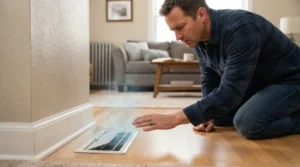
- Fresh filter. During a freeze, your system may run nearly continuously. A choked filter overheats furnaces into safety shutdowns and starves heat pumps — the cheapest insurance on this list.
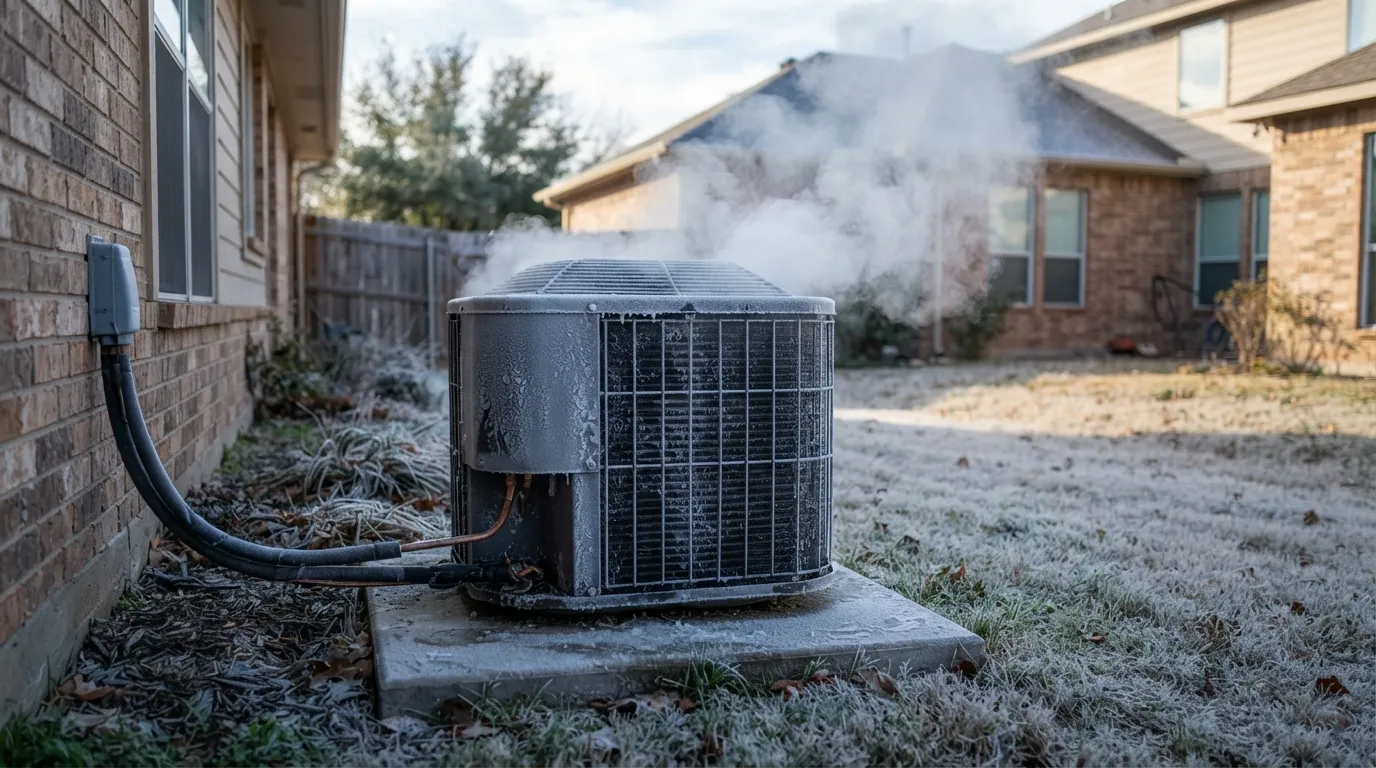
- Learn your defrost cycle. Heat pump owners: in freezing weather the outdoor unit will periodically stop heating, swirl steam like it’s on fire, maybe whoosh. That’s defrost, and it’s normal. Knowing that at 2 a.m. saves a panicked service call.
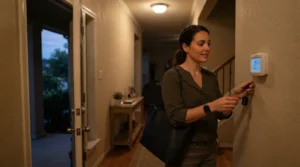
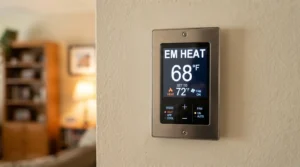
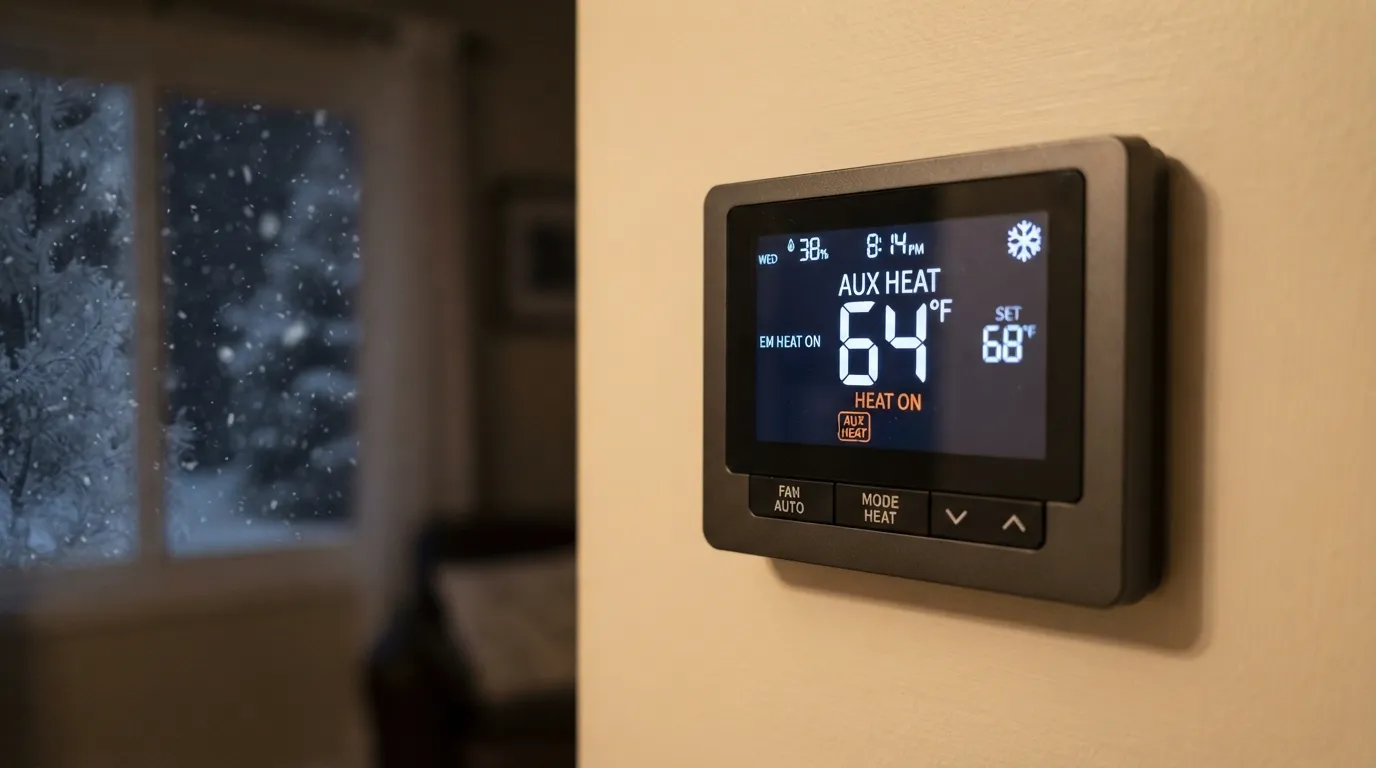
- Find the auxiliary heat setting. On most thermostats it engages automatically as backup (“aux” or a little flame icon). Know where the manual switch is before you need it, and know it costs real money to run.
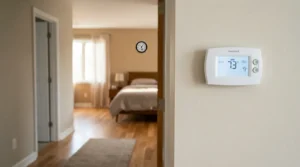
- Plan a steady temperature. Hard freezes are the one time we tell people to skip the nightly setback. More below, because this one fights the usual advice.
- Check the roofline exhaust and intake pipes (high-efficiency furnaces): the two PVC pipes exiting the wall or roof must stay clear of snow, ice, and leaf nests, or the furnace locks itself out.
That’s the HVAC half of storm prep. For the household half — water, food, power outage planning — ready.gov’s winter weather page is the checklist your family should argue about over dinner.
Heat Pumps in a Hard Freeze: What Normal Looks Like
Most newer Central Texas homes heat with heat pumps, and hard freezes are their one awkward week. A heat pump pulls heat from outdoor air, and as the temperature drops toward the teens its output drops with it. Below about 25°, the auxiliary electric strips shoulder more of the load, your air feels cooler at the vents than a gas furnace would blow, and the unit runs nearly nonstop.
All normal. Steam off the unit? Defrost, normal. Longer runtimes and a slow crawl back to setpoint? Normal. What’s never normal: the outdoor unit sealed in a solid shell of ice for hours, indoor temperatures falling while the system runs, or a thermostat already reading “aux” for days on end before the freeze even arrives — that last one means your strips were quietly carrying you all season, and something upstream needs a look.
Also: never cover or tarp a heat pump in winter. It’s designed to live outside, and it can’t breathe through a bedsheet.
The One Time You Use Emergency Heat
Emergency heat is a thermostat setting, and it does one thing: shuts the heat pump off and runs the backup strips alone. Techs get asked about it before every front, so here’s the plain rule. Flip it on when the heat pump itself has failed or is locked in ice and useless — that’s what it exists for, and it’ll keep the house livable while you book a repair. Leave it off otherwise. Running strips-only heat by choice roughly doubles-to-triples the cost of every degree, and the “just to be safe” crowd finds that out on the March bill.
If your thermostat’s the confusing part, or it’s old enough that you’re not sure what it’s telling you, our thermostat replacement cost guide covers when an upgrade makes sense and what it runs in Texas.
The Setback Myth in Hard Freezes
The standard energy advice says set the thermostat back at night and save money, and most of the year that advice is right. In a hard freeze, it backfires two ways.
First, recovery. When outdoor temperatures sit in the teens, a heat pump asked to climb four degrees at 6 a.m. can’t do it alone, so the auxiliary strips slam on and burn away everything the setback saved, with interest. Gas furnaces in marginal shape short-cycle hard on the same climb. Second, margin: a house held at 68° has hours more cushion against interior pipe trouble in an outage than a house that started at 60°.
So during the freeze itself: pick a temperature, 68° is a fine argument-settler, and hold it day and night until the thaw. Resume the setbacks when the weather resumes being Texas.
Furnace Owners: Your Two-Minute Version
Gas furnace homes get a shorter list. Test-run early, fresh filter, and a look at the flue and cabinet for rust — corrosion is how old furnaces fail safety inspections, and our furnace rust guide shows what’s cosmetic versus concerning. Working carbon monoxide alarms near sleeping areas are non-negotiable in any gas-heated house that’s about to run its furnace nonstop for four days.
And the stop-lines, freeze edition: if the test run turns up a gas smell, leave the house and call your gas provider from outside — then us. No relighting experiments, no burner-compartment curiosity, no bypassing a safety switch to force heat during a cold snap. Every winter someone defeats a limit switch to keep warm, and it’s the most expensive free repair in Texas.
If the Test Run Fails
That’s the whole point of running it early: the week before a front is the calmest, cheapest time to book furnace repair that exists. Same-day is often realistic on morning calls, Monday through Friday, and the service fee is quoted up front and credited toward the repair on a written quote. Once the front actually lands, every failed system in the county calls the same three days, and physics decides the queue. Beat the rush by a week and you’ll never notice there was one.
FAQ: Freeze-Proofing Your Heat
What temperature should I set my thermostat during a Texas freeze?
Should I switch my heat pump to emergency heat before a freeze?
Why is my heat pump steaming and blowing cool air during the freeze?
Do I need to cover my outdoor unit in winter?
Before the Next Front
The whole February freeze checklist fits in one afternoon: test, filter, learn defrost, find the settings, hold steady, clear the pipes’ exhaust. If the test run coughs, get a straight answer and a written quote while the forecast is still boring. Texas freeze HVAC prep works precisely because you did it before you needed it.
The On Point Team · On Point Service Company — family-owned HVAC & appliance repair, McGregor, TX · Serving Waco, Temple, Belton, and surrounding Central Texas towns · Licensed & insured, TDLR License TACLB00069239E ·