



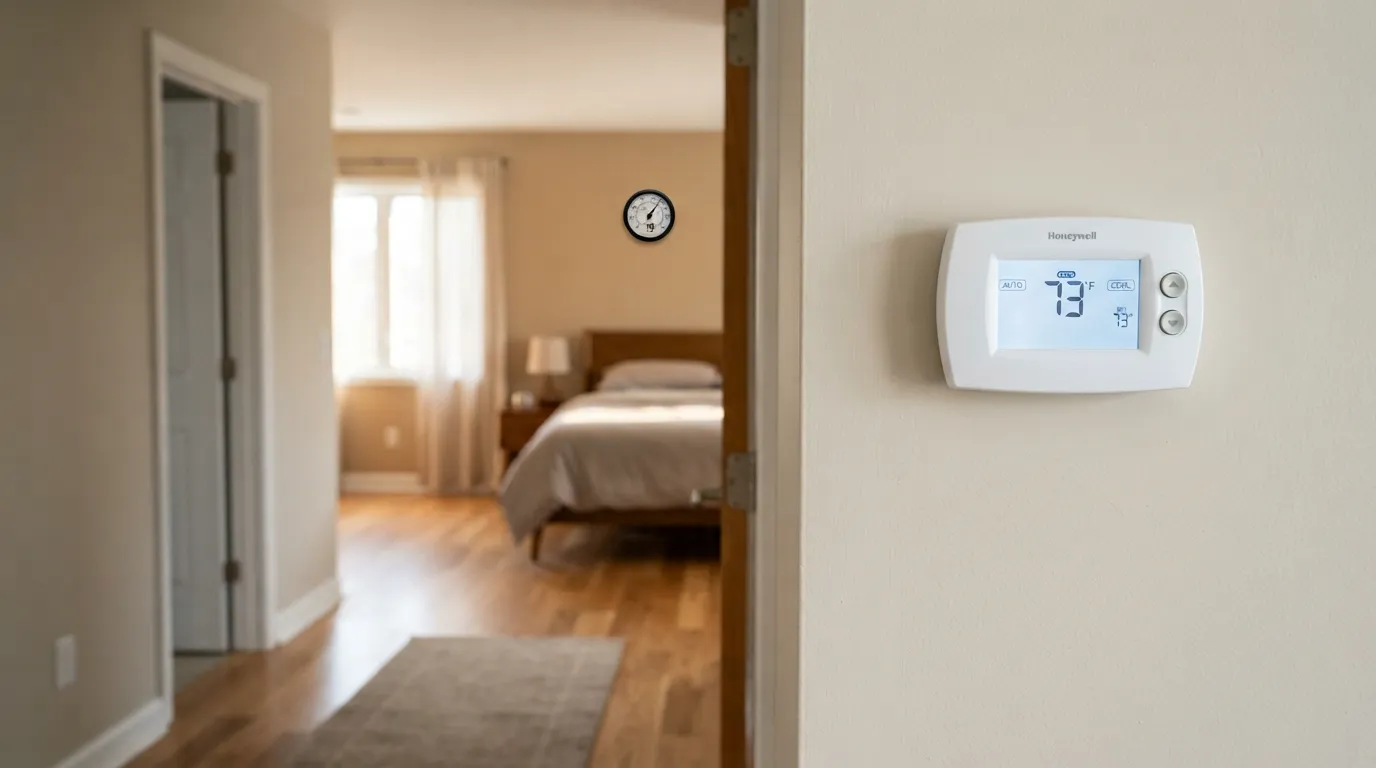
Uneven cooling in a house almost always traces to five things, in this order: blocked or closed supply vents, a dirty filter, starved return air, mis-set dampers, or duct leaks feeding one branch and shorting another. The thermostat only knows the temperature of its own hallway. Every other room is on the honor system.
So before anyone sells you equipment, walk through the same checks we run on airflow calls from Robinson to Lorena. Most of them cost nothing.
Start where the air comes out
Go stand in the warm room and put your hand over the supply vent. Weak trickle? Now compare it to the coldest room in the house. That difference is your whole diagnosis.
First, the embarrassingly common stuff. Registers have levers, and levers get bumped shut by vacuum cleaners, toddlers, and movers. Beds and dressers sit on top of floor vents. Curtains drape over them. We’ve solved “broken AC” service calls in under a minute by sliding a couch eight inches, and nobody’s ever mad about it.
Then the filter. A clogged filter drops airflow across the entire system, but the longest duct runs starve first, which is why the back bedroom suffers while the living room stays fine. During spring oak pollen season around Waco, check it monthly. People type “uneven airflow in house” into Google every August, and a shocking share of them are one $15 filter away from done.
How to increase airflow to one room
If exactly one room runs hot, work this shortlist:
- Open its register fully and make sure furniture and rugs aren’t sitting on any part of it.
- Partially close registers in the two or three coldest rooms. A third to half closed, never fully. You’re nudging pressure toward the weak branch.
- Crack the door at night. Closed doors trap air in rooms with no return vent, and the room pressurizes until the vent can barely push. An inch of undercut or a louvered transfer grille fixes it permanently.
- Follow the duct if you can. In the attic, the branch feeding that room may be crushed under a storage tote, kinked at a joint, or popped loose entirely. Flex duct is soft; boxes of Christmas decorations win every time.
- Feel the run length. The farthest room from the air handler gets the warmest, weakest air by design. That’s fixable, but the fix is duct-side, and it’s below.
One more habit worth breaking: don’t slam half the house’s vents shut to force-feed a single room. Past a certain point you’re spiking duct pressure, straining the blower, and inviting a frozen coil in humid weather. Gentle beats aggressive here, every time.
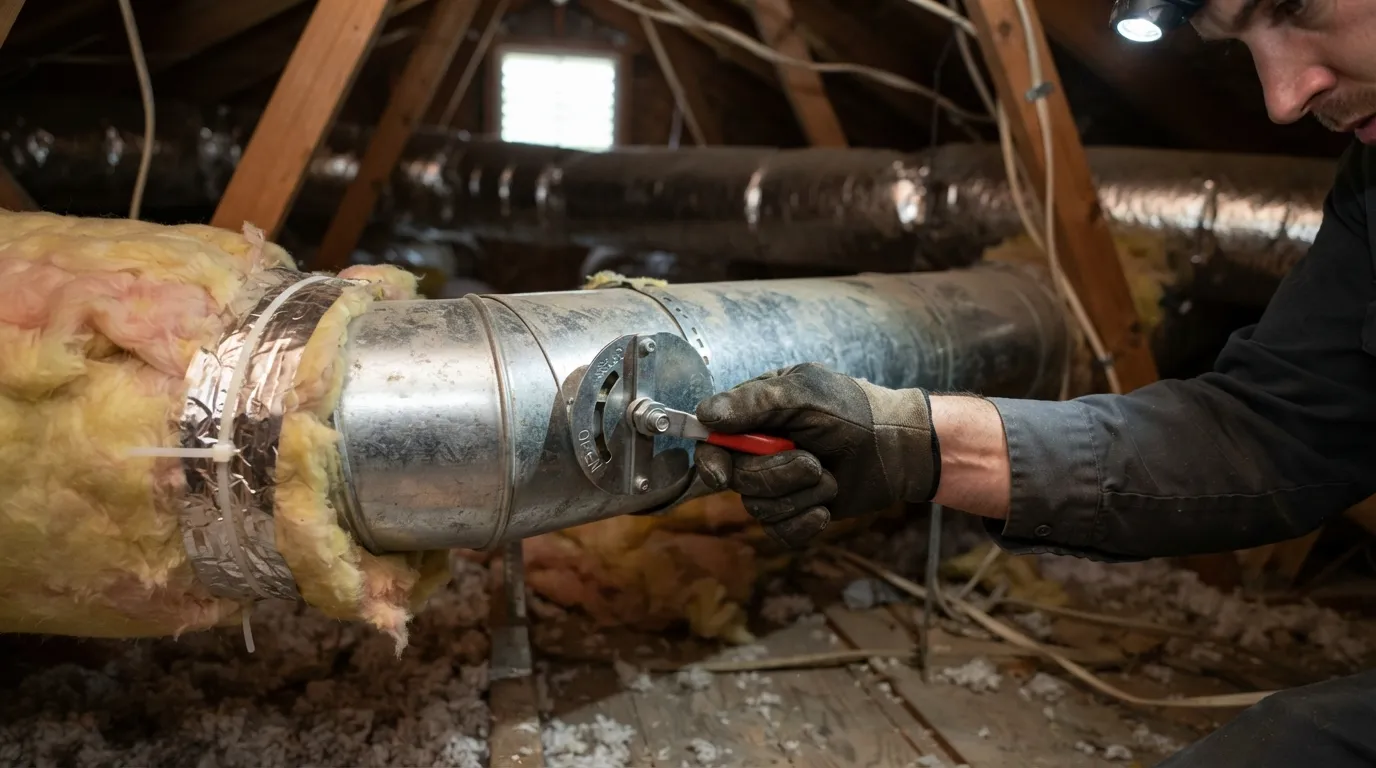
Adjusting HVAC Dampers for Balanced Airflow: On Point Service Company
Somewhere near your air handler — attic or a hallway closet, usually — the main trunk splits into branch ducts, and many of those branches have a small metal handle called a manual damper. Handle parallel to the duct means open; perpendicular means closed.
These are the real balance controls, far better than the registers, because they adjust flow at the source instead of at the finish line. Find a damper half-closed on the branch that feeds your problem room and you may have just found three years of discomfort.
Texas homes genuinely need two damper settings a year. Summer wants more air pushed to upstairs rooms and sun-baked ends of the house; a February freeze wants the opposite, since rising heat over-serves the second floor in winter. Mark the sweet spots with a Sharpie so it’s a 90-second chore each season instead of a guessing game. If the whole floor is the problem rather than one room, that’s a different animal — our second-floor airflow guide covers the two-story version in full.
Duct leaks: the quiet thief
When registers and dampers don’t explain the imbalance, the air is leaving the ducts before it arrives. The Department of Energy pegs typical duct losses at about 20 to 30 percent of system airflow, and the leaks are rarely spread evenly — one branch bleeds into the attic while another delivers fine, and you feel that lopsidedness as a hot room.
Clues: dust streaks at duct joints, a musty attic smell from a vent, and cooling bills that creep up while comfort creeps down. If you can safely reach a visible, disconnected joint in the attic, mastic paste or foil tape is fair game. The maze of boots and plenum connections buried in insulation is not a Saturday project, and cloth duct tape cooks to confetti in one Texas attic summer anyway.
Balancing is a pro job, and that’s fine
Here’s the honest line most articles blur. Register tweaks and damper seasons are absolutely yours. True air balancing — measuring flow at every register with instruments, then setting dampers so each room gets its designed share — is a technician’s job, and we’d say that even if we didn’t do it for a living. Done right, it typically lands in the $150–$450 range in Central Texas depending on system size, and it comes with a before-and-after you can feel.
The trade-off worth admitting: balancing sets the system you have. If the real problem is a leaky or undersized duct run, balancing helps but won’t cure, and a tech should tell you that at the quote, in writing, before any work. That written-quote-first policy is the whole reason our air conditioner repair visits start with a diagnosis instead of a sales pitch.
And if the “uneven” complaint is actually everything cools poorly after lunch, stop chasing rooms — check the system itself against our AC blowing warm air guide first.
Common questions about uneven cooling
Why is one room hotter than the rest of the house?
How do you fix uneven airflow in a house?
Can closing vents damage my AC?
Does duct cleaning fix uneven cooling?
Where to go from here
Vents, filter, doors, dampers — then measure your worst room against the hallway. Still more than about 3 degrees apart? Get a straight answer and a written quote or call . We’ll tell you whether it’s a $0 damper fix or a duct problem worth real money, and repairs carry a 10% senior and military discount.
The On Point Team · On Point Service Company — family-owned HVAC & appliance repair, McGregor, TX · Serving Waco, Temple, Belton, and surrounding Central Texas towns · Licensed & insured, TDLR License TACLB00069239E ·