



Emergency heat is a setting on a heat pump thermostat that shuts down the outdoor unit and heats your home with the electric backup strips alone. Flip it when the heat pump itself is broken or damaged: a dead compressor, a unit encased in ice after freezing rain, storm damage. Leave it alone the rest of the time, because those strips make the same warmth at roughly double the electricity.
One housekeeping note before anything else, because the name trips people up: “emergency heat” is a switch position on your thermostat. That’s the only sense we’re using here — a setting the industry named, not a type of service anyone is promising you. Your thermostat maker picked the word; we just have to live with it.
What the emergency heat setting does, mechanically
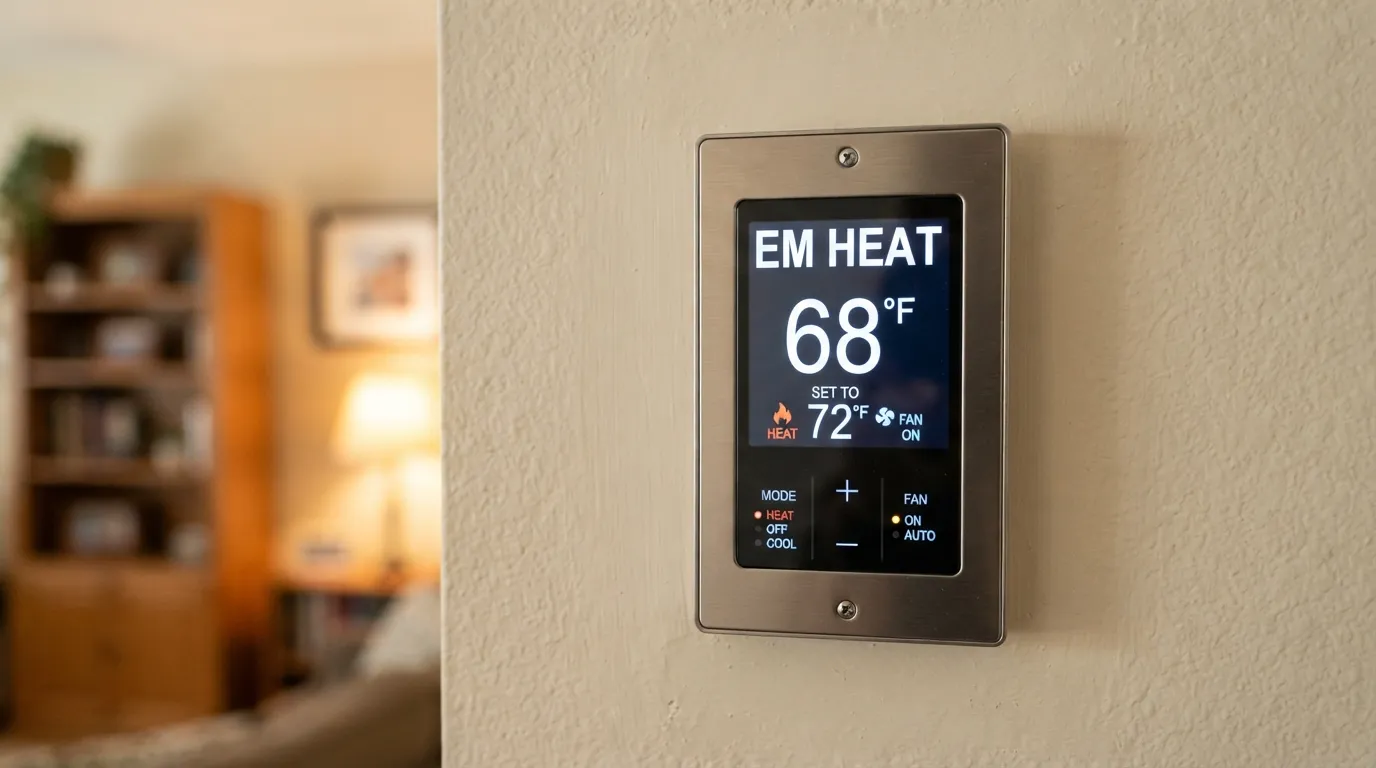
The emergency heat setting (labeled EM HEAT, EMER, or a red indicator on most thermostats) locks out the heat pump’s outdoor unit entirely and runs your indoor electric resistance strips as the only heat source. It exists so you still have warm air while the heat pump itself is out of commission.
Think of it as the spare tire. It absolutely works, you’re glad it’s there, and you shouldn’t drive on it all winter.
Emergency heat vs. aux heat: they’re not the same thing
This mix-up causes most of the confusion, so here’s the clean split.
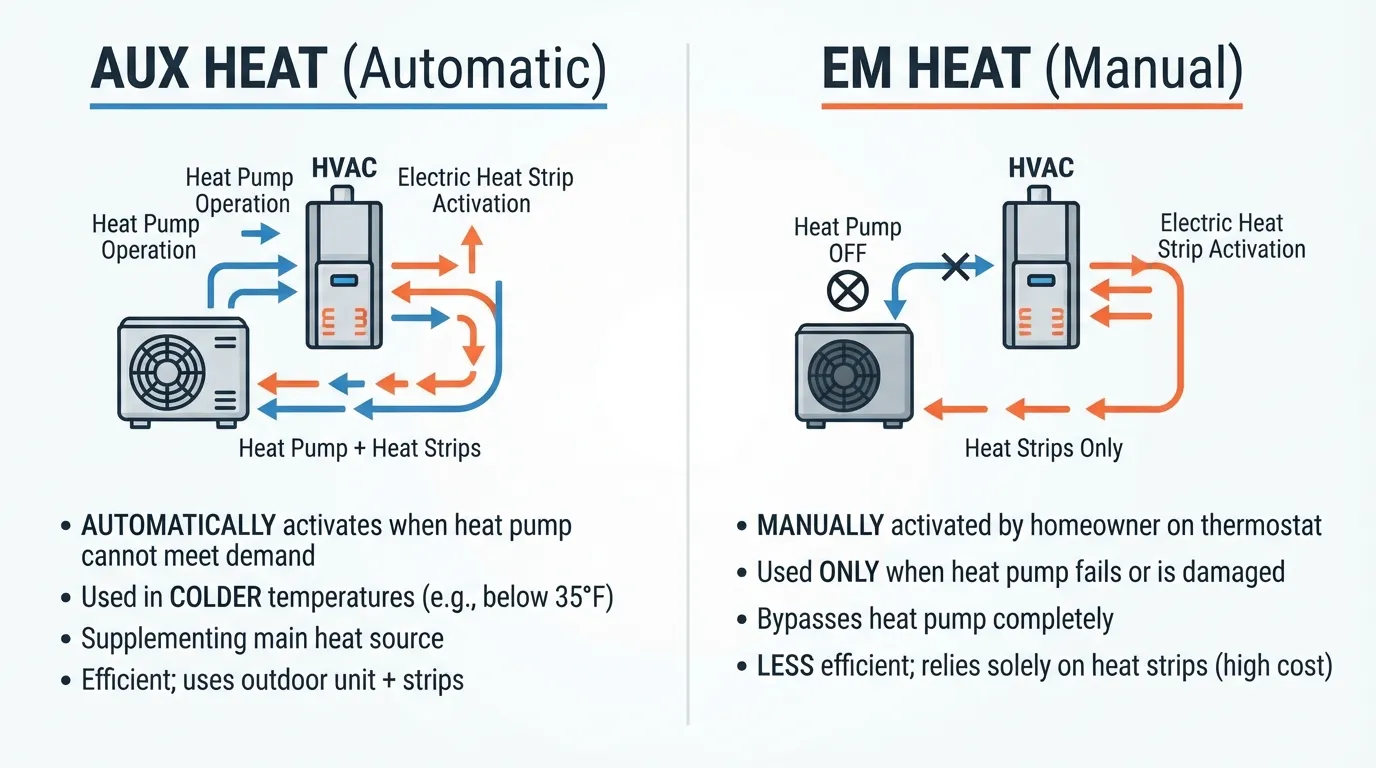
Aux heat is automatic. When it’s cold enough that the heat pump can’t keep up, or during a defrost cycle, the system turns the strips on as a helper while the heat pump keeps running. You didn’t do anything. You don’t need to. “AUX” glowing on the thermostat during a 28-degree morning is the system working exactly as designed.
Emergency heat is manual. You flip it, the outdoor unit stops participating, and the strips carry the whole load alone until you flip it back.
Aux is the system asking for help. The emergency heat setting is you benching the starter entirely. Only one of those should happen because of weather.
When to actually use it: three cases
- The heat pump is dead. The outdoor unit won’t start, trips the breaker repeatedly, or screams when it runs. Switch to emergency heat, then book the repair.
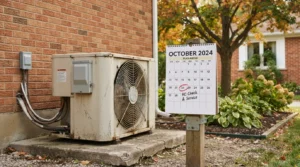
- Freezing rain turned the outdoor unit into an ice sculpture. Frost is normal and the defrost cycle handles it. A solid shell of ice from an ice storm is not; running the unit like that can wreck the fan. Flip the setting and let it thaw before anyone assesses it.
- Something physically hit it. A fallen limb, flood water, a fence panel through the fan guard. Shut the unit down, run the strips, make the call.
The pattern: the emergency heat setting is for when the heat pump itself is the casualty. Cold weather alone never qualifies, even the nasty February kind.
What it does to your electric bill
Electric resistance heat is the most expensive common way to warm a Texas house. The Department of Energy’s own guidance puts heat pumps at roughly half the electricity of resistance heating for the same warmth (energy.gov’s heat pump page carries the figure), which means running strips-only costs about double what your heat pump costs for every hour it runs.
Run it a night or two while you wait on a part? Fine, that’s what it’s for. Run it from Thanksgiving to March because somebody bumped the switch and the house still got warm? That’s the mystery behind more than one shocking winter bill we’ve been asked to explain in Temple and Belton. The thermostat never complains. It just obeys, expensively.
Our honest take: check your thermostat mode any time the heat’s been acting weird, after any power blink, and after every battery change. It’s a ten-second look that can save a three-digit mistake.
The Texas freeze playbook
Every few winters, Central Texas gets a real one, and heat pumps become the most misunderstood machines in the county. Keep two pictures in your head.
Normal: frost on the coil, then every hour or so the unit pauses, hisses, steams like a kettle for a few minutes, and goes back to work. That’s the defrost cycle doing its job. Don’t touch the setting for that, and don’t hose the unit down.
Not normal: the whole cabinet sheathed in clear ice after freezing rain, fan blades frozen mid-spin, or heating that collapses entirely. That’s when the emergency heat setting earns its spot on the dial, and when a repair visit is worth booking. Defrost failures and their cousins get their own writeup in our heat pump repair guide.
Either way, our furnace and heating repair visits start with a written quote before any work, so the decision stays yours. And if your thermostat is old enough that the modes are a guessing game, here’s what thermostat replacement costs in Texas.
Common questions about the emergency heat setting
Should I switch to emergency heat when it’s below freezing?
Why is my emergency heat light on when I didn’t turn it on?
Does emergency heat cost more to run?
How long can I run emergency heat?
Where to go from here
Aux heat: automatic, normal, leave it be. The emergency heat setting: manual, expensive, and strictly for a heat pump that’s down. If yours is down, or you can’t tell what the thermostat is doing, request a written quote or call and we’ll give you a straight answer, including whether you even need us.
The On Point Team · On Point Service Company — family-owned HVAC & appliance repair, McGregor, TX · Serving Waco, Temple, Belton, and surrounding Central Texas towns · Licensed & insured, TDLR License TACLB00069239E ·