




Refrigerator compressor replacement typically costs $600 to $1,200 in Central Texas, parts and labor together. But before you spend a dime of that, know this: a failing start relay produces almost identical symptoms and usually lands between $150 and $300 to fix. Around half the “dead compressor” panic calls we take end at the relay.
That gap, roughly a grand, is the whole reason this article exists.
What compressor replacement actually costs, and why
The compressor itself runs $150–$500 depending on the fridge. The rest is skilled labor: recovering the old refrigerant, brazing in the new unit, pulling a vacuum on the lines, and recharging the system. Federal law requires EPA certification for that refrigerant work (Section 608 is the rule), which is why there’s no budget version of this repair and no legitimate handyman version either.
One compressor serves the whole box, by the way. If you’ve been searching fridge freezer compressor repair because both sides went warm at once, that’s actually the compressor telling on itself; one failed part, two warm compartments.
Before you accept any of those numbers, spend five minutes in the file drawer. Sealed-system parts often carry longer warranties than the rest of the fridge — 5 or even 10 years on the compressor itself for several brands — so on a younger unit the part can be covered while you pay labor only. That single check has cut a quote nearly in half for more than one kitchen we’ve visited, and no, not every company brings it up unprompted.
Typical ranges, not our price list. Your written quote is the real number, and you should have it in hand before anyone starts.
The start relay: the cheap impostor
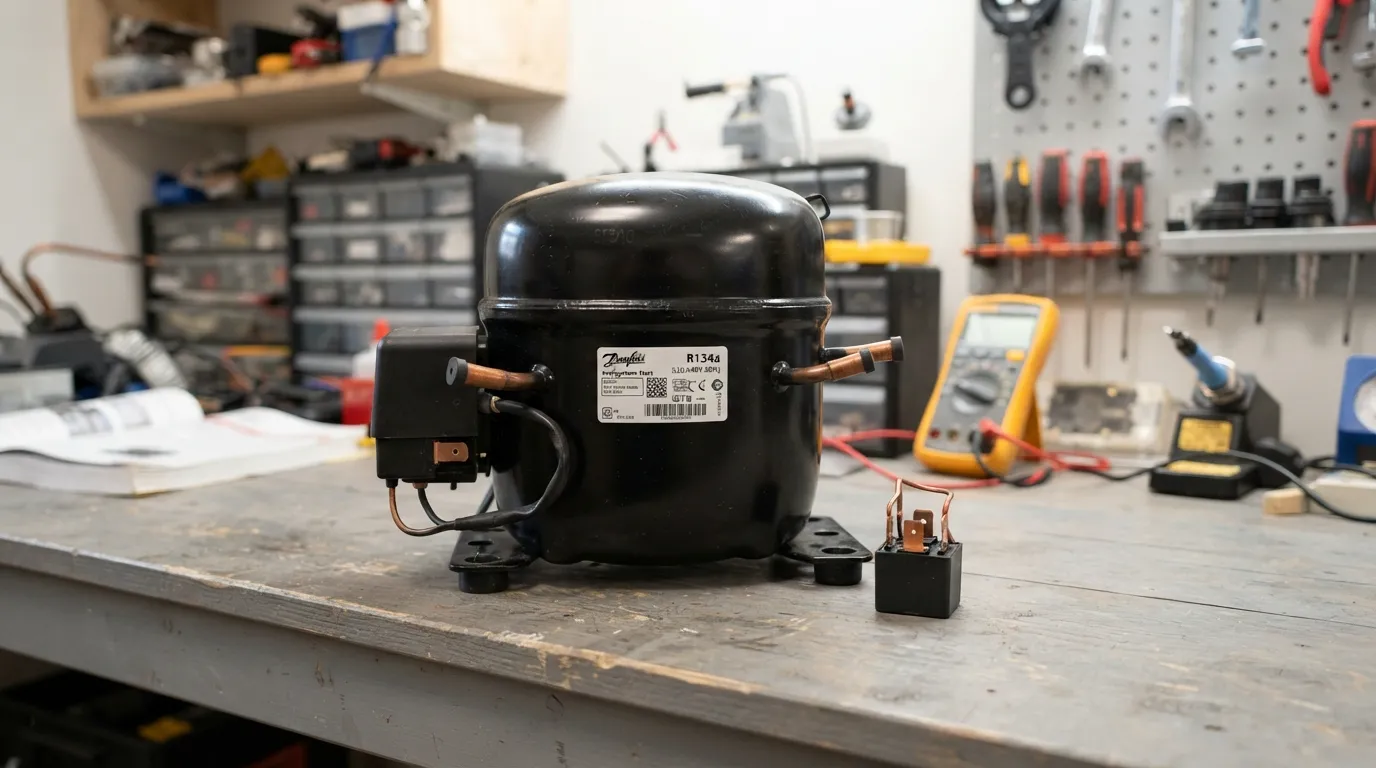
Bolted to the compressor’s side is a part the size of a matchbox. The relay’s job is to kick the compressor awake, and when it fails, you hear the attempt: a click from behind the fridge every two to five minutes, then silence, then another click. The fridge warms up. Everything about it feels like a $1,000 problem.
It’s often a $150–$300 problem wearing a $1,000 costume.
Here’s our honest advice, and yes, it works against our invoice: if anyone quotes you a compressor without proving the relay is fine, get a second opinion. Ours are free, and this exact scenario is why that policy exists. A tech who’s confident in a compressor diagnosis will happily show you how they ruled the relay out.
If the fridge is warm and you haven’t run the basics yet (coils, gasket, vents, fan), start with the 9-cause checklist before you price anything.
How a real compressor diagnosis works
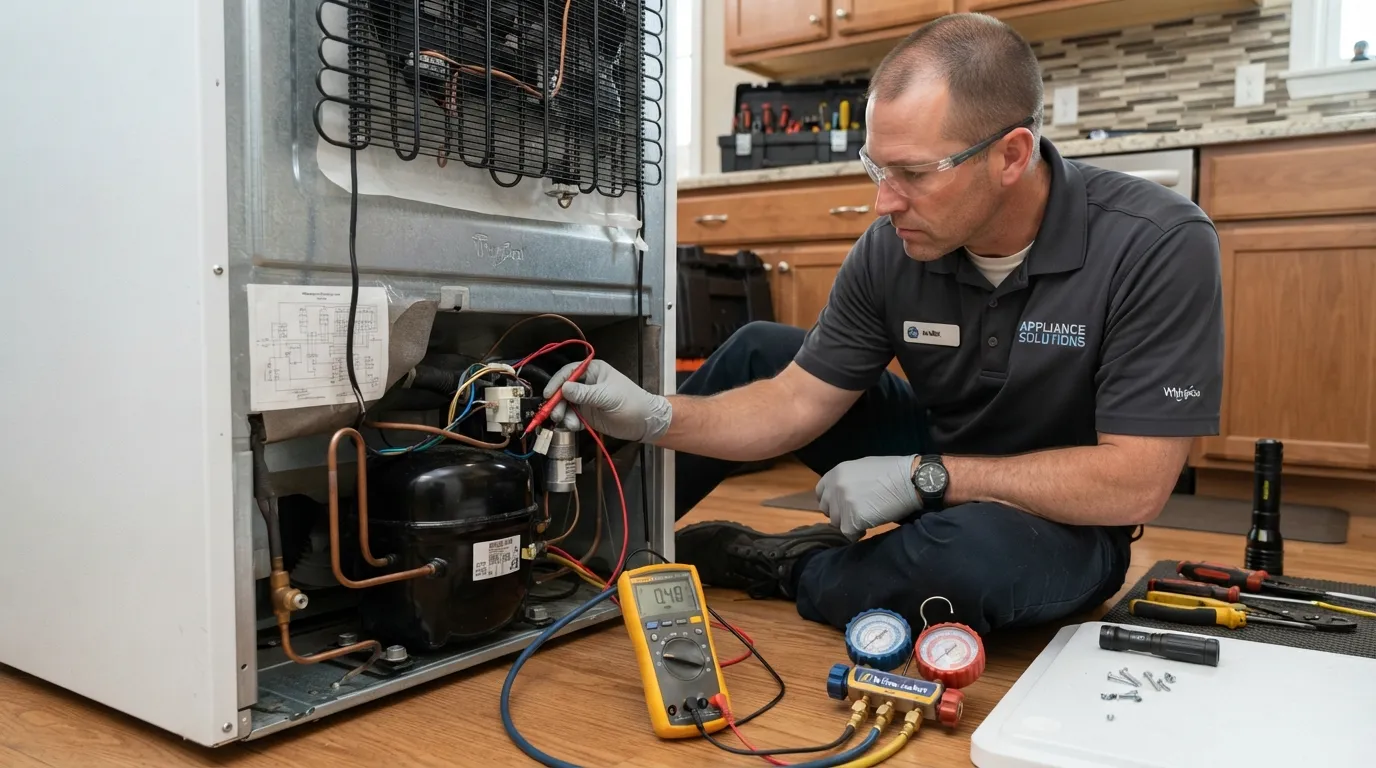
A proper condemnation of a compressor isn’t guesswork. The tech checks amp draw against the spec plate, tests the windings for opens and shorts, substitutes a known-good relay, and puts gauges on the system where warranted. Ten to twenty minutes of actual evidence.
What that looks like on your invoice: a diagnostic visit, typically $75–$150 around Waco, credited toward the repair if you go ahead. What it should never look like: a verdict delivered from the kitchen doorway after thirty seconds of listening. We’ve re-diagnosed enough doorway compressors in Temple and Robinson kitchens to plant a flag on this one.
One wrinkle worth knowing: a compressor can also fail loud instead of silent. Knocking, rattling at start-up, or a box that runs hot and constant without ever reaching temperature points the same direction. Different soundtrack, same diagnostic steps, same rule about getting the evidence in writing.
When fridge compressor repair is worth it (and when it isn’t)
The math is age times quality, and it’s blunt:
A premium fridge under 8 years old: usually worth it. A $900 compressor job on a $3,000 built-in that’s otherwise healthy buys years, and beats replacing the whole unit by a wide margin.
A mid-range box at 8–12 years: coin-flip territory, and the 50% rule with age brackets settles it. Compare the quote to what you’d really spend on a replacement, doubled.
A builder-grade fridge past 10: don’t. A new compressor in an old fridge is a new heart in an old body; the fans, board, gaskets, and defrost parts are all still original and lining up behind it. We’ll say that at the quote stage even though it costs us the job.
Texas adds one modifier: garage fridges. A second unit working against 110° garage air half the year lives a compressed life, pun intended, and its compressor usually isn’t worth replacing at all.
Where you stop and call
There is no DIY lane on this one, and we’d rather say it plainly than politely. The sealed system (compressor, refrigerant, evaporator and condenser lines) is EPA-certified-tech territory by law, not by gatekeeping. Relays and capacitors can hold or deliver a charge with the fridge unplugged. What you can safely do: listen for the clicking pattern, note whether the compressor housing is hot, clean the coils, and report all of it when you call. Good phone notes genuinely shave time off the diagnosis.
That call lands on our refrigerator repair bench: written assessment, the fault named, a quote before any work, and a no if a no is the right answer.
Common questions about refrigerator compressor costs
How much does it cost to replace a refrigerator compressor?
Is it worth replacing the compressor on a 10-year-old refrigerator?
How do I know if it’s the compressor or the relay?
Can I replace a refrigerator compressor myself?
Where to go from here
If your fridge is clicking, warm, or both, don’t pre-spend $1,000 in your head. Request a written quote or call 254-640-2350
, tell us what you’re hearing, and we’ll start with the $200 suspect before anyone says the c-word. Seniors and military get 10% off the repair, whichever part it turns out to be.
The On Point Team · On Point Service Company — family-owned HVAC & appliance repair, McGregor, TX · Serving Waco, Temple, Belton, and surrounding Central Texas towns · Licensed & insured, TDLR License TACLB00069239E · 254-640-2350