



A refrigerator that’s not cooling usually has a cheap problem, not a dead compressor. In order of what we actually find on calls: bumped controls, blocked vents, dusty condenser coils, a worn door gasket, a failed evaporator fan, a defrost fault, a bad start relay, and only then the sealed-system stuff. Work the list from the top and you’ll find most of them yourself.
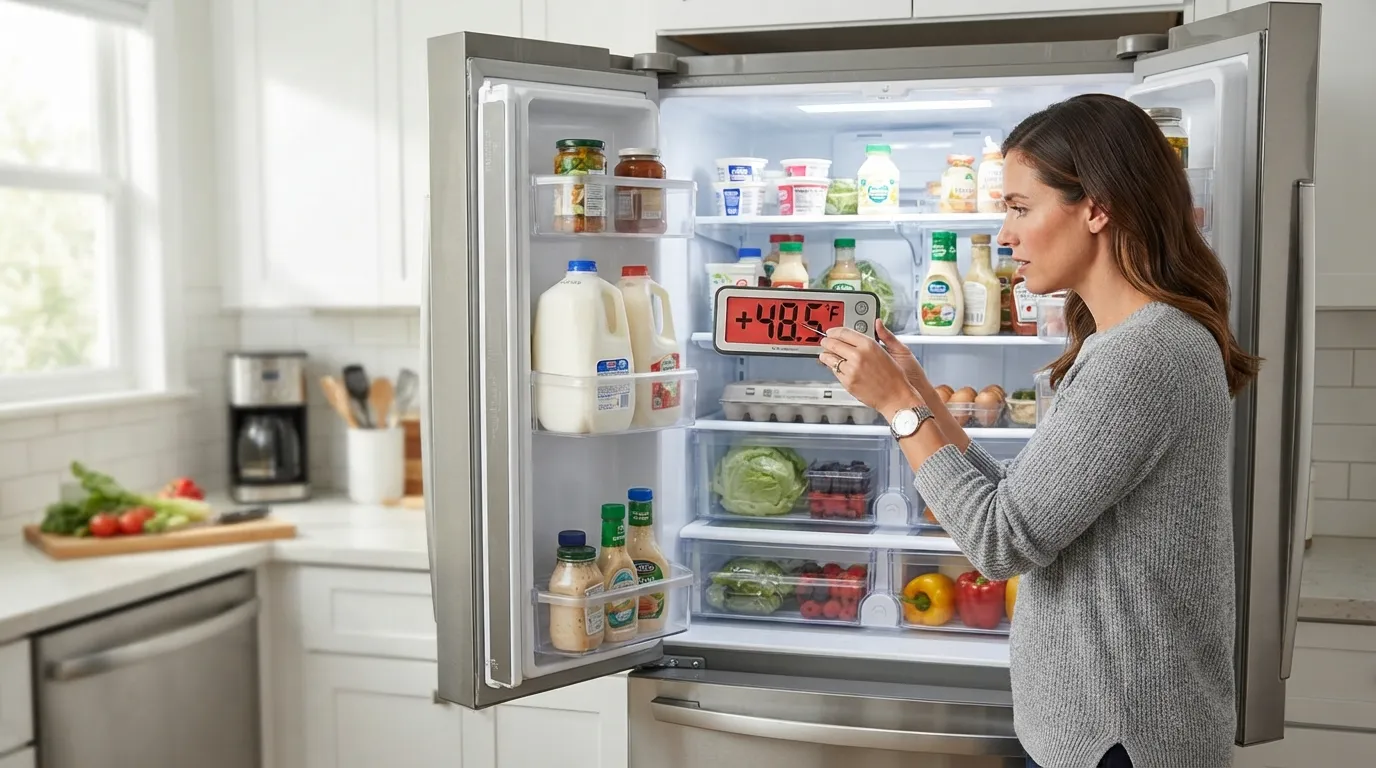
First move, before any troubleshooting: keep the doors shut. A full, closed refrigerator holds safe temperatures for about 4 hours, per foodsafety.gov. That’s your working window.
The 9 causes, cheapest first
- Bumped controls or a tripped breaker. Kids, groceries, and a Saturday deep-clean all bump dials. Verify 37°F in the fridge, 0°F in the freezer, and check the breaker panel. Reset a tripped breaker once; if it trips again, stop and call.
- Blocked vents or an overpacked box. Cold air moves from freezer to fridge through vents along the back wall. A cereal box or a brisket pan parked against them starves the fresh-food side.
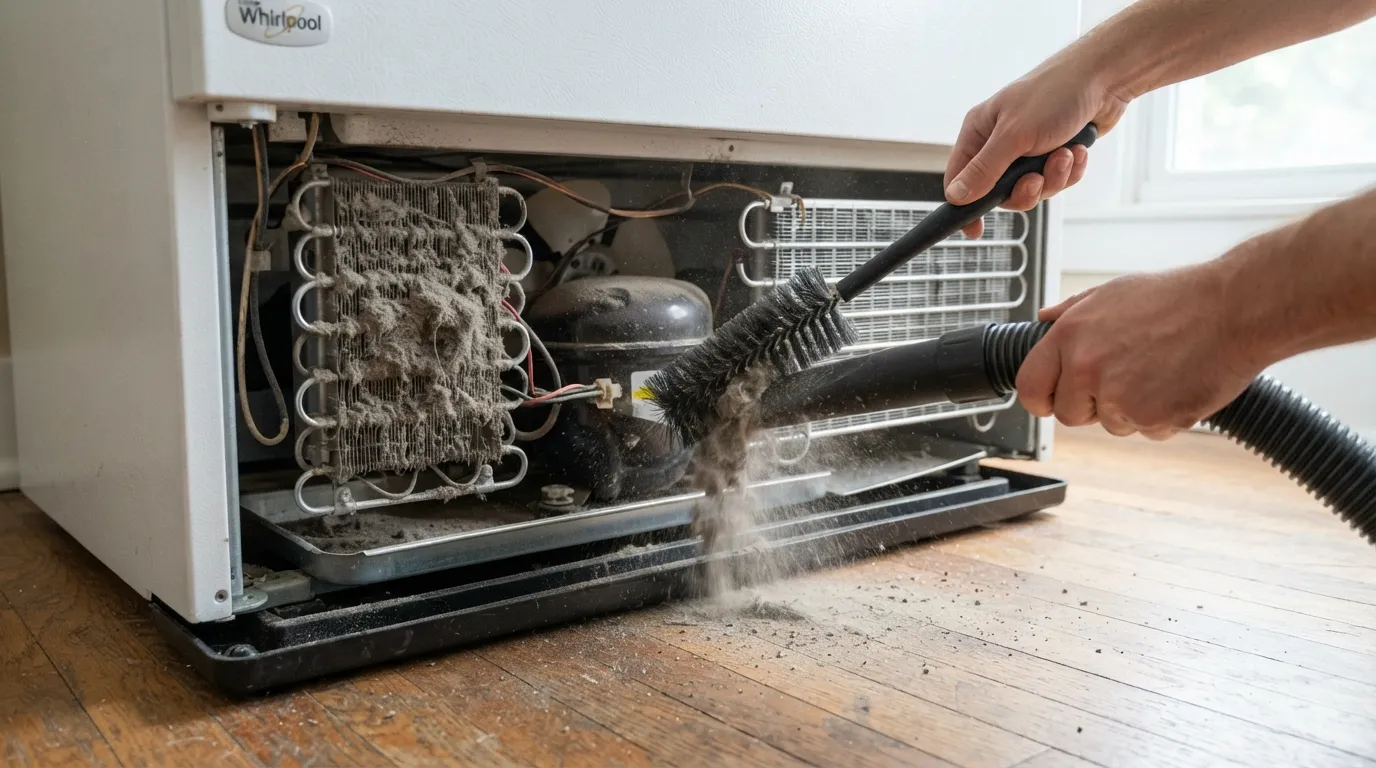
- Dusty condenser coils. Underneath or behind the unit. When they wear a fur coat, the fridge can’t shed heat, and in a 100° July kitchen it loses that fight fast.
- A worn door gasket. Torn, stiff, or crusted gaskets leak cold air all day and make the compressor run constantly.
- A failed evaporator fan. The classic sign: freezer’s cold, fridge is warm, and the hum you’re used to hearing behind the back wall is gone (or has turned into a scrape).
- A defrost fault. Frost slowly seals off the evaporator coils and the airflow, sometimes icing up around the ice maker too. Cooling fades over days, not hours.
- A failing start relay. Click… click… click from the back of the fridge every few minutes. The relay is trying to start the compressor and losing.
- A refrigerant leak. The box runs and runs, never gets cold, and frost may show on the evaporator coils. Sealed-system territory.
- A dead compressor. The actual villain in a minority of calls, and the one repair everyone fears getting sold.
Causes 1 through 4 are yours. Five and six you can diagnose but usually not fix. Seven through nine belong to a tech, and we’ll say exactly why below.
Start with the coils and the gasket
Coil cleaning is the highest-payoff five minutes in appliance ownership, and almost nobody does it. Unplug the fridge, pop the base grille, and vacuum the coils with a brush attachment. In older Waco houses with pets, we pull mats of hair off coils that haven’t been touched since the fridge was delivered.
The gasket check costs a dollar. Close the door on a bill and pull. Drag means the seal’s working; a bill that slides free means cold air is pouring out around it. Wipe the gasket with warm soapy water first, since grime breaks the seal more often than actual damage. A gasket that’s torn or stiff is a genuinely cheap part.
Both jobs are safe, no panels removed, no wiring touched. Do them twice a year and your refrigerator will outlive its warranty by a wide margin.
Freezer cold but the fridge warm? That’s airflow
This pattern points at cause 5 or 6: the evaporator fan that moves cold air into the fresh-food side, or a defrost fault letting frost choke the works. Quick test: press the door switch with the freezer open. If you don’t hear the fan spin up, it’s likely done. If the back interior wall of the freezer looks like a snow globe, that’s the defrost system.
Either way, the fix lives behind the freezer’s back panel, next to coils that must be handled carefully. Diagnose it yourself, sure. Fixing it is a judgment call we’d rather you not make with a hair dryer and hope.
The clicking clue: relay or compressor
Here’s the part of this diagnosis where money gets real, so listen for it. A rhythmic click from the back of the fridge, every two to five minutes, is usually the start relay failing to wake the compressor. A relay is a small, honest part, and swapping it typically lands around $150–$300 in Central Texas. A compressor is a different animal entirely, often $600–$1,200 installed.
Those two problems sound nearly identical from the kitchen. We’ve walked into houses where another quote called it a compressor and the fix was the relay, a tenth the price. Nobody should sell you a compressor off a hum and a click alone; make them show their work. We wrote up the relay-versus-compressor math in plain numbers if you want the whole picture.
Where you stop and call
Coils, gaskets, vents, the temperature dial, the breaker: all yours, all safe. The line sits right behind them.
The sealed system (compressor, refrigerant lines, evaporator and condenser internals) legally requires an EPA-certified tech, because refrigerant handling isn’t a homeowner job at any skill level. Start relays and capacitors can hold or pass a charge even unplugged. Control boards fail in ways multimeters lie about. If your checklist ends and the fridge is still warm, the next tool is a phone, not a screwdriver.
That’s not a sales line, it’s the trade’s actual boundary, and it’s where our refrigerator repair work starts: a diagnostic visit (typical Central Texas range: $75–$150, credited toward the repair), the fault named, and a written quote before anyone touches a part.
What the fix typically costs around Waco
Budget ranges, not our price list: gasket, thermostat, or fan work usually lands $150–$400 with parts. Defrost repairs sit in the same neighborhood. Relays, as above, $150–$300. Compressors and sealed-system leaks run $600–$1,200+, and on an older builder-grade box the honest answer is often “don’t” — a sentence that costs us the ticket and keeps the phone ringing anyway. The full breakdown, including the 50% rule and age brackets, lives in our refrigerator repair cost guide.
And if you’re mid-search for fridge repair near me from a hot kitchen in Bell County, we run Temple and Belton regularly from McGregor; the Belton refrigerator repair rundown covers timing and costs out that way.
Common questions about a refrigerator not cooling
Why is my refrigerator not cooling but the freezer works?
How do I know if the compressor is bad?
What temperature should my refrigerator be?
Is a fridge that stopped cooling worth repairing?
Where to go from here
Run causes 1 through 4 today; they’re free and they fix more warm fridges than anyone admits. Still warm after that? Request service or call 254-640-2350 and tell us what you’re hearing — clicks, silence, or a fan that won’t spin. You’ll get a straight answer, a written quote before any work, and a 10% discount on the repair if you’re a senior or military.
The On Point Team · On Point Service Company — family-owned HVAC & appliance repair, McGregor, TX · Serving Waco, Temple, Belton, and surrounding Central Texas towns · Licensed & insured, TDLR License TACLB00069239E · 254-640-2350