




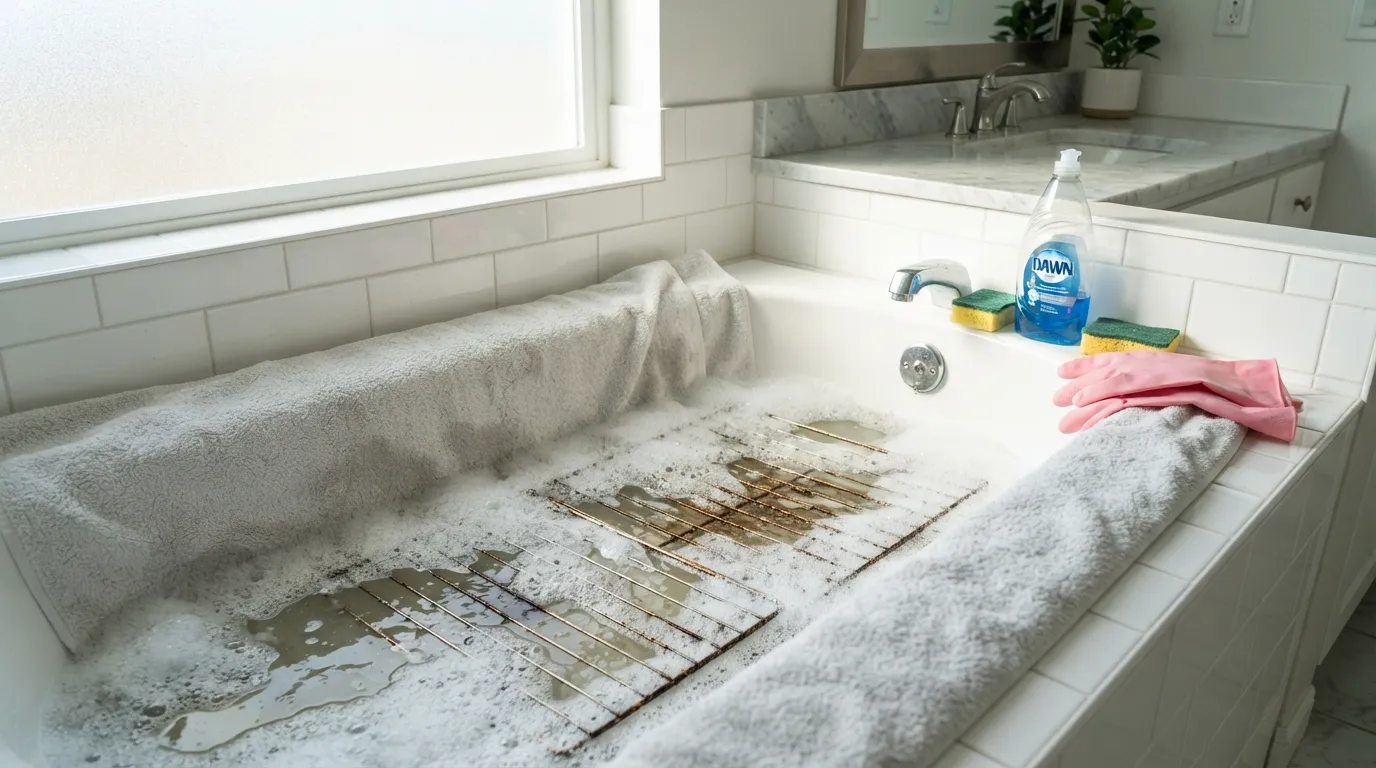
The best way to clean oven racks is a long soak: hot water and dish soap in the bathtub, two to six hours, then ten minutes with a stiff nylon brush. That’s the whole method. The dishwasher — the shortcut half the internet recommends — is the one we’d talk you out of. It dulls the rack plating, feeds grease into the dishwasher’s filter and pump, and around Waco it adds a hard-water film that leaves racks looking worse than when you started.
We repair both machines in this story for a living, so nobody wins here but you. Here’s the honest version of the whole job.
Why “just run them through the dishwasher” mostly backfires
Three problems, in the order we meet them.
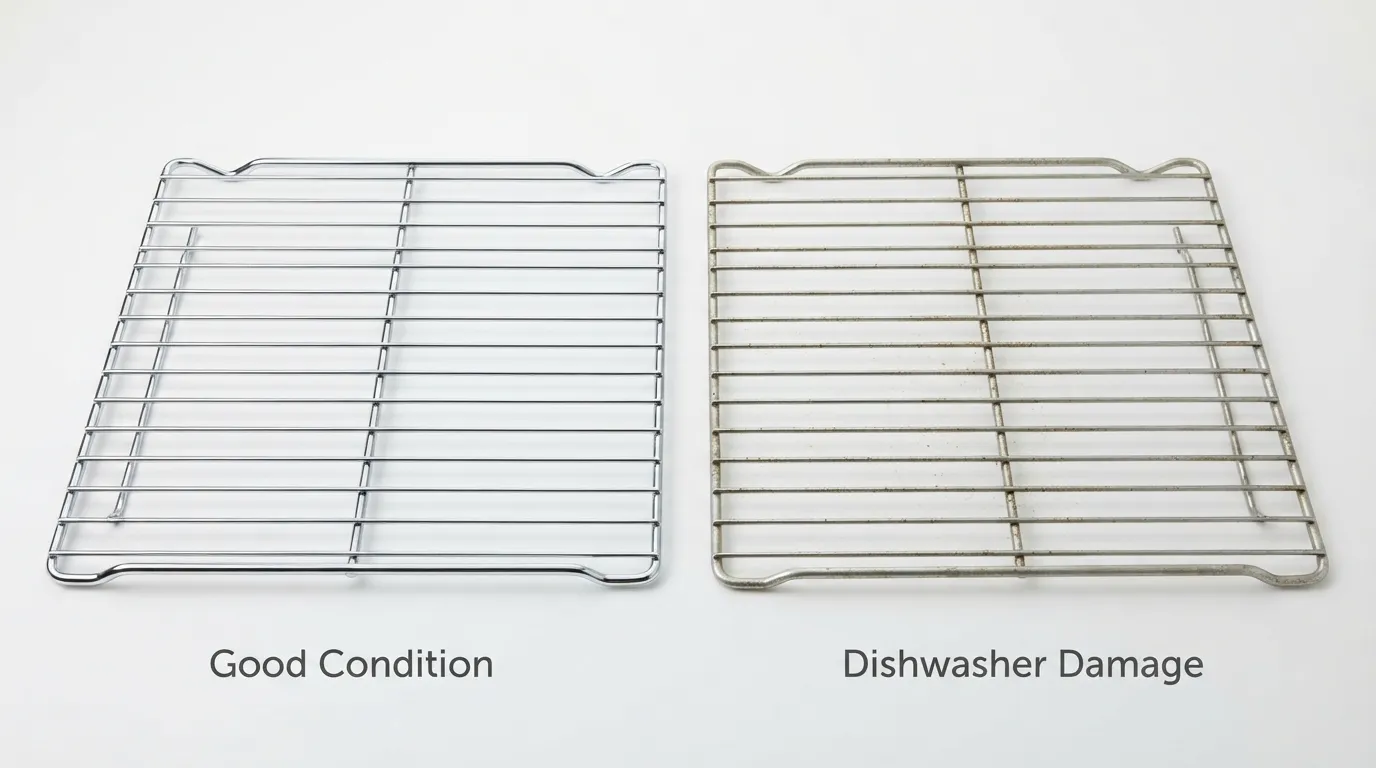
The racks come out worse. Most oven racks are steel under a shiny nickel-chrome plate. Dishwasher detergent is much harsher than dish soap (it has to be), and repeated hot, caustic cycles dull that plating and invite rust at the welds. Once a rack starts shedding brown flakes over a pizza, no amount of scrubbing brings it back.
The dishwasher pays for it. A rack caked with carbonized drippings sends all of that grit straight into the machine’s filter and drain path. We once pulled charred roast drippings out of a dishwasher filter in China Spring that had never misbehaved before oven-cleaning day. If your machine already leaves grit on glasses, our post on a dishwasher not cleaning the top rack shows how little debris that takes.
Hard water finishes the job. Central Texas water carries a heavy calcium load. A long, hot cycle over bare metal leaves the same cloudy mineral haze you fight on glassware, now baked across four square feet of steel.
There’s a practical problem too: a full-size oven rack barely fits in a dishwasher. You end up forcing it across the tines, and bent, scraped tines are exactly how dishwasher racks start flaking and rusting themselves. One cleaning shortcut, two damaged racks.
How to clean oven racks in the dishwasher, if you insist
There’s one version of this we won’t argue with: racks that get a quick wash monthly and never build real bake-on. If that’s yours, load one rack at a time, laid diagonally, no dishes sharing the cycle. Run a normal wash, skip heated dry, and pull the rack out the moment it finishes so minerals don’t bake on as it steams. Expect to towel off a little film anyway.
What the dishwasher cannot do is remove carbonized grease. Detergent enzymes are built for food, and once spillover has been through five 400° bakes it isn’t food anymore. It’s carbon. That’s a soaking job, and no machine shortcut replaces it.
The bathtub method (the one that actually works)
- Line the tub with old towels or a $5 tarp so the rack corners can’t scratch the porcelain.
- Lay the racks flat and run the hottest tap water until they’re fully covered.
- Add soap — a half cup of Dawn or any degreasing dish soap. A half cup of baking soda on top helps and costs pennies.
- Walk away for two to six hours. Overnight is better.
- Scrub with a stiff nylon brush or the rough side of a sponge. Softened gunk should slide off in sheets.
- Spot-treat stubborn corners with baking-soda paste and give them ten more minutes.
- Rinse and dry completely before the racks go back in. Water spots turn into steam-baked mineral marks at 350°.
The dryer-sheet trick is real, by the way. Toss three or four into the soak and the fabric softener helps release the carbon. Your bathroom smells like a laundromat for a day. It works anyway.
The honest trade-off: this method hands you a second, smaller chore. Plan on ten minutes rinsing the grease shadow out of the tub afterward. If that’s a dealbreaker, take the whole operation outside.
The tarp version (July in Central Texas does half the work)
Same soak, in the yard: a tarp or heavy trash bags, racks flat, hot water, soap, sunshine. On a 100° Waco afternoon the water holds its heat for hours, which is the entire trick. This is our pick for racks too far gone for the tub, and for anyone who’d rather hose off a tarp than scrub porcelain.
The old ammonia method lives out here too. Seal each rack in a large trash bag with a half cup of household ammonia — the fumes do the loosening, so the liquid doesn’t need to cover anything — and leave it overnight. It genuinely defeats the worst racks we’ve seen. Two rules with zero exceptions: outdoors only, and never anywhere near bleach, because the two combine into a gas you don’t want in your lungs.
What should never touch an oven rack
Oven-cleaner spray inside the dishwasher. Never. The residue attacks door seals and rides the next cycle onto your dishes.
Steel wool or a wire brush. You’ll win the scrubbing battle and start the rust war. Nylon bristles only on plated racks.
The self-clean cycle with racks left inside. Self-clean runs near 880°F. That discolors racks gray-blue and burns off the factory glide coating, which is why racks that survive one drag like a stuck drawer forever after. Manufacturers tell you to pull them first — GE Appliances’ care guidance says it plainly — and for once the manual and the repair guy agree.
If the racks were the easy part
Cleaning day has a way of surfacing the oven’s real problems: smoke that isn’t burn-off, a bake element with dark patches, cookies browning on one side only. Those aren’t rack problems. Our oven troubleshooting guide runs the checks in a tech’s order, and if the range needs actual eyes on it, you get a written quote for oven or stove repair before any work starts. Around here that visit is often same-day outside the holiday crunch.
One last move while momentum’s high: sliding clean racks into a dirty oven wastes half the effort. A baking-soda-paste wipe of the interior walls (skip the elements and the door gasket) finishes the job the same afternoon, no 880° drama required.
Common questions about cleaning oven racks
Is it OK to put oven racks in the dishwasher?
How do you clean oven racks without scrubbing?
Can you leave oven racks in during a self-clean cycle?
Why do my oven racks look dull and gray?
Get the Real Number for Your House
That’s how to clean oven racks without wrecking anything: soak, brush, rinse, and save the dishwasher for dishes. If cleaning day turned up something the oven shouldn’t be doing, tell us what you’re seeing or call — you’ll get a straight answer on whether it’s a cheap part or nothing at all.
The On Point Team · On Point Service Company — family-owned HVAC & appliance repair, McGregor, TX · Serving Waco, Temple, Belton, and surrounding Central Texas towns · Licensed & insured, TDLR License TACLB00069239E ·