






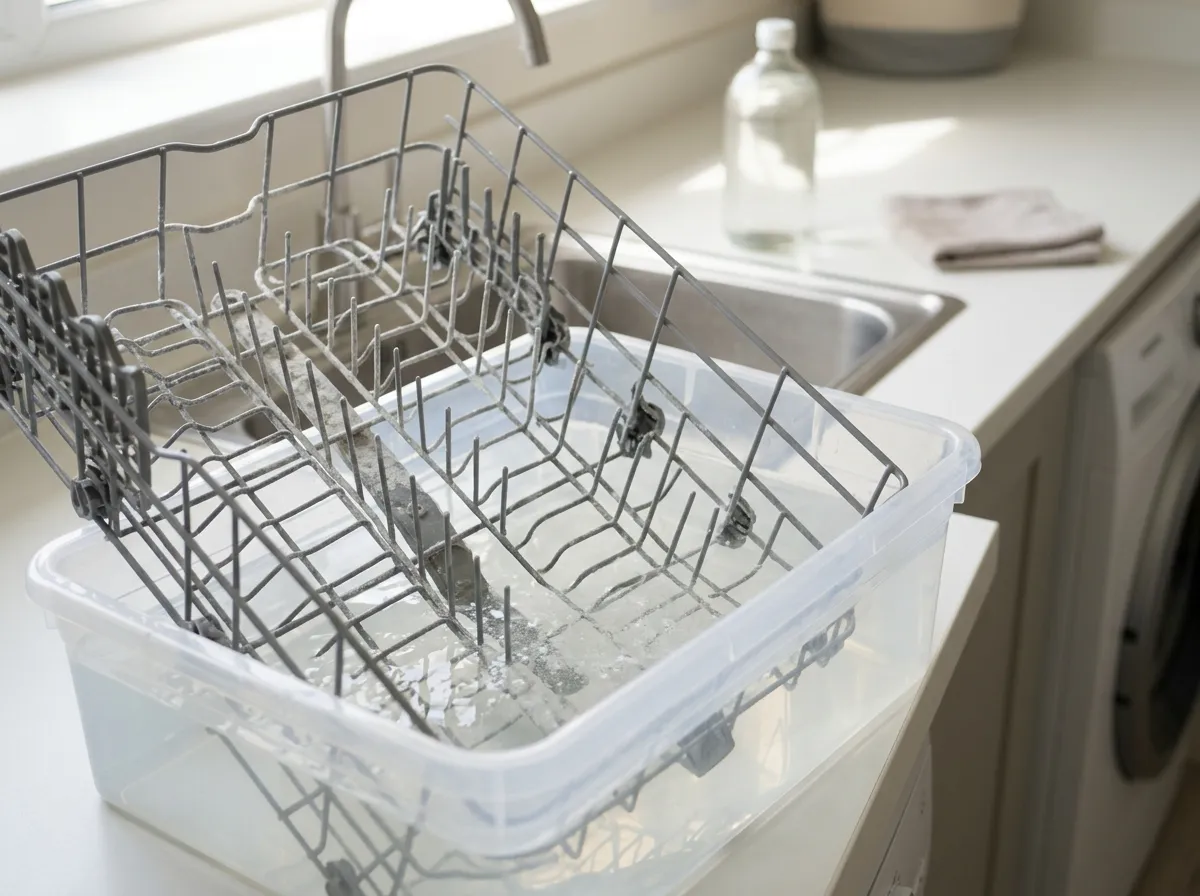
Here’s how to clean dishwasher racks: pull them out, scrub with warm water and dish soap, soak the mineral crust off with white vinegar or citric acid, rinse, and dry before they go back in. Twenty minutes, maybe $3 in supplies.
The reason your racks still look chalky after you’ve done exactly that is the part most guides skip: Central Texas water. Around Waco, the water is hard enough that mineral scale — not food — is usually what’s actually on the rack. Cleaning it takes an acid step, not more soap.
We’re an appliance repair shop, so we’ll also tell you the moment cleaning stops being the answer.
What’s Actually on Your Racks (It’s Usually Not Food)
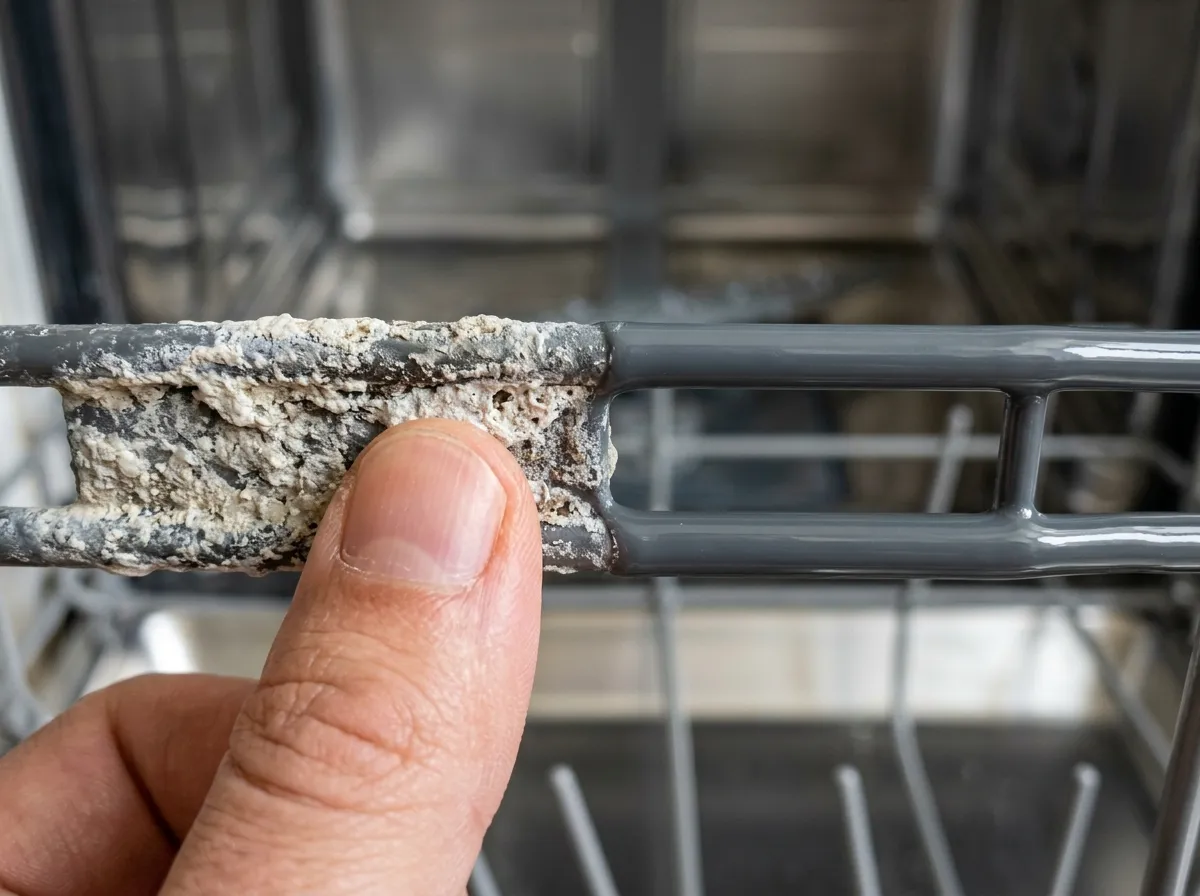
Grab a rack wire and run your thumb down it. Slick film is detergent and grease. Gritty white crust is limescale — calcium and magnesium left behind by hard water. Orange freckles are rust starting where the vinyl coating has chipped.
That order matters because each one needs a different fix. Soap cuts the film. Acid dissolves the scale. And rust doesn’t clean off at all — it has to be sanded and sealed, which is a repair job, not a cleaning job.
Our part of Texas sits on limestone, so most local tap water lands on the hard side of the USGS hardness scale. If you’ve fought white residue on glassware, your racks are collecting the same minerals — they just hide it better than a wine glass does.
What You’ll Need
Nothing exotic: white vinegar (a lot — a half gallon for a soak), baking soda, degreasing dish soap, a stiff nylon brush and an old toothbrush, towels, and a bathtub or bin big enough to lay a rack flat. Citric acid powder (a few dollars at any grocery store, sold for canning) beats vinegar on heavy scale and smells better doing it.
Skip dishwasher-cleaner tablets for this job. They’re fine for the machine’s innards, but they never touch the outside of a wire the way a brush does.
How to Clean Dishwasher Racks: The 20-Minute Method
- Pull the racks out. Bottom rack lifts straight off its rollers. Top rack slides forward to end stops — flip the stop tabs or squeeze the clips at the rail ends and walk it off gently.
- Lay them in a tub on a towel, or take them to the yard with a hose if it’s a classic Waco July and you’d rather not mop.
- Scrub with soap first. Warm water, degreasing dish soap, nylon brush. This strips the grease film so the acid can reach the minerals underneath.
- Hit the crust with acid. Spray undiluted white vinegar over the scale and let it sit 15–20 minutes, or lay the rack in a 1:4 vinegar-to-warm-water bath. For crust you can feel, dissolve 2–3 tablespoons of citric acid in hot water and soak instead — it works faster on Central Texas scale than vinegar does.
- Brush again while it’s wet. The scale should come off chalky now. A toothbrush clears tine bases and weld joints where the buildup packs in.
- Rinse hard. Leftover acid plus your next detergent load is a recipe for cloudy dishes.
- Dry and inspect. Towel off, then look closely at tine tips and wire bends. Any chips, bare metal, or orange spots — flag them now while the rack is out. That’s your five-minute head start on the next section.
Done monthly-ish, steps 3–6 shrink to a quick spray-and-brush inside the machine. The full pull-and-soak earns its 20 minutes two or three times a year here; in softer-water cities, once might do.
The Hard-Water Step Everyone Skips
Cleaning the racks and putting them back into a scale-coated machine is bailing a boat without patching it. While the racks soak, run the empty dishwasher on its hottest cycle with citric acid or a bowl of vinegar upright on the bottom — that clears the spray arms and tub of the same minerals. Then check two settings: rinse aid full (it sheets water off before minerals can dry on), and if your dishwasher has a hardness or salt setting (common on Bosch), set it instead of leaving the factory default.
Honestly, this section is the whole game locally. The scrubbing is the same everywhere; keeping scale from re-coating everything within a month is the part that depends on your zip code.
The trade-off: vinegar and citric acid are cheap and safe on vinyl-coated racks, but they will not fix established rust, and no cleaner will. Acid on bare rusted steel actually speeds the corrosion if you don’t seal it afterward.
When Cleaning Isn’t Enough: Seal the Bare Spots
Chips and bare metal you found in step 7 need sealing before rust spreads under the coating. The short version of the recoat job: sand the spot back to solid, bright metal with fine-grit paper, wipe it with rubbing alcohol, brush on a thin coat of a dishwasher-rated vinyl touch-up (not general-purpose rubber dip — if the label doesn’t say dishwasher-safe, it isn’t), and give it a full 24-hour cure before running a cycle. Thin coats beat thick ones; work somewhere ventilated and mind the VOC safety guidance on the label.
Worn tine tips are even easier — vinyl repair caps glue on in seconds and outlast brushed coating.
For the full decision math — caps vs. ReRack coating vs. an $80–$300 replacement rack, and the point where patching wastes money — see our dishwasher rack repair cost guide. If you’re already staring at broken wires or rust-through, skip straight there.
Habits That Keep Racks Clean Longer
Load cast iron and heavy pots in the bottom rack only, and lower them in instead of dropping them — most coating chips we see line up exactly with where a skillet lands. Stop jamming plates into slots that don’t quite fit; that scrape-scrape-scrape is the vinyl wearing through. Keep metal utensils from resting against rack wires, since an hour of spray pressure turns contact into friction. And once a month, give the racks the thumb test while you’re unloading. Catching one chip early is a $10 fix instead of a $150 rack.
Where You Stop and Call a Pro
Racks, filters, and spray arms are safe DIY. Stop at anything past them:
- Rust or corrosion on the heating element or tub floor — don’t scrub it, don’t coat it, and don’t unbolt anything down there. Element and pump connections are electrical and sealed for a reason.
- Discolored water pooling after cycles, which points inside the machine, not at the racks.
- A rack that won’t glide because the track or rollers have corroded into the tub — forcing it bends the frame.
If dishes come out gritty or stained even after clean racks and a citric cycle, that’s a diagnostic visit, not a bigger brush. A dishwasher repair appointment gets you a written assessment and quote before any work happens — and if you’re second-guessing a quote someone else gave you, our DIY-or-call decision guide plus a free second opinion will settle it.
FAQ: Cleaning Dishwasher Racks
How often should you clean dishwasher racks?
Does vinegar damage dishwasher racks?
Why do my racks feel gritty right after cleaning?
Can I clean rust off dishwasher racks?
Step-by-Step Guide: Recoating Dishwasher Racks for Durable Protection
Soap for the film, acid for the crust, a monthly citric cycle so the machine stops re-coating everything, and a hard look at the tine tips before the racks go back in. That routine keeps most Waco-area racks out of our schedule entirely.
And when what you find under the crust is rust, bare metal, or a machine that isn’t cleaning like it should — get a straight answer and a written quote before you spend another Saturday on it.
On Point Service Company is a family-owned HVAC and appliance repair company in McGregor, TX, serving the greater Waco area with 20+ years of combined experience. Licensed & insured · TDLR License TACLB00069239E ·