



Here’s how to increase airflow to the second floor, in the order we’d try it at your house: open and clear every upstairs vent, put in a fresh filter, partially close a few downstairs registers, switch the fan from AUTO to ON during heat waves, then go after the real thieves — leaky attic ducts and starved return vents. Most hot-upstairs problems are duct math, not a dying AC.
That’s the short version. The long version matters because the fixes range from free to $5,000, and the expensive one gets recommended way too early. We run airflow calls all over Waco, Temple, and China Spring every summer, and the pattern is consistent: two or three cheap adjustments get most homes within a couple degrees, floor to floor.
Work the list top to bottom. Stop when you’re comfortable.
In this guide:
- Why the second floor runs hot
- The 20-minute free checklist
- Balance your vents by season
- Fan ON vs. AUTO
- The duct leaks you can’t see
- Returns: the forgotten half of airflow
- The attic above your bedroom
- What each fix costs
- Zoning: the honest version
- Band-aids we’d skip
- When it’s the AC itself
- FAQ
Why the second floor runs hot
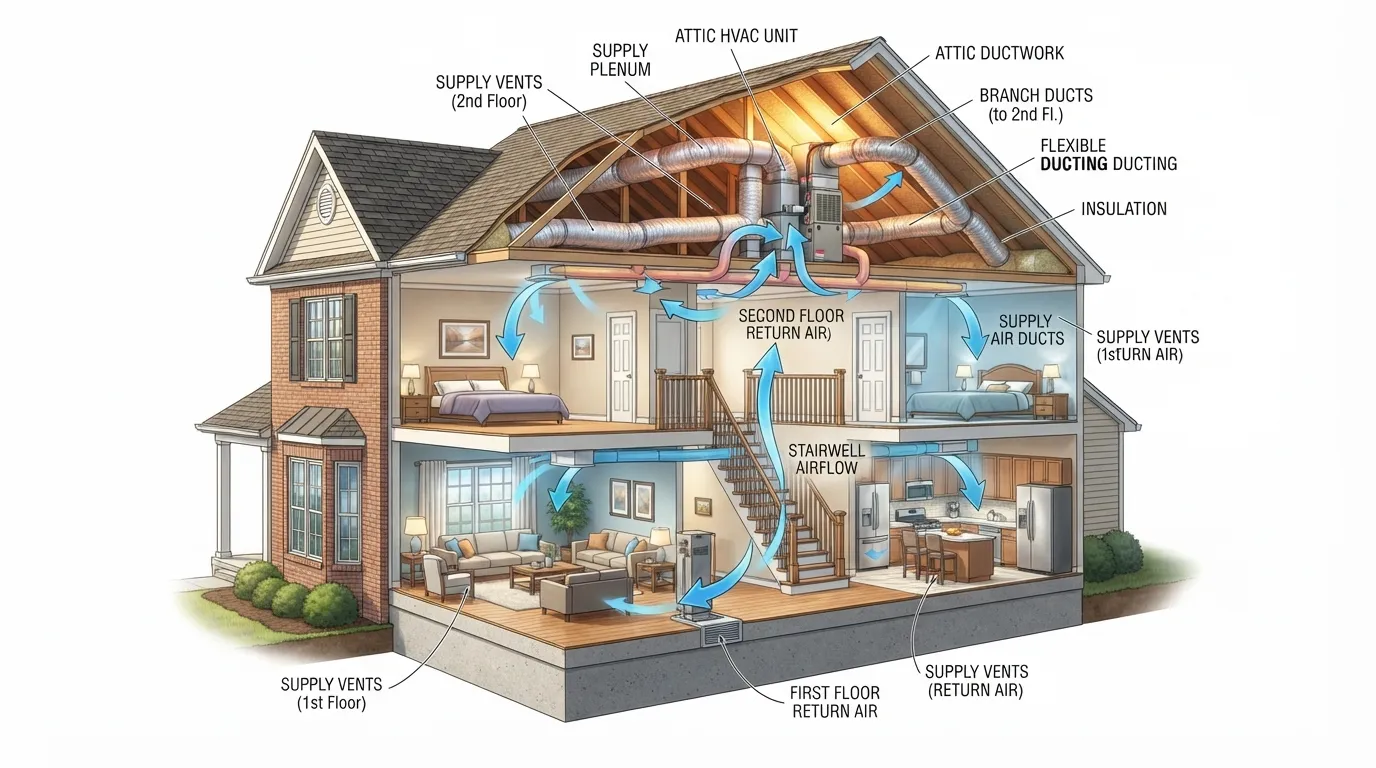
Physics is working against your upstairs from three directions at once. Heat rises, so everything the first floor generates drifts up the stairwell. The roof bakes all day, and in a Central Texas heat dome that attic hits 130°F or more by late afternoon, radiating down through the bedroom ceilings. And your ductwork runs through that same oven, warming the “cold” air before it ever reaches a vent.
Meanwhile the AC itself usually sits closer to the first floor, so downstairs gets the shortest, coolest duct runs. Upstairs gets the leftovers.
None of that means your system is broken. It means the air isn’t being pushed, pulled, and sealed in your favor yet. Every fix below exists to increase airflow to second floor rooms without buying new equipment first.
The 20-minute free checklist
Before anything costs money, walk the house:
- Open every upstairs vent fully. Check behind beds and dressers. We find at least one blocked or closed register on most calls, usually in the room that “never cools.”
- Swap the filter. A loaded filter chokes the blower, and the second floor loses pressure first because it’s the longest run. During oak pollen season around here, a filter can clog in six weeks flat.
- Look at the return grilles. The big vents that pull air in. If a bookcase or laundry pile sits in front of one, the whole system suffocates politely.
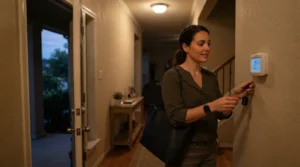
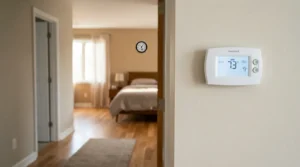
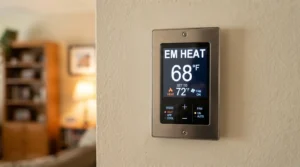
- Check the thermostat fan setting. More on this below; ON instead of AUTO is a legitimate summer trick.
- Close blinds on west-facing upstairs windows. Not an airflow fix, but it can knock several degrees off a bedroom by 6 p.m., and it’s free.
Say your master bedroom in Robinson reads 79 while the living room holds 73. Do all five of these and re-check tomorrow evening. It’s common to claw back 2 of those 6 degrees before spending a dime.
Balance your vents by season
Your ductwork probably has more control built in than anyone told you. Two places to look.
The registers themselves. Downstairs, partially close a few supply registers (the little lever or dial on each vent). That raises pressure in the duct system and shoves more air up the risers. Go a third closed, maybe half in the rooms nobody uses. Never fully closed, and never most of the house at once. Fully closed vents raise static pressure enough to strain the blower and, in muggy weather, can help freeze the coil. Gentle nudges win.
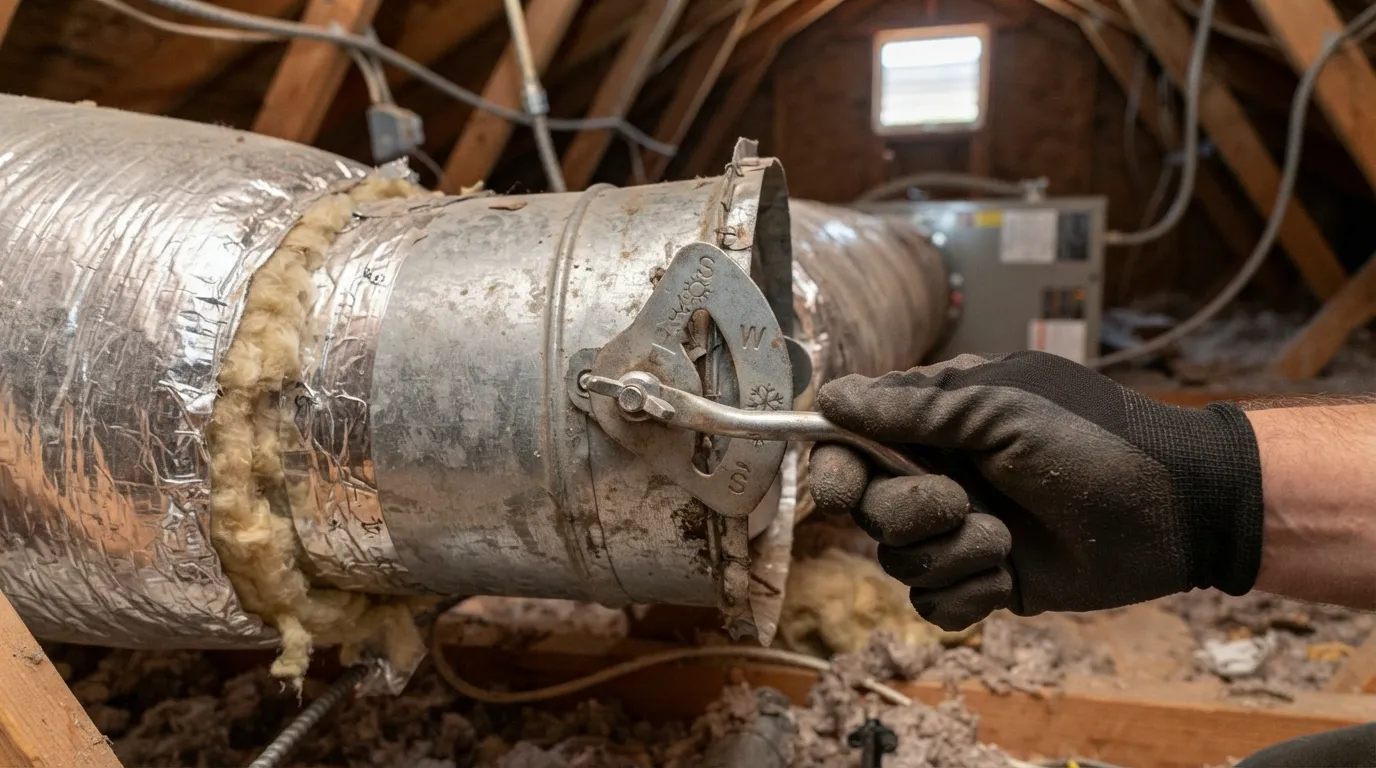
Manual dampers. Follow the main ducts near your air handler (attic or closet) and look for small metal handles on the branch lines. Handle parallel to the duct = open. Perpendicular = closed. Many two-story homes have a damper on the upstairs trunk that some previous owner set for February and never touched again.
That February point deserves its own sentence: this is a twice-a-year chore in Texas. Summer, push air up. Winter, ease it back down, because rising heat will over-warm the upstairs while the ground floor shivers through a freeze. Mark the handle positions with a Sharpie (“S” and “W”) and thank yourself later.
If moving dampers and registers barely changes anything, the air is escaping before it gets there. Keep reading.
Fan ON vs. AUTO
On AUTO, the blower only runs when the AC is actively cooling. On ON, it circulates air constantly, mixing that cold first-floor pool with the warm upstairs layer and evening out the stairwell divide.
During a 100° stretch, we tell people to run ON from afternoon through bedtime. The blower uses some extra electricity, and there’s a genuine trade-off in humid weather: constant fan can re-evaporate moisture off the coil and bump indoor humidity a notch. In a soupy June that might matter to you; in a bone-dry August, run it and enjoy. The Department of Energy’s home cooling guidance covers the fan-and-thermostat side of this if you want to go deeper.
Ceiling fans help too, counterclockwise in summer, but they cool people, not rooms. Turn them off when you leave.
The duct leaks you can’t see
Now the big one. ENERGY STAR estimates that 20 to 30 percent of the air moving through a typical duct system leaks out through gaps, holes, and sloppy connections. In a two-story home, most of that loss happens in the attic — which means you’re paying to air-condition the hottest space in McLennan County while your bedrooms wait.
The signs: upstairs vents that whisper while downstairs vents blow, dust streaks around duct joints, flex duct lying crushed under stored boxes, and a system that runs forever without gaining ground after 4 p.m.
If your attic has a walkable deck and you’re up for sweaty work, sealing the reachable stuff is fair DIY: mastic paste or UL-181 foil tape on visible joints, never cloth “duct tape,” which cooks and peels in one Texas summer. Re-hang sagging flex duct so it runs straight. Uncrush what’s crushed.
Honestly, though? Most attics up here are a maze of blown insulation and truss webs, and the worst leaks hide at boots and plenum connections you can’t reach without crawling somewhere unpleasant. A pro with a duct blaster quantifies the leakage, seals it properly, and shows you before-and-after numbers. That’s a job worth paying for, and it’s the single highest-impact fix on this whole page for older Waco two-stories — homes from the ’50s through the ’80s whose ducts were an afterthought.
Returns: the forgotten half of airflow
Supply vents get all the attention because you can feel them. But your AC can only push as much air as it pulls back, and second floors are chronically starved for return capacity.
Plenty of newer builds out toward China Spring and Temple run one system for 2,400 square feet with a single upstairs return in the hallway. Bedroom doors close at night, the return can’t pull from behind them, and each bedroom becomes a little pressurized balloon of warm air. The AC downstairs keeps score; the kids’ rooms lose.
What helps, cheapest first:
- Sleep with doors cracked, or undercut the doors an inch so air can escape back to the hallway return. Free, unglamorous, effective.
- Transfer grilles above bedroom doors let air out while the door stays shut. A carpenter-and-grille job.
- An added return run to the starved room or an upsized central return. This is duct work, priced in the table below, and it fixes the problem instead of managing it.
An opinion we’ll stand behind: if you can only afford one professional visit this summer, spend it on ducts and returns, never on gadgets.
The attic above your bedroom
Air sealing and insulation aren’t airflow fixes in the literal sense, but they decide how hard your airflow has to work. Thin spots in attic insulation let that 130° ceiling radiate straight down into the second floor, so even good airflow feels like it’s losing.
Peek into the attic with a flashlight. If you can see the ceiling joists poking through the insulation, you’re underinsulated for our climate. Topping up blown-in insulation is a one-day job that pays off twice a year — August heat domes and February freezes both.
New construction fares better on paper, but we’ve measured builder-grade attics in brand-new China Spring two-stories that were thin exactly where the plans said they shouldn’t be. Trust the flashlight, not the spec sheet.
Repair vs Replace Major Home Appliances: Smart Homeowner Tips
Typical Central Texas ranges, parts and labor, cheapest first. These bracket what “normal” looks like; your written quote is the real number.
| Fix | Typical cost range | Impact on upstairs comfort |
|---|---|---|
| Fresh filter | $10–$40 (DIY) | Restores the blower’s full push |
| Register/damper re-balance | Free (DIY) or $150–$450 (pro with instruments) | 2–4° floor-to-floor improvement is common |
| Door undercuts / transfer grilles | $50–$300 | Fixes pressurized bedrooms at night |
| Duct sealing, accessible runs | $300–$1,000 | Recovers air you already paid to cool |
| Whole-system duct sealing | $1,500–$3,000 | The deep fix for leak-riddled attics |
| Added upstairs return | $350–$900 | Un-starves the second floor |
| Attic insulation top-up | $1,500–$3,000 | Cuts the ceiling heat load all year |
| Zoning system | $2,000–$5,000 | Separate upstairs control; read below first |
A dirty coil or a tired blower can also strangle airflow from inside the machine; a seasonal cleaning catches both, and we broke down what an HVAC tune-up costs if you want that math.
Zoning: the honest version
Zoning splits your ductwork with motorized dampers and gives each floor its own thermostat. When the upstairs calls for cooling, its damper opens and the downstairs one throttles back. For a genuinely stubborn two-story, it’s the most complete answer short of a second system.
Now the part most articles skip. Zoning costs real money — that $2,000–$5,000 range — and it adds moving parts to a system that used to have none. Motorized dampers fail. Control boards act up. A damper stuck shut in August is its own service call, on a system you paid extra to complicate. Retrofit zoning on old, leaky ducts is lipstick; seal first, zone second, always.
We install zoning and we like it in the right house. We just won’t pretend it’s step one when a $500 duct-sealing visit hasn’t been tried. If your system is near the end of its life anyway, fold the decision into replacement instead — a two-stage or variable-speed system handles two floors far more gracefully, and our AC installation cost guide for Waco walks through those numbers.
Band-aids we’d skip
Register booster fans, the little electric fans that sit in a vent. They pull a trickle more air to one room and announce themselves with a hum. Forty to $150 of “meh.” Spend it on sealing instead.
A window unit upstairs can absolutely rescue one brutal bedroom, and there’s no shame in a $300 bridge during a July heat wave. Long term you’re running a second, less efficient machine to paper over a fixable duct problem.
Duct cleaning gets sold as an airflow cure. Unless something is physically blocking a duct, cleaning changes almost nothing about flow. It has its uses; this isn’t one.
When it’s the AC itself
Everything above assumes the machine is healthy. Two signals it isn’t.
Weak air from every vent, both floors. That’s a blower problem, a crushed plenum, or a coil so dirty it’s acting like a second filter. Whole-house symptoms mean the equipment, and that’s an air conditioner repair visit rather than a weekend project — you’ll get a written quote before any work, and a second opinion on someone else’s diagnosis is free.
Cool-ish air that never quite gets cold points away from airflow entirely; run through our AC blowing warm air guide before you touch another damper. And if the complaint is one specific room rather than the whole floor, the fixes shift a little — we covered the room-by-room version in our guide to uneven cooling from room to room.
The same imbalance also shows up on paper: a system fighting leaky upstairs ducts runs longer cycles, and rooms that never cool properly usually cost you at the meter before they cost you sleep.
Common questions about second-floor airflow
How do you increase airflow to the second floor?
How to cool upstairs of a 2 story home?
Should I close downstairs vents to push air upstairs?
Why is my second floor so much hotter than the first?
Does running the fan on ON instead of AUTO help?
Is zoning worth it in a two-story house?
Where to go from here
Free checklist first, vents and dampers second, ducts and returns third, and zoning only when the cheap layers are done. If you’d rather have the whole thing diagnosed in one visit, request a written quote or call — we’ll tell you which fix your house actually needs, in writing, and which ones it doesn’t.
The On Point Team · On Point Service Company — family-owned HVAC & appliance repair, McGregor, TX · Serving Waco, Temple, Belton, and surrounding Central Texas towns · Licensed & insured, TDLR License TACLB00069239E ·