




By The On Point Team · Updated July 2026
An AC blowing warm air usually comes down to one of six things, and they sort neatly by price: a thermostat set wrong (free), a tripped breaker (free), a clogged filter that froze the coil (a few dollars), a dirt-choked outdoor unit (a garden hose), a failed capacitor ($150–$400 typical), or a refrigerant leak (the expensive one).
Most companies check them in whatever order the tech feels like. You should check them in exactly that order — cheapest first — because in our experience, the fix is in the first four more than half the time, and three of those cost you almost nothing.
Work down the list. Stop when the cold air comes back.
The Free Tier: Two Minutes, No Tools
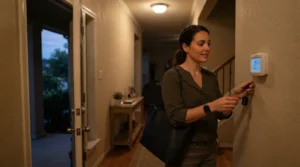
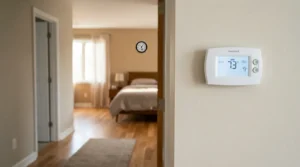
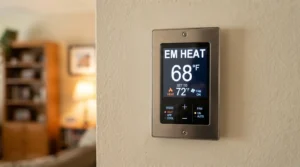
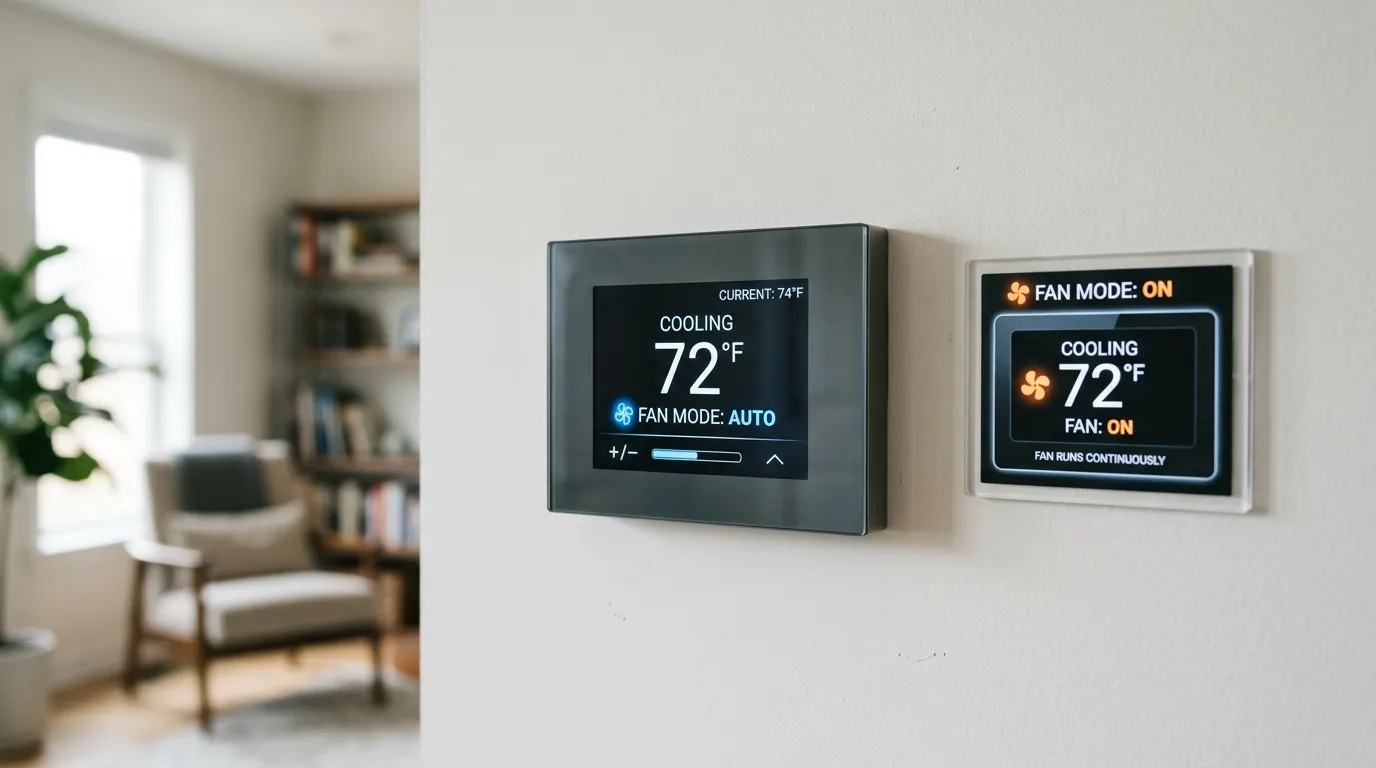
- Thermostat first. Set to COOL, not HEAT, and the fan to AUTO, not ON. This one’s sneaky: on ON, the fan runs constantly, blowing room-temperature air between cooling cycles, and the vents feel “warm” even though nothing’s broken. If the screen looks faded, swap the batteries while you’re standing there.
- Both breakers next. Central AC uses two: one for the indoor air handler, one for the outdoor condenser. If the outdoor breaker trips, the indoor fan keeps politely circulating warm air while the part that makes cold sits dead outside. Reset a tripped breaker once. If it trips again, stop. A breaker that trips every time the AC starts is a fault talking, not bad luck.
- Walk outside. Is the big fan on the condenser spinning? Compressor humming? If the outdoor unit is silent while the indoor fan runs, you’ve localized the problem already, and it’s frequently electrical, which sits in the affordable half of the menu.
The Almost-Free Tier: Filter and Ice
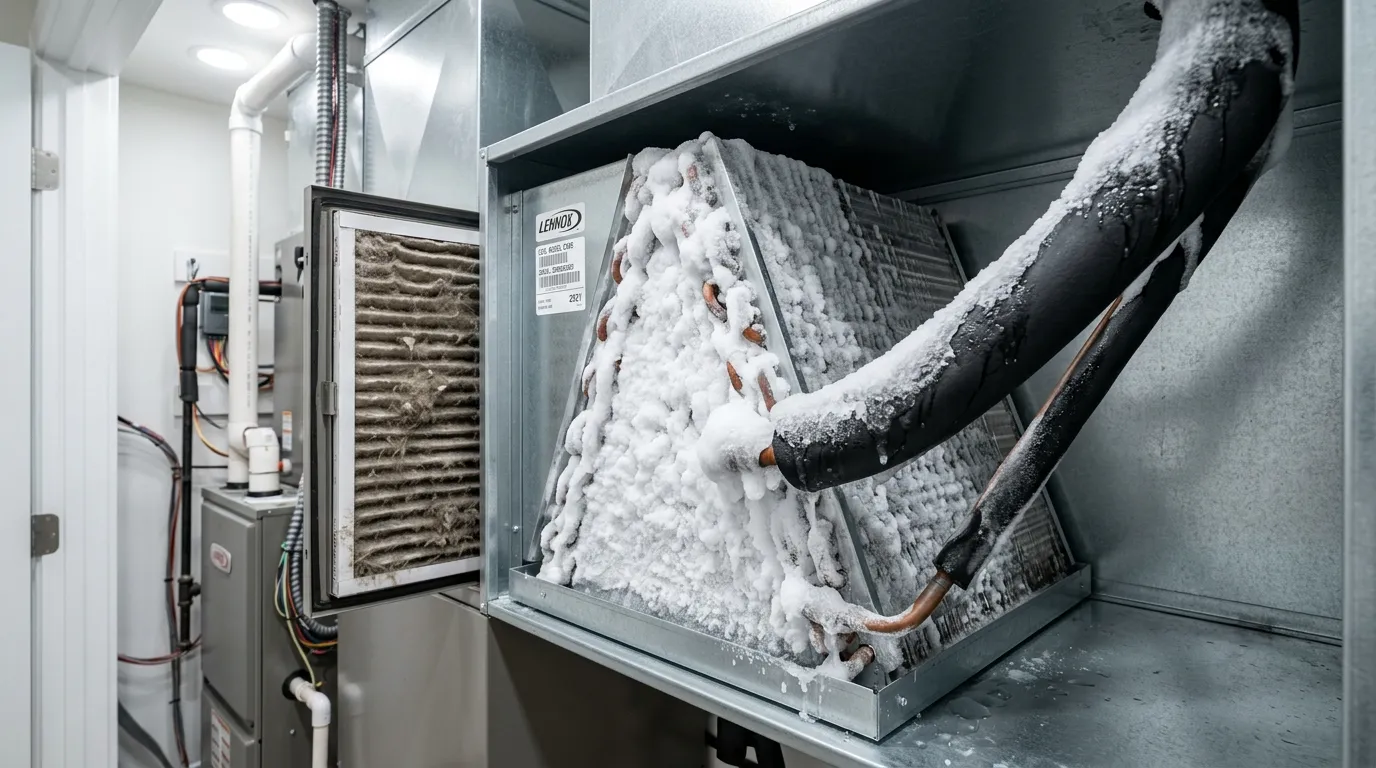
- Pull the filter. A suffocated filter starves the system of airflow until the evaporator coil freezes into a block of ice. Ice, counterintuitively, blocks cooling entirely. Warm air at the vents, maybe a hiss, maybe water around the indoor unit as it melts.
If you find a gray, furry filter: replace it, switch the system OFF and the fan to ON, and give the ice two to three hours to thaw before you judge anything. Plenty of “broken” July ACs are a $10 filter and an afternoon of patience. During oak pollen season here in the spring, and again in peak summer, monthly filter checks aren’t overkill; Central Texas air is not gentle.
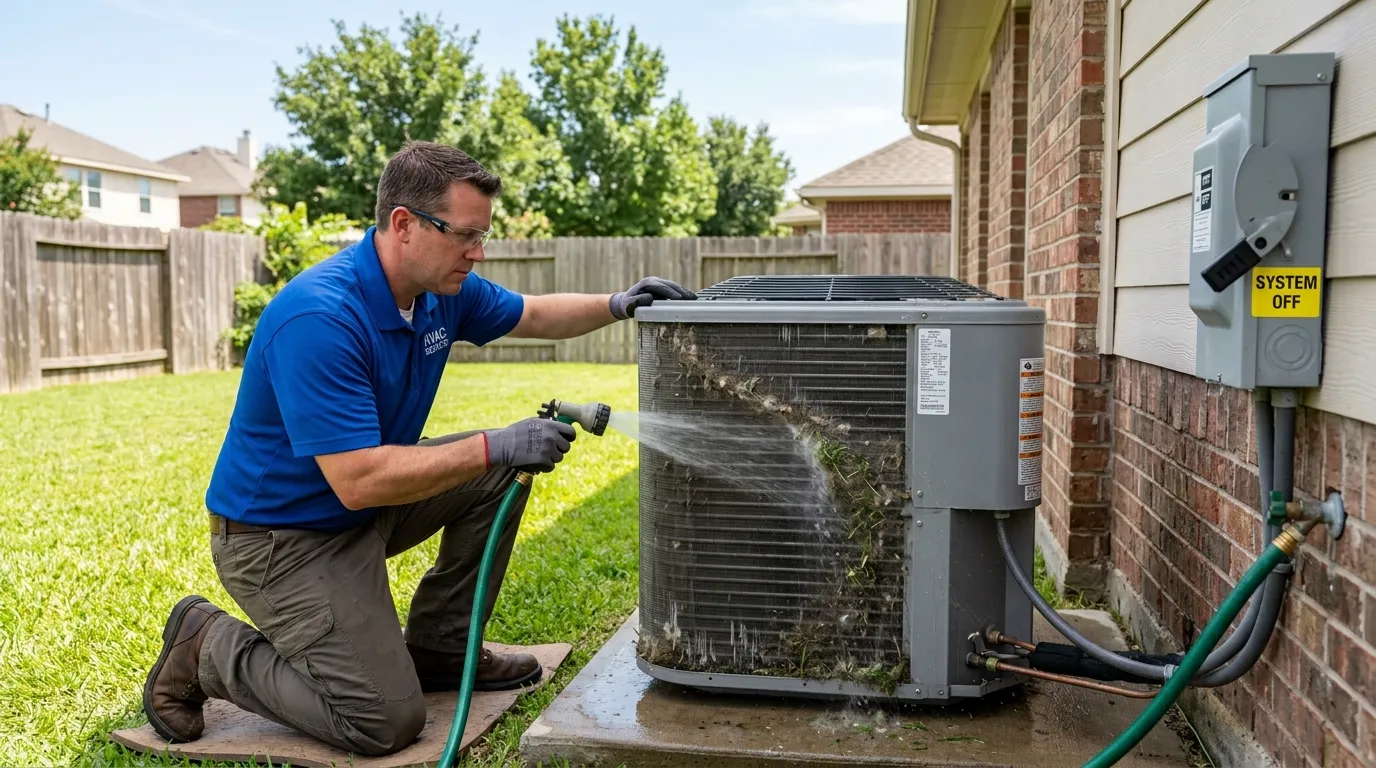
- Rinse the outdoor coil. Kill power at the disconnect box beside the condenser, then gently hose the fins clean of grass clippings, cottonwood fluff, and dust. A condenser that can’t shed heat can’t make cold, and a five-minute rinse restores more capacity than people believe. If the fins are matted deep or hail-flattened, that’s a service visit: fin combs and coil cleaners in untrained hands do more harm than good.
The Moderate Tier: Where the Service Call Earns Its Keep
- The drain line. Algae clogs the condensate line, a float switch shuts the system down to protect your ceiling, and the whole thing reads as “AC died” when it’s really “$75–$250 clearing, typically.” Look for standing water in the drain pan under the indoor unit. Scariest symptom on this list, smallest bill.
- The capacitor (read this one even if you skim the rest). The run capacitor is the single most common summer failure in Texas: heat kills them, and 100° weeks execute them in batches. Typical swap: $150–$400, under an hour of work. The symptom is an outdoor unit that hums but won’t start, or starts and quits.
Here’s why it matters that you know this: a humming condenser with a $40 part inside is where the worst quotes in this industry are born. If someone looks at a 10-year-old unit with a swollen capacitor and starts talking “failing condenser, $2,800,” ask them to show you the failed part and its reading. Then get a second opinion — ours are free. If the unit’s age is genuinely part of the conversation, run it through our 10-year-old AC repair-or-replace math before you sign anything.
- Fan motors and contactors. Same neighborhood: $150–$650 typical, honest parts failures, worth fixing on almost any otherwise-healthy system.
The Expensive End, and Where You Stop
- Refrigerant leak. If the system runs, airflow is strong, the coil is clean, and the air still won’t get cold (or the indoor coil ices up even with a fresh filter), low refrigerant from a leak moves to the top of the suspect list.
This is where your part of the job ends, and not as a formality. Refrigerant work is EPA-certified-tech-only territory by federal law: no top-off kits from the parts store, no gauges, no “just adding a pound.” A proper visit finds the leak, fixes it, and weighs in the charge, because refrigerant doesn’t get “used up,” and a system that’s low is a system that’s leaking. Anyone offering to top you off annually without hunting the leak is selling you the same repair every spring.
Same stop-line for the electrical panel on the condenser: capacitors hold a charge that can knock you down with the power off. Breakers, filters, thermostat batteries, drain lines, a gentle coil rinse: all yours. Everything sealed, pressurized, or charged belongs to a licensed tech. That’s what the air conditioner repair visit is for, and it starts with a written quote before any work.
Why Your AC Picked This Week
Because everything on this list gets worse at 100°. Capacitors fail on the hottest afternoons, marginal filters become blocking filters when runtime doubles, and a condenser that limped through May chokes in a July heat dome. It’s why half of Waco calls in the same week, and why the smart move is running this checklist in June, not discovering it in the driveway in August. Costs for every failure above, part by part, are in our Waco AC repair cost guide if you want numbers before you call anyone.
FAQ: AC Blowing Warm Air
Why is my AC running but not cooling the house?
In order of likelihood: fan set to ON instead of AUTO, clogged filter (frozen coil), dirty condenser, tripped outdoor breaker, failed capacitor, low refrigerant. The first four you can check yourself in fifteen minutes; the last two are a service visit.
Why is my AC blowing warm air only sometimes?
Intermittent warm air points to a coil that’s freezing and thawing in cycles (airflow problem; check the filter first), a capacitor on its way out, or a system icing up from low refrigerant. Sometimes-warm usually becomes always-warm within a week or two, so use the window to get it looked at cheaply.
How fast can someone come out during a heat wave?
Can I add refrigerant myself?
No, and skill isn’t the reason: refrigerant work is federal law plus physics. Handling refrigerant requires EPA certification, and a low system has a leak that topping off doesn’t fix. DIY kits mostly deliver overcharged systems, masked leaks, and a bigger bill later.
Start at the Top of the List
Thermostat, breakers, filter, coil rinse, drain pan. Fifteen minutes, four of the six most common causes, nearly zero dollars. If the warm air survives all five checks, it’s a capacitor, a motor, or a leak — and you’ll be talking to a tech armed with exactly what you checked, which shortens the diagnostic and the bill.
Get a straight answer and a written quote. Seniors and military get 10% off repairs, and if somebody already quoted you a new condenser over a humming unit, the second opinion is free.
On Point Service Company is a family-owned HVAC and appliance repair company in McGregor, TX, serving Waco, China Spring, Robinson, and the surrounding area with 20+ years of combined experience. Licensed & insured · TDLR License TACLB00069239E