



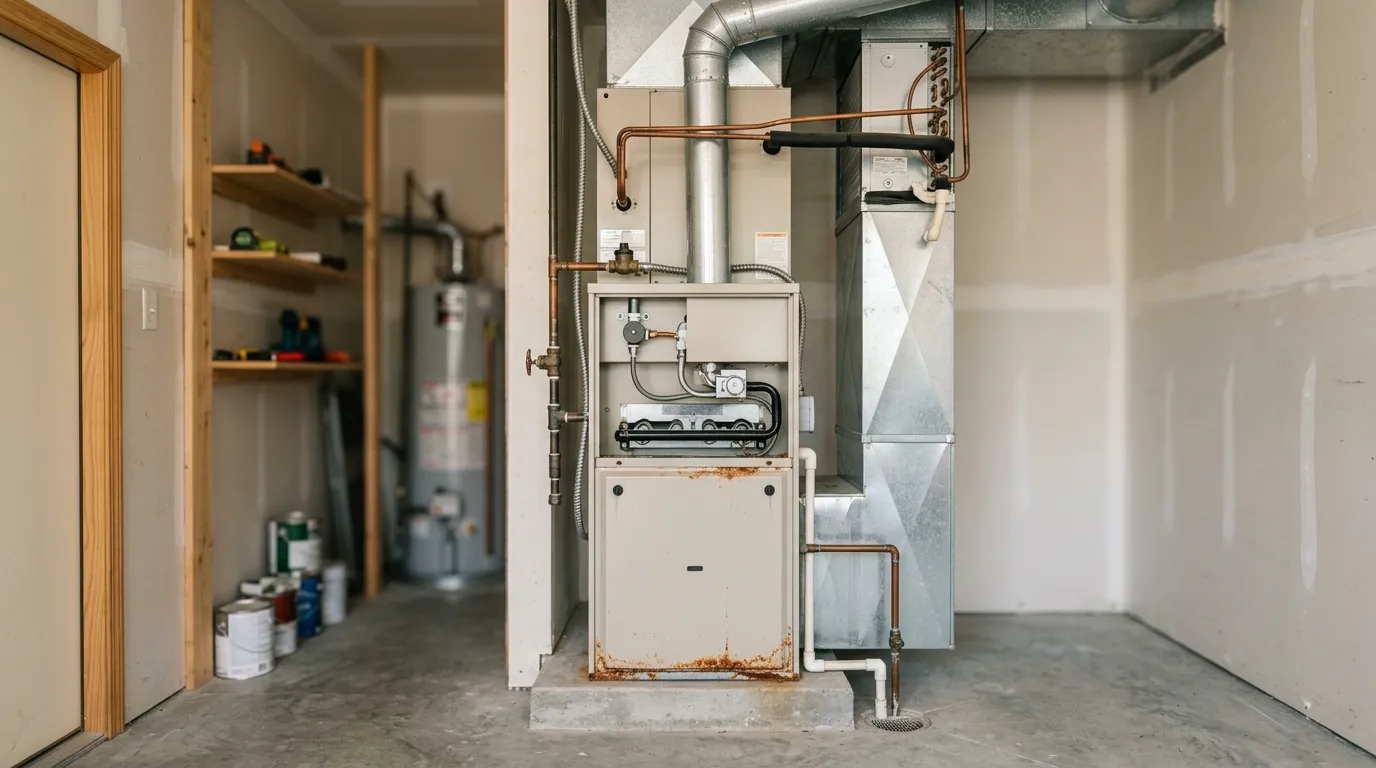
You opened the furnace closet for the first time since February and there it is: orange-brown staining down the cabinet. Whether that’s a shrug or a problem depends entirely on where the rust is sitting, and most of what we find on service calls is the shrug kind.
Here’s the quick answer, then the full location-by-location walkthrough.
Is rust on a furnace a problem?
Rust on a furnace is common and often cosmetic. What matters is location. Surface rust on the cabinet or door is usually harmless. Rust around the burners affects how the furnace fires. Rust on the heat exchanger or flue pipe is serious and needs a professional inspection before the next heating season.
That’s the whole framework. Rust is never the disease — it’s the receipt for moisture that’s been somewhere it shouldn’t. Find the water, judge the location, and the right response falls out on its own.
Why furnaces rust in Central Texas
Nobody’s furnace here rusts from snow. The water comes from closer to home:
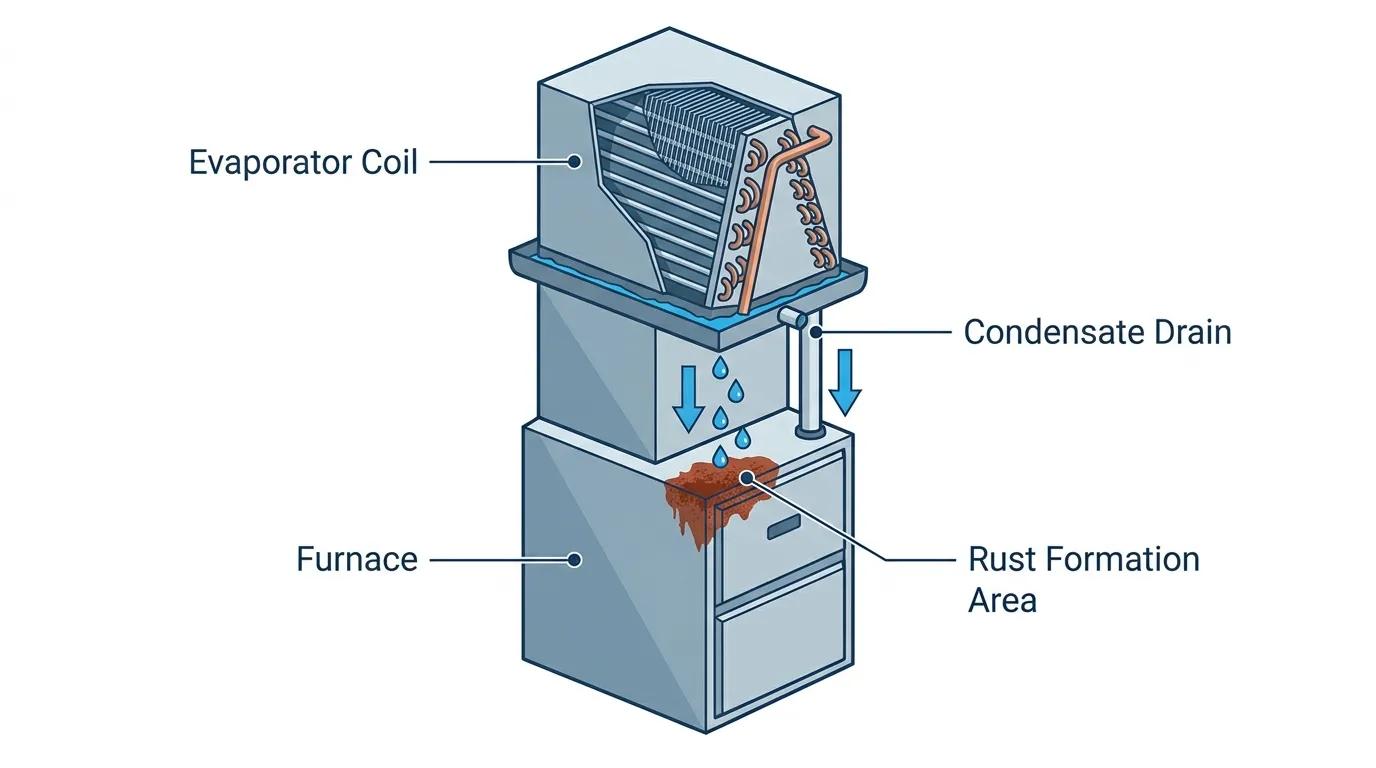
The AC coil sitting on top of it. In most Waco-area homes, the evaporator coil for your air conditioning is mounted directly above the furnace, in the same cabinet. That coil sweats condensation nine months a year. A cracked drain pan, a clogged condensate line, or plain splash-over drips straight down onto the furnace below. This is the number one rust source we find, and it’s why a “furnace problem” in Central Texas so often turns out to be an AC drainage problem wearing a disguise.
A short work year. A gas furnace around Waco runs hard for maybe December through February, then sits idle through nine humid months. Idle steel in 70% summer humidity develops surface oxidation just standing there. Homes out toward China Spring and Lorena on slab closets see it; attic installs in older Waco houses see it worse.
Condensate from the furnace itself. High-efficiency condensing furnaces (common in newer Temple and Belton builds) produce acidic water by design, every hour they run. More on that below, because it rusts systems in a specific, predictable spot.
February surprises. Hard freezes like the ones Central Texas keeps catching can crack condensate lines and humidifier fittings. The leak shows up as rust stains by April.
Notice what’s missing from that list: age alone. A dry, well-drained 18-year-old furnace can be nearly spotless inside. Rust is evidence of water, not just years.
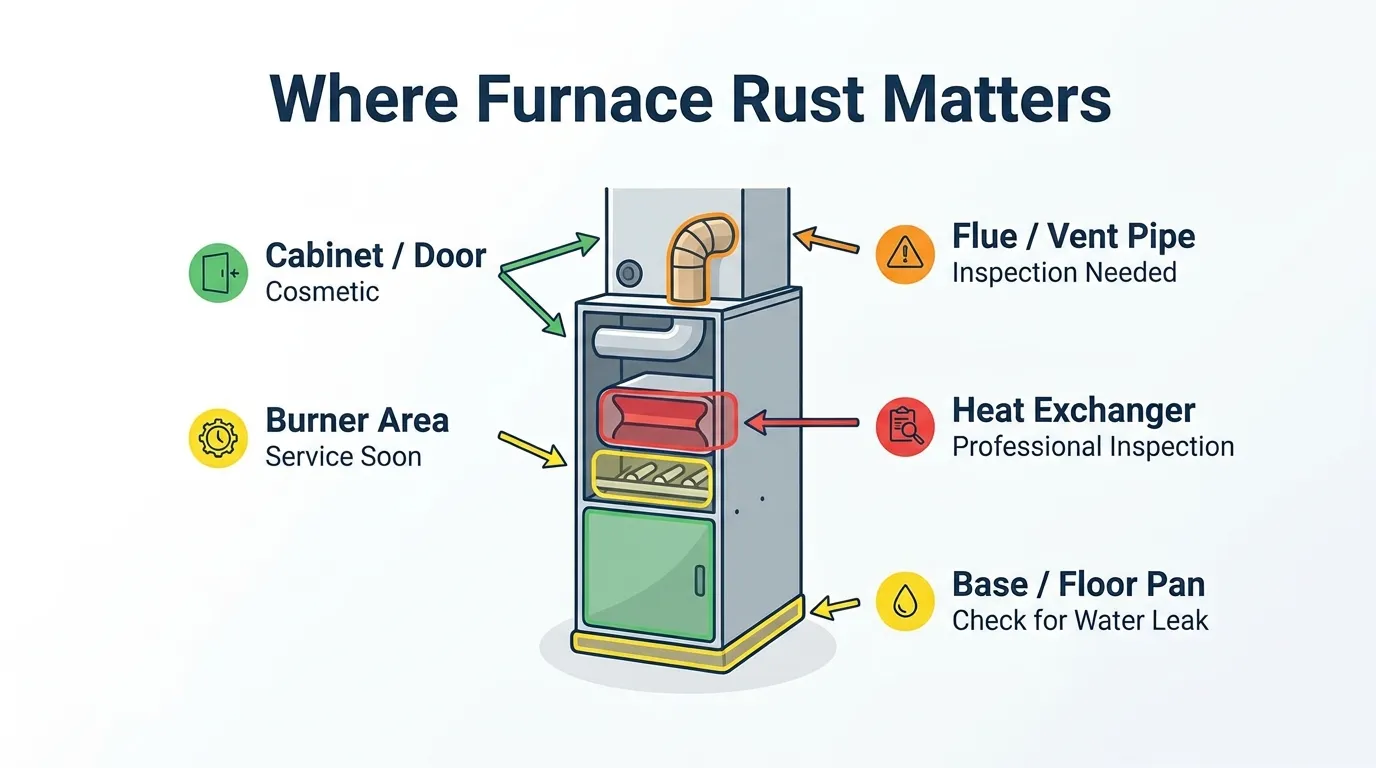
The location test: where the rust sits tells you what it means
| Where the rust is | What it usually means | What to do |
|---|---|---|
| Cabinet, door, exterior panels | Cosmetic; humidity or old drips | Find the moisture source; no urgency |
| Burner area | Moisture reaching the flame path; affects ignition and flame quality | Professional cleaning at next service |
| Heat exchanger | Potential safety issue | Professional inspection before further use |
| Flue / vent pipe | Exhaust moisture or draft problem | Professional inspection; pipe may need replacing |
| Base / floor pan | Active leak (usually AC condensate) above or beside | Fix the drainage; check what else got wet |
Rust on the cabinet or door
The outside skin of the furnace is just painted sheet steel. Surface rust here tells you the closet or attic has a humidity or drip history, and that’s all it tells you. It doesn’t spread inward like a disease, and it doesn’t mean the furnace is dying.
Our honest take: anyone who quotes you a new furnace based on cabinet rust alone should make you nervous. We see this pitch in second-opinion visits more than we’d like.
Worth doing anyway: figure out where the water came from. Cabinet rust with a rusty floor pan under it usually points up, at the AC coil.
Rust around the burners
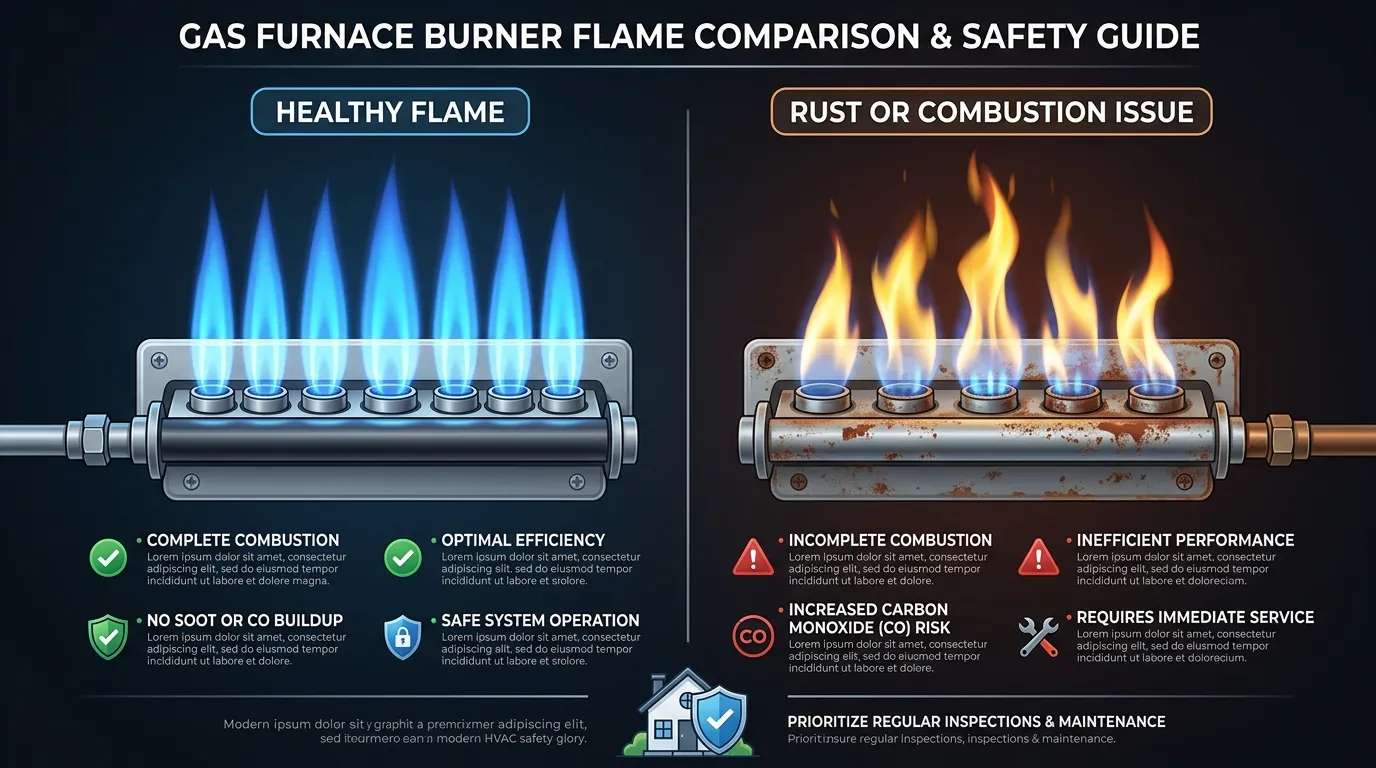
Open the burner compartment door (most have a view window — looking is fine, dismantling is not) and orange scale on the burners themselves is a step more serious. Rust flakes disturb how gas and air mix. You’ll see it as lazy, uneven, or yellow-tinged flames instead of steady blue, and sometimes hear it as a delayed whump on ignition.
This one’s a performance-and-wear problem. Rusted burners make the furnace run dirtier and harder, and the fix is a professional burner cleaning, which around here typically rides along with a seasonal tune-up rather than a standalone call.
Rust on the flue or vent pipe
The metal pipe carrying exhaust out of the house should be dry inside. Rust streaks, white powdery corrosion, or flaking at the joints mean exhaust gases are condensing inside the pipe instead of leaving the house hot, or rain is getting in from above. Either way, the pipe’s job is containing combustion byproducts, so corrosion here gets a professional look before the next heating season. Vent sections are cheap to replace. What they protect isn’t.
Is a rusted heat exchanger bad?
Yes — rust on a heat exchanger is the one location that’s never cosmetic. The heat exchanger is the sealed metal barrier between the flames and the air blowing into your rooms. Rust weakens that metal, and a rusted-through or cracked exchanger can let combustion gases, including carbon monoxide, mix into your home’s air supply.
Calm context, because this gets dramatized: a rusty cabinet almost never means a rusty exchanger. The inside of a heat exchanger is a set of metal tubes or clamshell passages you mostly can’t see without pulling the blower and running an inspection camera. That’s exactly why this one diagnosis isn’t a flashlight job. Techs confirm it with cameras, combustion analysis, and CO readings, not a glance.
What you should do is simple and unheroic:
- Don’t run the furnace if a tech has flagged exchanger rust or cracking, or if your CO alarm has sounded. Not “run it gently.” Off.
- Have working CO alarms near sleeping areas regardless of what shape your furnace is in. The Consumer Product Safety Commission’s carbon monoxide guidance covers placement in two minutes of reading.
- Get the finding in writing. A legitimate exchanger diagnosis comes with photos or camera footage and measured readings. “It’s shot, trust me” is not a diagnosis, and this is the single most second-opinion-worthy call in heating. We give free second opinions on exactly this.
How corrosive is furnace condensate?
Condensate from a high-efficiency (90%+ AFUE) furnace is genuinely acidic — typically around pH 3 to 4, in the range of orange juice. That’s by design: condensing furnaces wring extra heat out of exhaust until the water vapor in it condenses, and that water picks up combustion acids. It’s why condensing furnaces use plastic vent pipe and why many jurisdictions require a condensate neutralizer before the drain.
If you have an 80% furnace (metal vent pipe, no second heat exchanger), it isn’t supposed to produce condensate at all. Rust plus dampness on an 80% unit means water is arriving from somewhere else — almost always the AC coil above — or exhaust is condensing where it shouldn’t, which is its own red flag.
The practical takeaway: acidic condensate eats drain pans, floor pans, and anything metal it drips past, slowly and from the bottom up. Rust concentrated low on the unit with a white crusty trail is this pattern. The fix is drainage and neutralization, not paint. (The Department of Energy’s furnace efficiency explainer covers the 80%-vs-condensing distinction if you’re not sure which you own.)
Can you remove rust from a furnace?
On the outside, yes. On anything internal, no — and it wouldn’t help.
Cabinet and door rust is a Saturday job if it bothers you: kill power at the switch, light sanding or a wire brush, wipe clean, and a coat of rust-inhibiting enamel rated for the location. It’s purely cosmetic and completely optional. The part that actually matters is fixing the moisture source, because paint over an active drip buys you one season of looking better while rusting underneath.
Internal rust doesn’t sand away. Burner scale needs proper cleaning and adjustment. Exchanger rust is structural — the metal has thinned, and no coating restores it. Skip the “rust converter on the heat exchanger” advice floating around forums. That’s painting over the one part whose integrity is the whole point.
Rust and the signs of a dying furnace
Rust alone doesn’t retire a furnace. Rust in combination does. The pattern we look for on an aging unit:
- Age 15–20+ years (13–15 for hard-run condensing units)
- Exchanger or flue corrosion, not just skin rust
- Yellow or wavering burner flames after cleaning
- Short cycling — firing and quitting in tight loops
- Heating bills drifting up with no rate change
- Repairs stacking — a board last winter, an igniter this one
Two or three of those together and the honest conversation is repair versus replacement, the same math we walk through for AC systems. One of them alone, on a 9-year-old furnace? Fix the one thing.
If your symptom is no heat rather than rust, start with our heater troubleshooting walkthrough — most no-heat calls trace to things far cheaper than corrosion.
What fixing the real problem costs
Typical Central Texas ranges, not our price list, and every one of these gets a written quote from us before any work:
- Cabinet rust: $0 mandatory. A can of enamel if you’re fussy.
- Condensate drain repairs (the usual true culprit): $100–$300 for line clearing, pan or fitting fixes. A neutralizer install for a condensing furnace typically lands $150–$350.
- Burner cleaning: usually inside a $80–$200 tune-up visit rather than billed alone.
- Vent/flue pipe section replacement: $150–$600 depending on run and access.
- Heat exchanger replacement: $1,500–$3,500 with the part — which is why, on a unit past 12–15 years, this quote is usually the start of a replacement conversation instead. A new furnace installed in Central Texas typically runs $3,500–$7,500, and putting a $2,500 part in a 17-year-old cabinet rarely pencils out. We’ll show you both numbers and let you do the math with us, not after us.
The trade-off we’ll admit to: an annual tune-up costs real money, and most years it finds nothing dramatic. The year it catches burner scale early or a drain about to overflow into the cabinet, it quietly pays for a decade of itself. That’s the whole bet, stated plainly.
Where you stop and call a licensed tech
You can, safely: look through the burner view window, check for water or rust stains around the base, swap the filter, keep the area around the furnace dry and clear, reset a tripped breaker once, and clear a condensate drain line at its outdoor exit.
You stop at: opening sealed panels, dismantling burners, anything involving the gas line or gas valve, and any attempt to inspect or patch the heat exchanger. Gas plus combustion plus sealed electrical is licensed-tech territory in Texas for good reason. If what you’ve seen through the view window or around the base worries you, describe it to us and we’ll tell you over the phone whether it sounds like a shrug or a visit.
Furnace Rust: Frequently Asked Questions at On Point Service Company
Is a rusty furnace dangerous?
Usually not. Cabinet and exterior rust is cosmetic. The danger cases are rust on the heat exchanger or flue, which can involve combustion gases. If rust comes with a CO alarm, yellow flames, or exhaust smells, shut the furnace off and get it inspected.
Should I replace a 15-year-old furnace that’s rusting?
Depends on where the rust is. Skin rust on a 15-year-old unit that heats fine: leave it alone. Exchanger or flue corrosion at that age: replacement usually beats a $2,000+ repair on a unit in its final third of life. Get the diagnosis in writing, then decide.
Why is my almost-new furnace already rusting?
Water from above, nearly every time — a clogged AC condensate drain or cracked pan dripping onto a young furnace. The furnace isn’t failing; the drainage is. Fix that this month and the rust story usually ends there.
Does rust void a furnace warranty?
It can complicate one. Manufacturers generally cover defects, not water damage from installation or drainage problems, and corrosion often gets attributed to the latter. Document drainage fixes and keep service records — paper trails win warranty arguments.
How do I stop my furnace from rusting?
Control the water. Keep the AC condensate line clear (a wet/dry vac at the outdoor exit each spring works), fix drips fast, and have the system serviced yearly so drain pans and traps get looked at before they overflow. Dry furnaces essentially don’t rust.
Is rust on the AC coil the same problem?
Same water, different victim. Coil-cabinet rust points at the same condensate issues and often explains the furnace rust below it. Central Texas hard water and heavy AC runtime make this a package deal in our service area.
Where to go from here
If the rust is on the skin, find the drip and sleep fine. If it’s at the burners, book a cleaning before fall. If anyone has said “heat exchanger,” get it documented and get a second opinion — ours are free, and we’ll put what we find in writing either way. Request a visit or call . Straight answers, no scare stories. 10% off repairs for seniors and military.
The On Point Team — On Point Service Company, McGregor, TX. Family-owned, 20+ years of combined experience in HVAC and appliance repair across Waco, Temple, Belton, and Central Texas. Licensed & insured — TDLR License TACLB00069239E. Call for same-day availability.