



A refrigerator leaking water is usually announcing a clogged defrost drain — that’s the number-one cause by a comfortable margin. The rest of the lineup: a shifted or cracked drain pan, a weeping water line or filter housing, and plain summer condensation off a tired door seal. Best part: the puddle’s location tells you which one you’ve got before you touch a tool.
So don’t pull the fridge out yet. Look at where the water is.
The puddle is the diagnosis
- Inside the fridge, pooling under the crisper drawers: defrost drain, almost certainly. Ice sheet on the freezer floor confirms it.
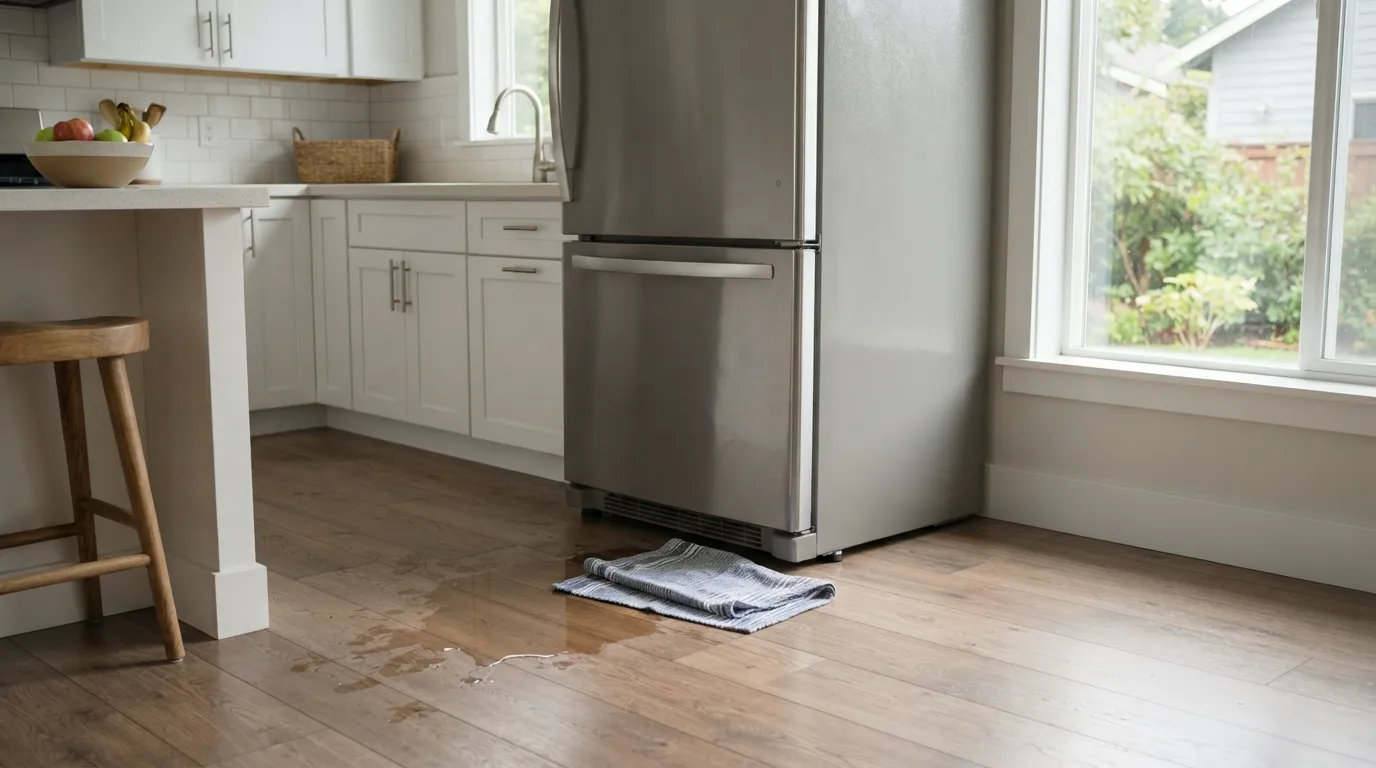
- On the kitchen floor, front and center: drain pan or an overwhelmed defrost drain that’s overflowing it.
- Behind or under the back of the fridge: water supply line or the inlet fittings, especially on ice-maker fridges.
- Around the door edges, doors sweating: condensation, meaning a gasket problem or just a brutal July.
Match your puddle, jump to your section, and leave the others for a slower day.
The defrost drain: the number-one cause
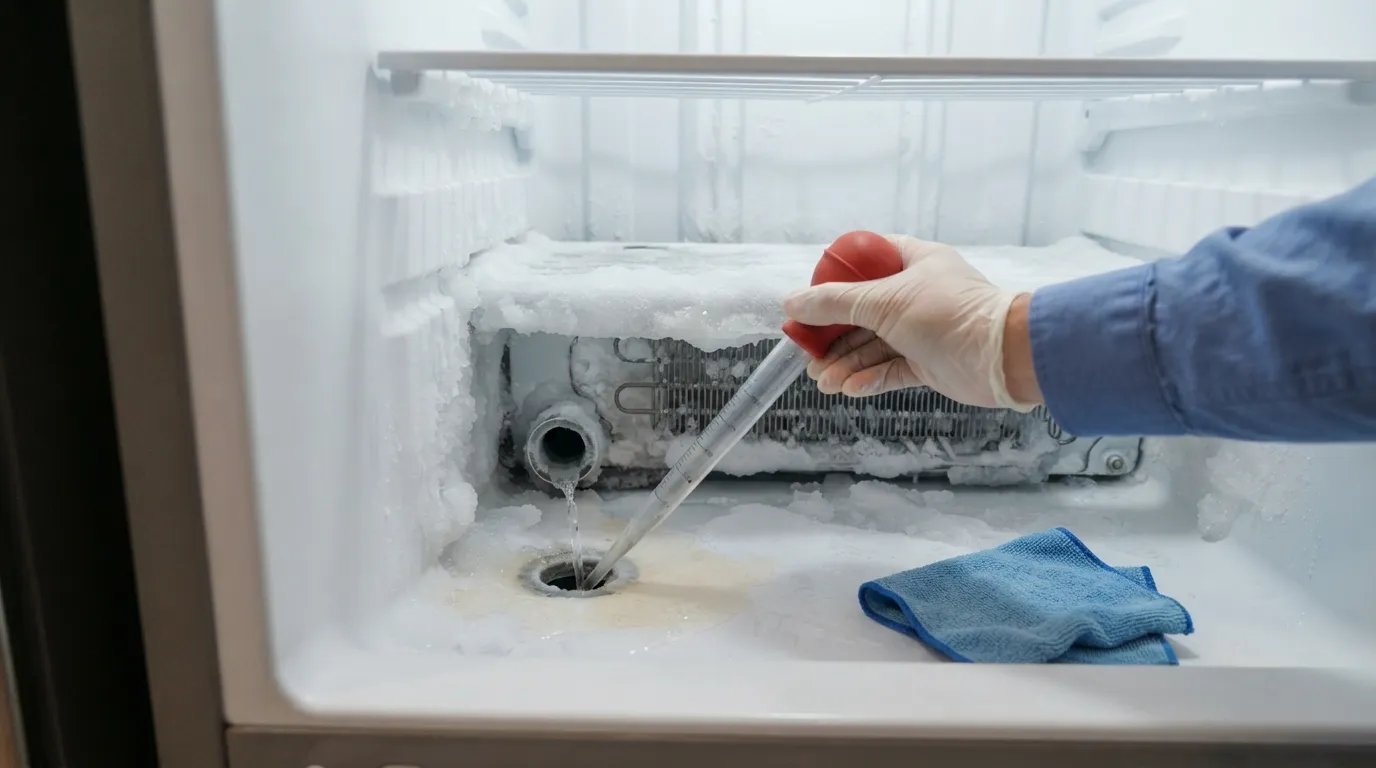
Every frost-free fridge melts its frost on a schedule, and the meltwater runs down a small drain at the back of the freezer floor into a pan underneath. That drain is narrow, cold, and directly downstream of food crumbs, which is why it clogs, freezes over, and sends the next defrost cycle’s water under your crispers instead.
The fix is genuinely satisfying. Clear the freezer floor, find the drain hole (center-back on most models; GE Appliances’ support pages show per-model locations), and flush it with warm water using a turkey baster until it swallows freely. If there’s an ice sheet over it, let warm water do the work. No knives, no screwdriver chiseling; the drain trough and the evaporator parts near it don’t forgive stabbing.
Our professional opinion: the turkey baster is the most underrated appliance tool in your house. Flush the drain once a year and this post never applies to you again.
The drain pan: a look, not a project
Meltwater’s final stop is a shallow pan under the fridge, behind the kick plate, where it quietly evaporates. Pans rarely crack, but they do get knocked crooked during mopping or a fridge shuffle, and then a normal defrost cycle drips onto the floor instead.
Pull the kick plate, shine a light, and straighten the pan if it’s cockeyed. A pan that’s brim-full is its own clue: water’s arriving faster than it can evaporate, which points back up at the drain or at a leaking line. A little standing water in the pan is normal and means the system’s working.
The water line and the filter housing
Ice-maker and dispenser fridges carry a thin supply line up the back and a filter inside. Both are honest leak suspects, and both get a look, not a wrench, from you.
Dry everything with a towel, then watch where the first new drip forms: at the wall valve, along the line, at the inlet fitting, or around the filter seat. A filter that’s weeping after a recent change usually just needs reseating — pull it, check the O-rings, click it home firmly. A dripping line or fitting gets one move from you: shut off the little valve feeding it (behind the fridge or under the sink) and stop the bleeding.
Central Texas water shortens this system’s life, since scale stiffens lines and crusts fittings until they seep; the hard-water rap sheet explains why fridges in Waco and the well-water houses out toward Crawford see this early. And if the same line’s scale is behind your slow ice production, the ice maker checklist is the companion read.
Sweating doors and a Texas July
Sometimes the “leak” is the weather. In 100° humidity, a fridge with a tired gasket sweats around the door edges and drips a convincing little puddle. Run the dollar-bill test (close the door on a bill; drag means seal), wipe the gaskets clean with warm soapy water, and make sure the doors actually close instead of resting on a ketchup bottle.
Condensation costs nothing to fix and, honestly, it’s the diagnosis we’re happiest to deliver. A fridge that’s sweating and struggling to hold temperature has a bigger story, though — that one goes to the not-cooling checklist next.
Where you stop and call
If the drain’s flushed, the pan sits straight, the line’s dry, and the doors seal, what’s left is internal: a drain heater or trough problem behind the freezer’s back panel, an inlet valve that leaks under pressure, or a line that needs replacing rather than tightening. Ice maker line replacement and anything behind sealed panels is tech work — water plus electrical components plus disassembly is a bad DIY cocktail.
The good news is on the invoice: leaks sit on the cheapest rows of the refrigerator repair cost sheet, typically $100–$350 around here, quoted in writing before any work. What actually gets expensive is waiting. Water that runs for weeks finds subfloor, and in Waco’s older pier-and-beam houses it finds it fast. Shut off the supply valve, towel the floor, and make the call the same week; the leak is the cheap part of this story.
Common questions about a leaking refrigerator
Why is my refrigerator leaking water inside?
Why is my fridge leaking water underneath?
Can I keep using a fridge that’s leaking?
How much does it cost to fix a leaking refrigerator?
Where to go from here
Read the puddle, flush the drain, straighten the pan, dry-and-watch the line, dollar-test the doors. Two of those five fixes are free and one requires a turkey baster. If the water keeps coming, request service or call for a straight answer and a written quote — same-day slots are often available across the Waco area, and the 10% senior and military discount applies to repairs.
The On Point Team · On Point Service Company — family-owned HVAC & appliance repair, McGregor, TX · Serving Waco, Temple, Belton, and surrounding Central Texas towns · Licensed & insured, TDLR License TACLB00069239E ·