



An ice maker that’s not working usually has one of four problems: the feeler arm got flipped up, the freezer’s running warm, the water filter is clogged, or the supply line is kinked. All four are checkable in ten minutes without tools. The fifth possibility, a failed inlet valve or module, is real, but it’s the minority and it’s a tech’s job anyway.
Skip the bagged-ice run until you’ve flipped the arm. It fixes more ice makers than any part we stock.
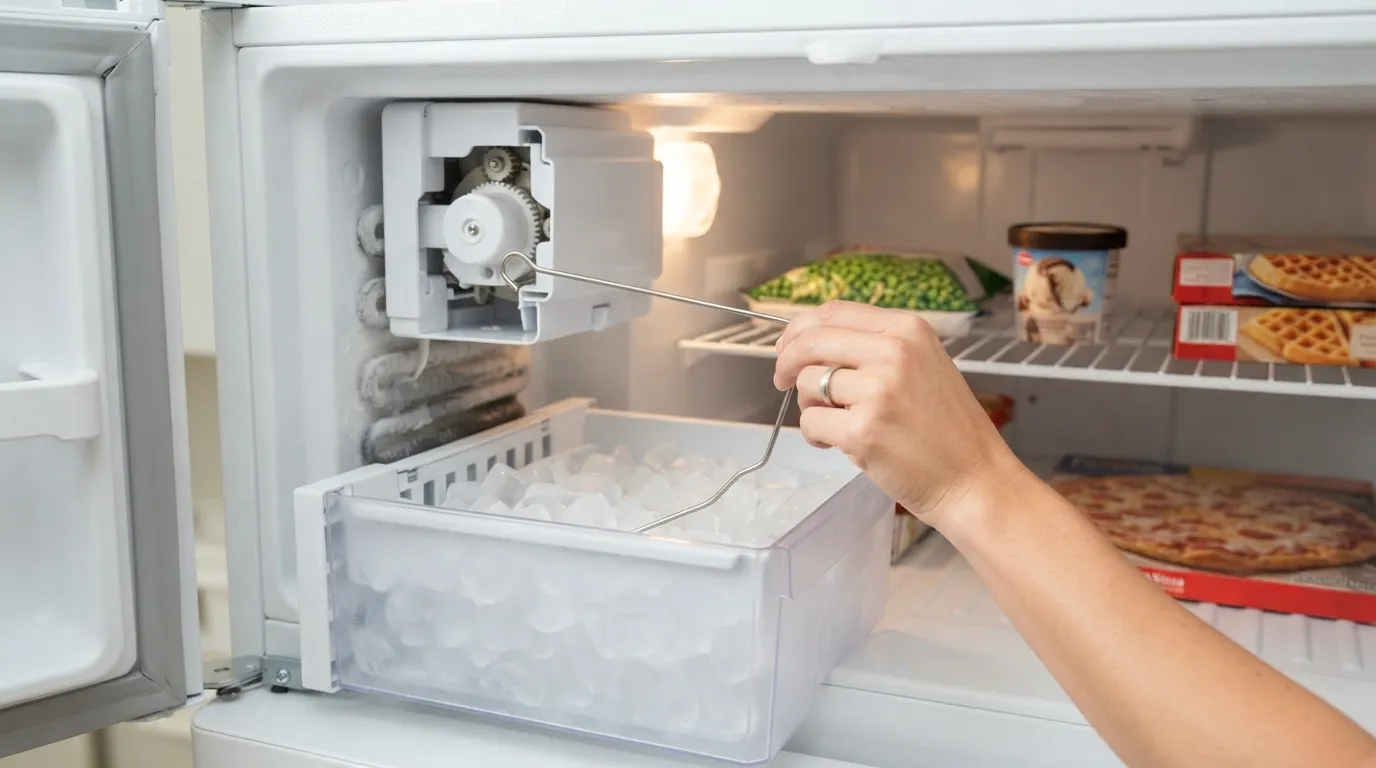
Check 1: The feeler arm (or the paddle)
Most ice makers shut off mechanically: a wire arm that rises with the ice level, or a paddle behind the dumping chute. Arm up means off. And arms get pushed up constantly, by a gallon of tea, a Costco lasagna, or the ice bin going back in crooked.
Push the arm gently down, or make sure nothing is pressing the paddle, and give it a couple of hours. If you hear water fill and a cycle start, you’re done, and you owe the internet nothing.
Check 2: The freezer temperature
Ice makers are divas about temperature. They want the freezer at 0°F, and production falls off hard above about 5°F. A freezer that creeps warm (packed door shelves, a gasket losing its grip, a door left cracked overnight) will make small cubes, then hollow cubes, then none.
Put a $10 appliance thermometer in there instead of trusting the display. Give it overnight if you’ve been in and out of the door all day; a Saturday of Lake Waco cooler-packing swings a freezer more than people expect. If the freezer itself is warm the next morning, ice is your symptom, not your problem — go run the refrigerator-not-cooling checklist first, because the ice maker is just the first appliance in the house to complain.
Check 3: The water filter you forgot about
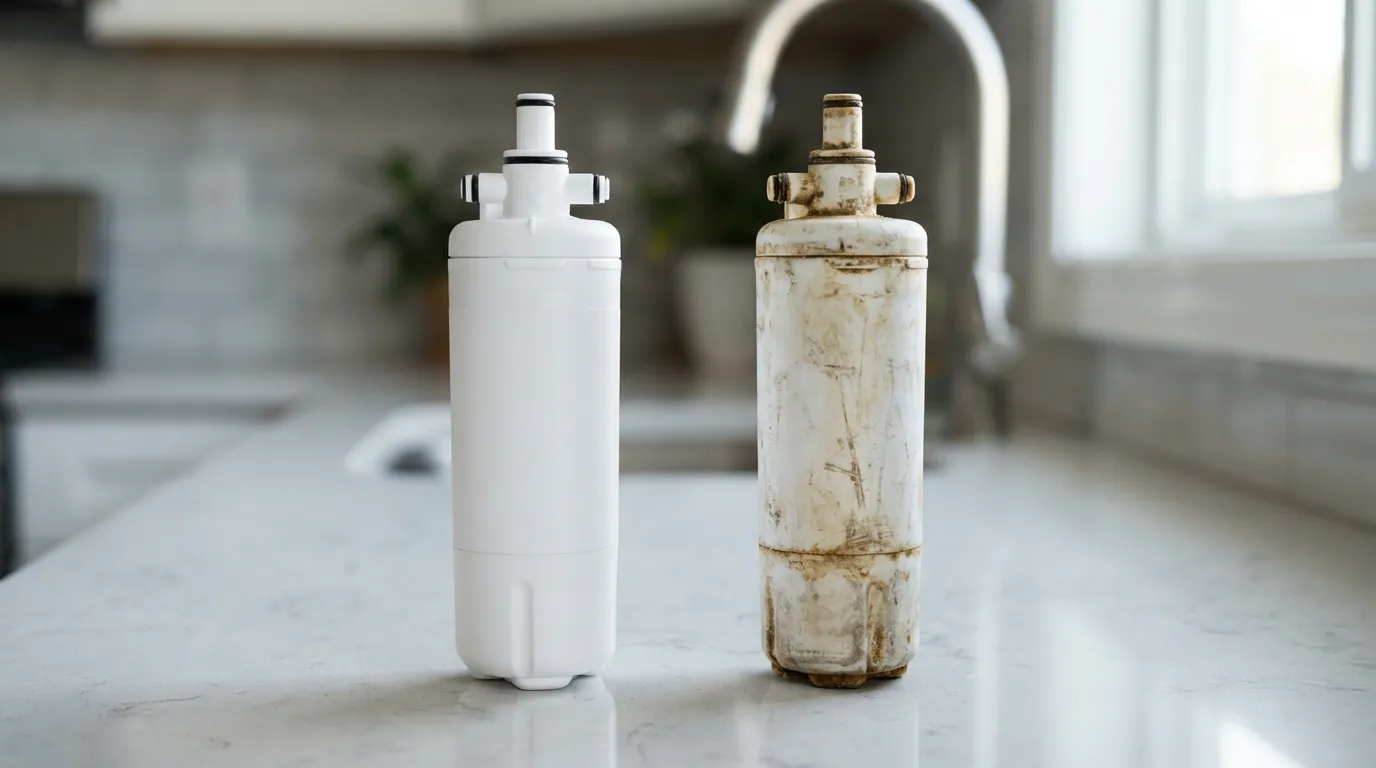
Here’s the one nobody wants to hear. When did that filter last get changed? The ice maker sits downstream of it, and a clogging filter starves ice production before it ever slows the water dispenser. Cloudy, small, or oddly-tasting cubes are the early warning.
Manufacturers say every six months. In Central Texas water, treat that as a ceiling, not a suggestion. Our water carries enough minerals that filters load up early, and the same scale that crusts your dishwasher is at work here; we laid out what hard water does to appliances in its own post, and the ice maker is usually the first casualty. A $30–$50 filter is the cheapest ice maker repair there is.
Check 4: The water line
Pull the fridge forward gently and look at the thin supply line. The classic Waco version of this problem: the fridge got pushed back hard after mopping day, and the line’s been pinched ever since. Straighten any kink and make sure the little shutoff valve behind the fridge (or under the sink) is fully open.
One caution: if the line is frozen where it enters the freezer, don’t attack it with a hair dryer. A frozen fill tube is a symptom, usually of a slow valve or a temperature problem, and thawing it without fixing the cause buys you a week.
Where you stop: the valve, the module, and anything electrical
If the arm’s down, the freezer’s at 0°F, the filter’s fresh, and the line runs clean and open, you’ve earned the right to stop. What’s left is the inlet valve (the electrically-controlled valve that meters water in, and hard water’s favorite victim), the ice maker module itself, or a wiring fault. All of that is refrigerator repair work: parts that mix water and electricity, behind panels, with live connections.
Typical Central Texas range for valve or ice maker work: $150–$400, diagnosed in writing before anything gets replaced. Fair warning about how this trade works: modules usually get replaced whole rather than repaired at the component level. It feels wasteful, we agree, but one $200 module beats three service visits chasing a gremlin through a part that costs less than the labor to rebuild it.
It’s a bread-and-butter call for us. Paul B. flagged us down for exactly this, an ice maker repair, and got the fix priced in writing with no drama. That’s the whole playbook.
Keep it making ice: three two-minute habits
Once yours is running again, three habits keep it that way.
Dump the bin monthly. Old cubes fuse into a glacier, shrink, and soak up freezer smells. A fused clump can also prop the feeler arm up and shut the whole thing off, which restarts this article from the top.
Empty it before the party, on purpose. A bin-emptying the night before a cookout forces a full fresh production run and tells you today, not at noon Saturday, whether the system’s healthy.
Put the filter on the calendar. Six months, sooner if the cubes go small or cloudy. It’s the single cheapest thing you can do for every water-fed part in the fridge.
None of that requires a screwdriver. It’s the boring maintenance that keeps our number out of your phone, which we’re told is bad marketing and continue to recommend anyway.
Common questions about ice makers
Why is my ice maker not working but the water dispenser is?
How do I reset my ice maker?
How often should I replace the water filter?
How long until it makes ice again after a fix?
Where to go from here
Arm, temperature, filter, line. Ten minutes, no tools, and most ice makers surrender somewhere on that list. If yours holds out, request service or call and we’ll bring the diagnosis and a written quote to your kitchen — same-day slots are often available across the Waco area, and repairs carry a 10% senior and military discount.
The On Point Team · On Point Service Company — family-owned HVAC & appliance repair, McGregor, TX · Serving Waco, Temple, Belton, and surrounding Central Texas towns · Licensed & insured, TDLR License TACLB00069239E ·