



Replacing a gas furnace in Central Texas typically runs $3,000 to $7,500 installed. The low end is a basic 80% efficiency single-stage unit going into an easy spot; the high end is a 96%+ two-stage with new venting or awkward access; and high-end modulating systems can push past it. Most homes around here land between $4,000 and $6,000, equipment and labor together.
That’s the short version. The long version is worth ten minutes, because the difference between a fair $4,800 and a padded $7,200 hides in details you can absolutely learn to spot: the efficiency tier, the venting, the sizing math, and the quote itself.
The short answer: what a new furnace costs installed
For a typical Central Texas home replacing a gas furnace like-for-like, budget $3,000 to $7,500 installed, with most jobs landing in the middle. The equipment itself is often less than half of that number. The rest is labor, venting, code items, permit, and the unglamorous sheet-metal work that decides whether the system actually breathes.
Two warnings about internet numbers, ours included. First, “furnace cost” figures you’ll see elsewhere often quote the box alone, which is like pricing a wedding by the cake. Second, every range on this page is an industry-typical figure for our area, not a quote. The real number for your house comes in writing, after someone has actually looked at your house.
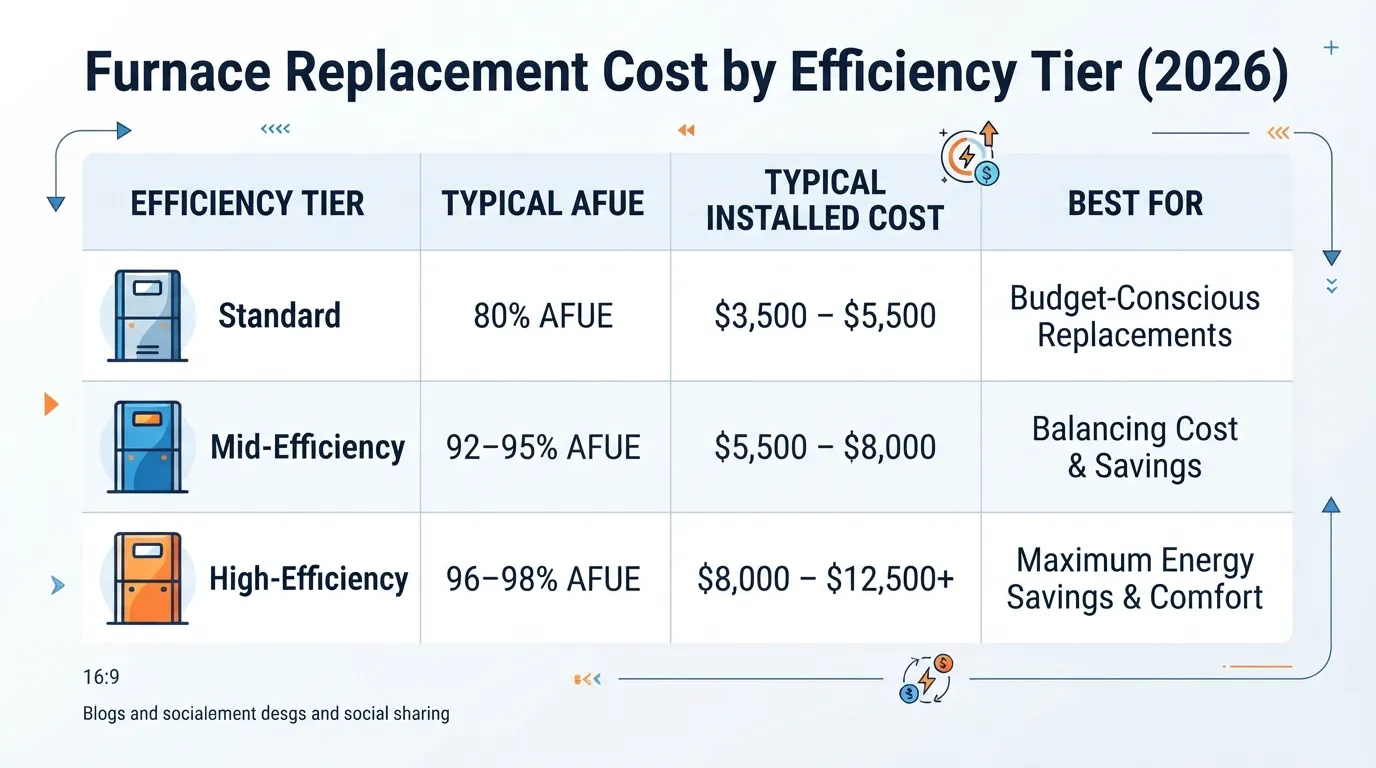
Furnace replacement cost by tier
| Unit tier | Typical installed range | What changes it |
|---|---|---|
| 80% AFUE, single-stage | $3,000–$5,500 | Reuses existing metal flue; easiest like-for-like swap |
| 90–96% AFUE, two-stage | $4,500–$7,500 | Needs PVC intake/exhaust + condensate drain if upgrading from 80% |
| 96%+ AFUE, modulating, variable-speed | $6,500–$10,000+ | Controls and thermostat compatibility, brand tier, comfort features |
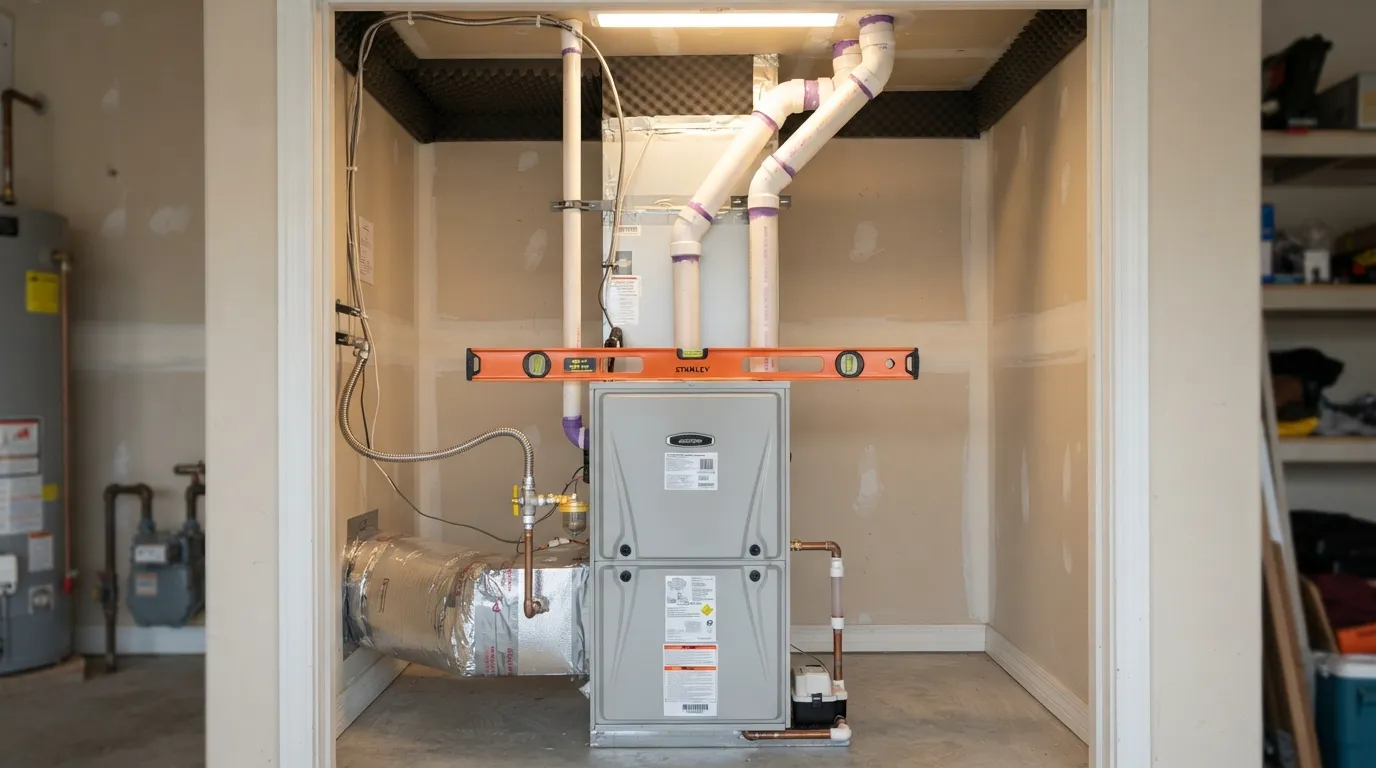
Read the middle column twice. The jump between tiers isn’t only the sticker on the box; it’s what the house needs to accept that box. An 80%-to-80% swap in a garage closet is a clean day’s work. An 80%-to-96% conversion adds venting runs and a drain, and the labor moves with it.
Brand matters less than the installer, and we’ll die on that hill. A mid-tier furnace installed with a proper load calculation and sealed ducts will outperform a premium unit slapped in crooked, every time, for years.
What moves the number up or down
Size (BTU rating). Bigger furnaces cost more. But the right size is a calculation, not an upgrade decision; more on that below.
Venting changes. The big one in our market. Moving from an 80% furnace to a condensing 90%+ unit means new PVC intake and exhaust runs plus a condensate drain. Depending on where your furnace lives, that’s anywhere from simple to genuinely invasive.
Location and access. A furnace in a garage or hallway closet is friendly. A furnace platformed in a Waco attic, reached through a scuttle hole, adds hours, and hours are money.
The ductwork it connects to. If the plenums are rusted or the ducts leak, tying a new furnace to them wastes some of what you just bought. Sometimes the quote should include duct repair. It’s not padding when it’s real; ask to be shown.
Code and safety items. Gas flex connector, shutoff, drain pan, float switch, smoke/CO requirements, permit. Individually small, collectively real, and a quote that skips them isn’t cheaper, it’s incomplete.
Time of year. Crews are slammed during the first freeze and slammed again in summer. A planned replacement in the shoulder months buys you scheduling room and a calmer decision.
AFUE, without the sales pitch
AFUE (Annual Fuel Utilization Efficiency) is the share of your gas that becomes heat in the house instead of going out the flue. An 80% furnace turns 80 cents of every gas dollar into warmth; a 96% furnace turns 96 cents. The Department of Energy’s furnace guidance explains the rating system if you want the full mechanics.
The honest arithmetic: moving from 80% to 96% buys the same heat for about 17% less gas. That is real money and a genuinely better machine. It is also, and here’s what the brochures skip, a percentage of a number that’s small in Texas to begin with.
The Texas asterisk on high efficiency
A furnace in Minnesota runs half the year, so 17% gas savings compounds fast and the 96% unit pays for its premium. A furnace in McLennan County works hard for maybe two or three months, idles through the shoulder seasons, and spends summer as a very expensive fan cabinet for your AC.
So here’s an opinion most installers won’t hand you: in Central Texas, buy the 90%+ furnace for comfort, quiet, and staging, or because your venting situation already suits it. Don’t buy it expecting the gas savings alone to repay the premium quickly, because with our short heating season, the payback is slow. If the budget is tight and the furnace is in a spot where 80% venting already exists, a quality 80% unit installed well is a defensible, grown-up choice, not a consolation prize.
The trade-off runs the other way too, to be fair: two-stage and modulating furnaces heat more evenly and run quieter, and if you’ve lived with rooms that lurch between cold and roasting, that comfort is worth paying for on its own merits. Just buy it for the right reason.
Repair or replace: the math that decides
The rule we use in every quote conversation: take the repair estimate, double it, and if that beats the installed price of the furnace you’d actually buy, repair. Then let age adjust the answer.
Furnaces last 15 to 20 years. ENERGY STAR’s guidance suggests a furnace older than 15 years is a replacement candidate, and our field experience agrees with the bracket.
Under 10 years old: repair, almost always. Even the expensive parts buy real years
10 to 15: the 50% rule decides, honestly run. Cheap ignition parts, fix. Blower motors and boards, do the math with a clear head.
15 to 20 and beyond: spend nothing serious. A cracked heat exchanger, a dead blower, or a second major failure in one season at this age is the machine resigning. Accept it.
Two flags accelerate the schedule. Rust is the loud one: a corroding cabinet usually means moisture that’s been aging the internals ahead of the calendar, and we covered why in furnace rust and corrosion. Repeated repairs are the quiet one: part-by-part costs are in our furnace repair cost breakdown, and if you’ve bought two rows of that table in eighteen months, stop buying rows.
The decision framework is the same one we published for cooling in is a 10-year-old AC worth repairing, and the diagnostic visit that produces your real numbers works the way service call fees always work: quoted up front, explained in writing.
Should you swap to a heat pump instead?
In a mild-winter climate, this question belongs in every furnace replacement conversation, and it mostly doesn’t get asked.
The case for the swap: Central Texas winters are short and usually gentle, which is exactly the weather heat pumps are best at. If your AC is also past 12 years old, one heat pump system replaces both aging boxes at once, and you stop buying gas for heat entirely. Cooling is the machine’s main job here anyway.
The case against: heat pump supply air runs milder than a gas furnace’s hot blast, which some people never stop missing. Electric rates versus gas rates decide the operating cost, and that math shifts. And in a deep freeze, heat pumps lean on electric backup strips, which are pricey to run for the few days a decade we genuinely need them. Dual-fuel setups (heat pump plus a gas furnace as the cold-snap backup) exist and are great, but they’re the premium path, not the budget one.
Our honest sorting: young AC and a dead furnace, replace the furnace and move on. Both systems old, get the heat pump conversation into your quotes and compare real numbers side by side. The cooling-side version of the install math is in our AC installation cost in Waco guide.
Sizing: the step that decides the next 20 years
Furnace capacity is measured in BTUs, and the correct number comes from a load calculation (the industry calls it a Manual J): square footage, insulation, windows, ceiling heights, orientation, and how leaky the house actually is.
The two shortcuts that ruin installs: matching whatever size was in the closet before, and rounding up “to be safe.” The first assumes the original builder got it right and your house hasn’t changed; if you’ve added insulation or replaced windows since, the right furnace today may be smaller. The second creates a machine that blasts, satisfies the thermostat in minutes, and shuts off before the air ever mixes: short cycling, uneven rooms, and extra wear on the parts that fail first.
If a quote arrives without anyone measuring anything, that quote is a guess with a dollar sign. This is the single easiest way to separate installers, and it costs you one question: “how did you size it?”
Buying it well: quotes, timing, financing
A real furnace replacement quote has five things in writing: the load calculation result, the exact model numbers (the real ones, not “a 96% furnace”), the venting plan, the code items and permit, and the total with no asterisks. That’s the standard our furnace replacement visits are built around, and we offer free estimates on new system installations, so comparing us against anyone costs you nothing but an afternoon.
On timing: if the furnace is limping rather than dead, replace it in the shoulder season on purpose. October and the early spring months mean open calendars and time to compare quotes; the first cold snap means everyone in the county calling at once. A planned replacement is a better-bought replacement, and it’s also how you avoid heating the house with space heaters for a week in January.
On money: flexible financing available; ask when you book and we’ll walk you through the current options. And take the price-match policy seriously; it exists so you never have to choose between the quote you trust and the number you found.
One more honest line, because it’s the one people thank us for later: the cheapest bid is sometimes the most expensive furnace you’ll ever buy. If a number comes in far under everyone else’s, the difference is usually hiding in the sizing, the venting, or the permit that never got pulled.
Common questions about furnace replacement cost
How much does it cost to replace a furnace?
How long does furnace installation take?
Is a 96% furnace worth it in Texas?
How long do furnaces last?
Can I replace the furnace and keep my AC?
Does furnace replacement include new ductwork?
Where to go from here
Furnace replacement cost is four decisions wearing one price tag: tier, sizing, venting, and installer. Get the load calculation, get model numbers in writing, and let the Texas math (short winters, honest paybacks) pick the tier without brochure pressure. When you’re ready for real numbers, get a straight answer and a written quote or call . Free second opinions apply here too; more than one Belton homeowner has used one to un-buy a furnace two sizes too big.
The On Point Team · On Point Service Company — family-owned HVAC & appliance repair, McGregor, TX · Serving Waco, Temple, Belton, and surrounding Central Texas towns · Licensed & insured, TDLR License TACLB00069239E ·