


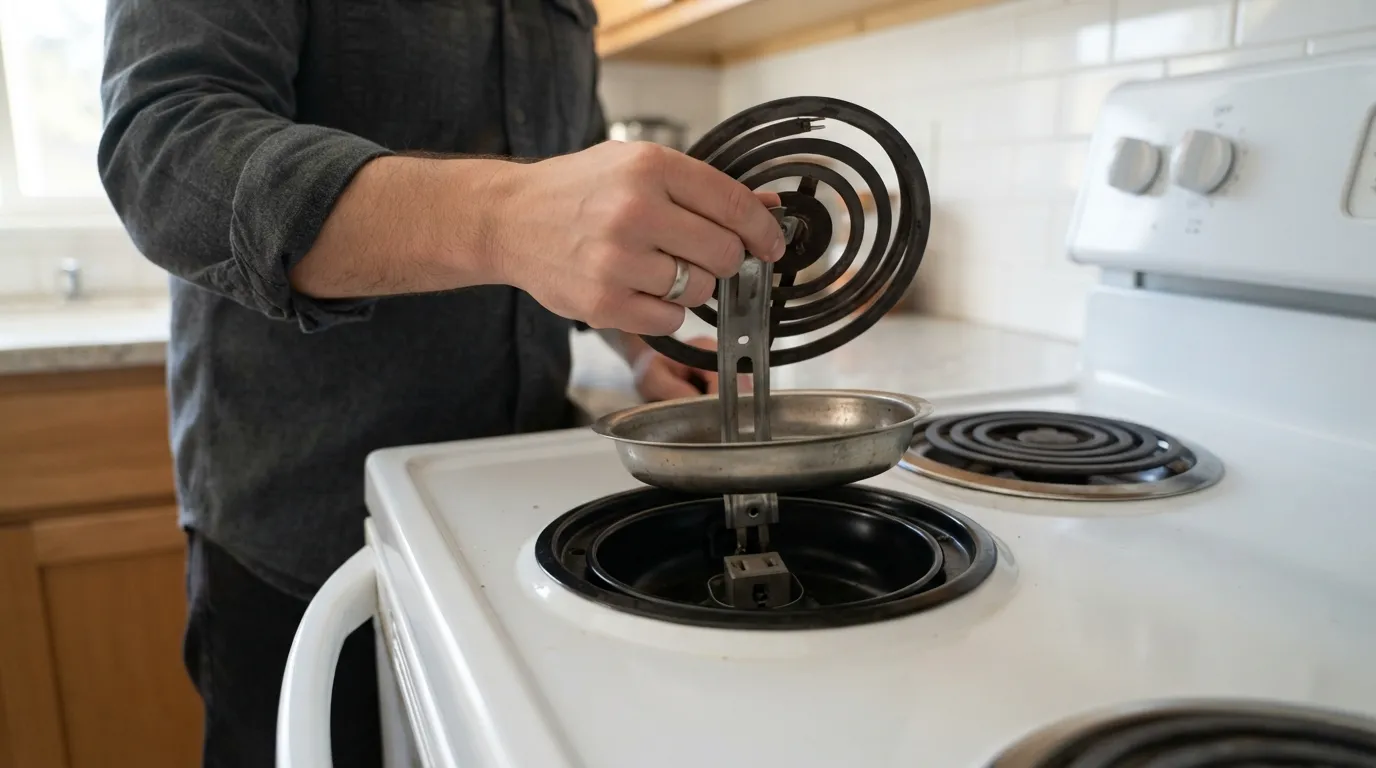
An electric stove burner not working comes down to four suspects: the coil itself, the receptacle it plugs into, the switch behind the knob, or the power feeding the stove. On a coil-top stove, one two-minute test (swapping the dead burner with a working one) tells you which, no tools involved. Glass-top stoves play by different rules, and we’ll get to them.
Here’s the test, what each result means, and exactly where the safe DIY ends.
First, the 60-second basics
A stove burner not working is occasionally a stove burner not asked properly. Thirty seconds on each of these before anything else:
The knob. Some models need the knob pushed in before turning, and a knob that’s a hair off its stem can feel on without being on.
The seating. Coil burners work loose; a big canning pot or an enthusiastic scrub can walk the terminals halfway out of the receptacle. With everything cool, press the coil firmly back in.
The breaker. Ranges run on a double 240-volt breaker, and one leg can fail while the other keeps the clock alive. Flip it fully off, then on. Weak, half-hearted heating across several burners is the classic one-leg symptom — the same panel gremlin we chase in breaker-tripping AC calls, wearing an apron this time.
Still cold? Run the test.
The swap test, step by step
This works on any stove with plug-in coil burners, and it’s the exact first move a tech makes.
- Kill the heat. Everything off, burners fully cool.
- Unplug the dead burner. Lift the coil slightly and pull it straight out of its receptacle. It slides out like a plug from an outlet, because that’s what it is.
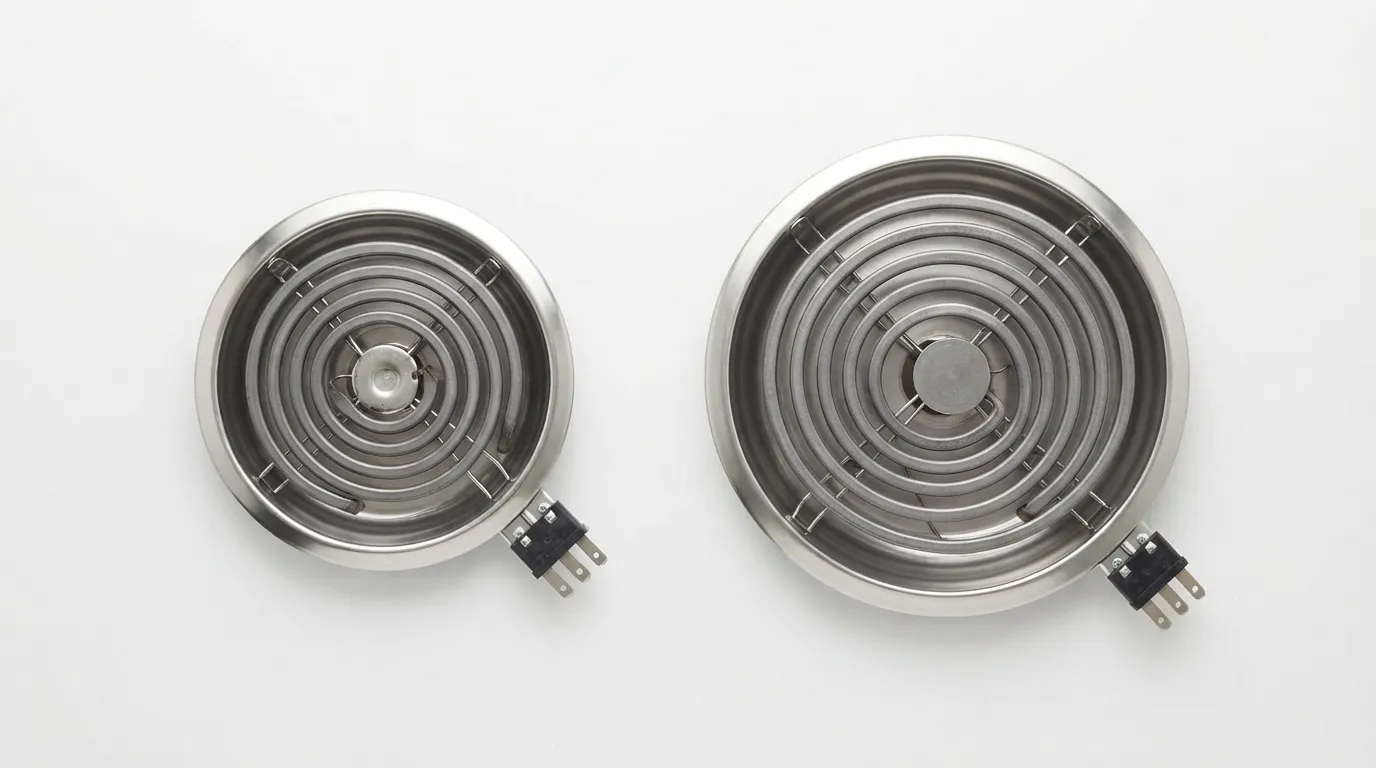
- Borrow a working burner of the same size. Six-inch for six-inch, eight for eight.
- Plug the borrowed burner into the dead spot. Push firmly, terminals fully seated.
- Test it on medium. Give it a minute.
Borrowed burner glows? The spot is fine; your original coil is dead. That’s the good ending: a coil is a $20–$40 part.
Borrowed burner stays cold too? The problem is in the receptacle or the switch, and the DIY portion of this story is over.
Good ending: replace the coil yourself
Here’s an opinion we’ll put in writing: the plug-in coil swap is the one stove repair every homeowner should do themselves, and anyone who charges you a service visit for it is charging for a handshake. There’s nothing to open, nothing to wire, no panel between you and done. Unplug the old coil, match the size, plug in the new one. It’s a lamp with ambitions.
Any hardware store around Waco stocks universal coils, or take the model number (on the sticker inside the drawer or door frame) and get the exact fit. Two honest notes: buy the right wattage rather than the biggest, and if the receptacle the coil plugs into looks scorched or crumbly, stop; that’s the next section, and a new coil won’t outrun burned contacts. Whirlpool’s element care guidance says the same thing in politer words.
Bad ending: the switch or receptacle (this is where you stop)
If the borrowed burner also stays cold, the failure lives behind the stove’s skin: the receptacle block the coil plugs into, or the infinite switch behind the knob that meters power to it. Both are cheap parts. Neither is a DIY job, and we’re not being precious about this.
Reaching them means pulling the range out and opening panels with live 240-volt wiring behind them. A range circuit carries enough current to put you down, and it doesn’t announce which terminals are still hot. The repair itself typically runs $100–$250 in Central Texas, parts and labor, quoted in writing before anyone touches a screw. Against what a mistake costs, that’s the cheapest number in this post. Get a written quote for the burner repair and spend your Saturday on something better.
The same stop-line covers scorched receptacles, melted wire insulation, and any repair that involves the words “just splice it.” No splicing. Not on a range.
Glass-top stoves play by different rules
No plug-in coils under that glass, so no swap test. A radiant element or its control can fail and show the same cold-burner symptom, but confirming which means opening the cooktop — tech territory, same reasoning as above.
Two glass-top notes worth having before you call anyone, though. First: a burner that cycles on and off, glowing then dimming, is usually working correctly — that’s the temperature limiter doing its job, not a fault. Second: a burner stuck on low or dead across multiple zones often traces to the control board rather than the elements, which changes the repair math on an older stove. If yours is pushing the far side of its lifespan, read the signs a stove is worth replacing before sinking board money into it.
When it’s every burner, or the whole stove
One burner is a burner problem. Every burner, plus a dead clock, is a stove problem: power, cord, terminal block, or the house side of the wall. Flip the breaker fully off and on, check that the plug hasn’t been shoved loose behind the range, and then work our oven and stove troubleshooting hub from the top, because the fix might have nothing to do with burners at all.
We run these calls from Lorena to China Spring, and the split is remarkably steady: half end at a $30 coil, most of the rest at a switch or receptacle. Very few end at a new stove. That’s worth remembering when the skillet’s cold and the mind starts pricing appliances.
Common questions about a burner that won’t heat
Why is one burner not working on my electric stove?
Can I replace a stove burner myself?
How much does it cost to fix a stove burner?
Why does my glass top burner turn on and off while cooking?
Where to go from here
Basics, swap test, verdict: coil means you fix it for $30, anything deeper means a quote before a repair. If the test pointed past the coil, tell us what you found or call — a straight answer costs nothing, and same-day slots are often there when the schedule allows.
The On Point Team · On Point Service Company — family-owned HVAC & appliance repair, McGregor, TX · Serving Waco, Temple, Belton, and surrounding Central Texas towns · Licensed & insured, TDLR License TACLB00069239E ·