






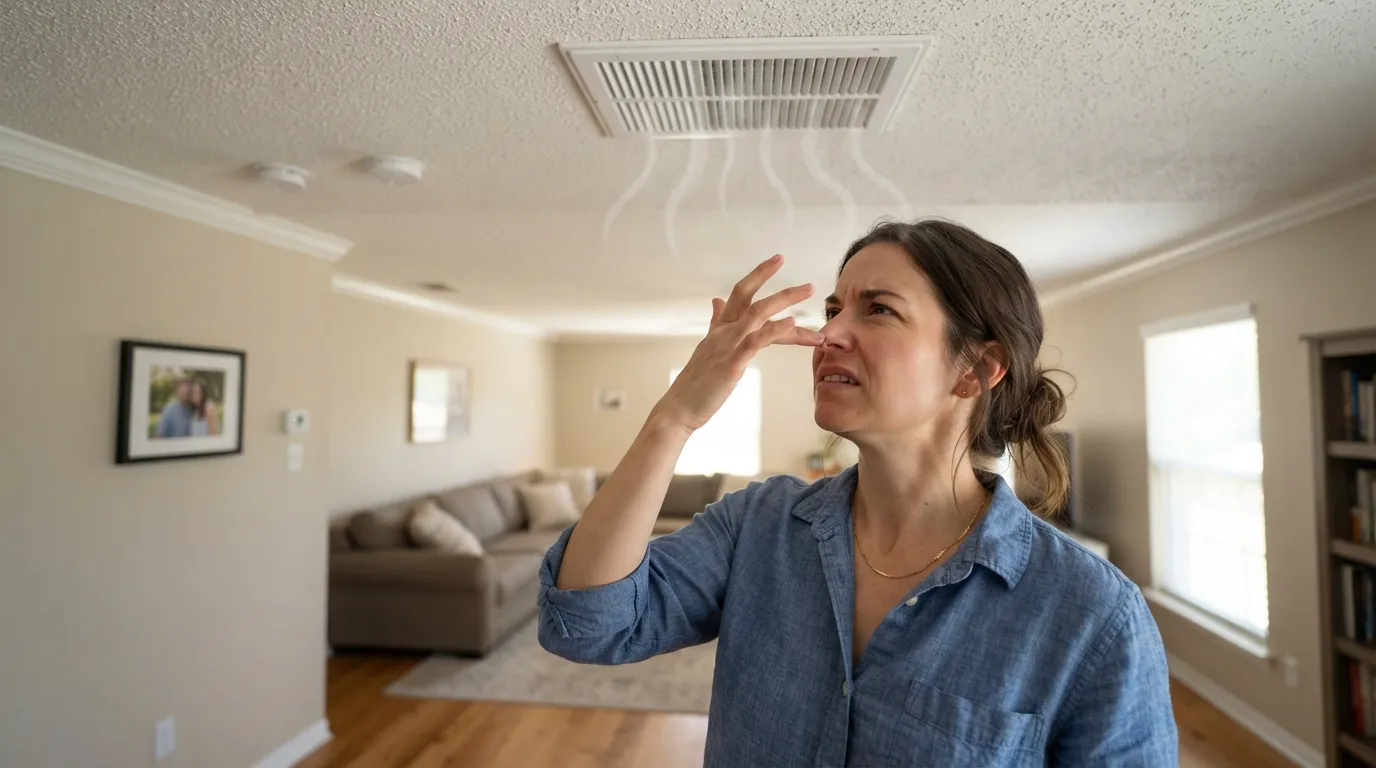
A musty smell from your AC means moisture is sitting somewhere it shouldn’t: a damp evaporator coil, a sludgy drain pan, or a clogged condensate line quietly growing things. It’s fixable, usually this weekend. A burning smell is the opposite kind of problem: switch the system off at the thermostat now and get it looked at, because “wait and see” is not a strategy for electrical smells.
Two smells, two speeds. Here’s both playbooks.
Why your AC smells musty (and why it’s always moisture)
Your indoor coil pulls gallons of water out of Central Texas air every day, which makes the coil cabinet the dampest, darkest corner of your house. Add the dust that sneaks past a tired filter and you’ve built a terrarium. Mildew moves in, and every cooling cycle mails you the sample.
Humid stretches make it worse; those soupy weeks around Lake Waco in early summer are peak season for this call. So does spring, when oak pollen packs filters and coils faster than anyone expects. The EPA’s guidance on mold is blunt on the underlying rule: control the moisture and you control the growth. Everything below is just that rule with steps.
The 15-minute smell hunt
- Pull the filter. A damp, gray, matted filter can be the entire smell. Swap it and run the fan; if the odor fades over a day, you’re done.
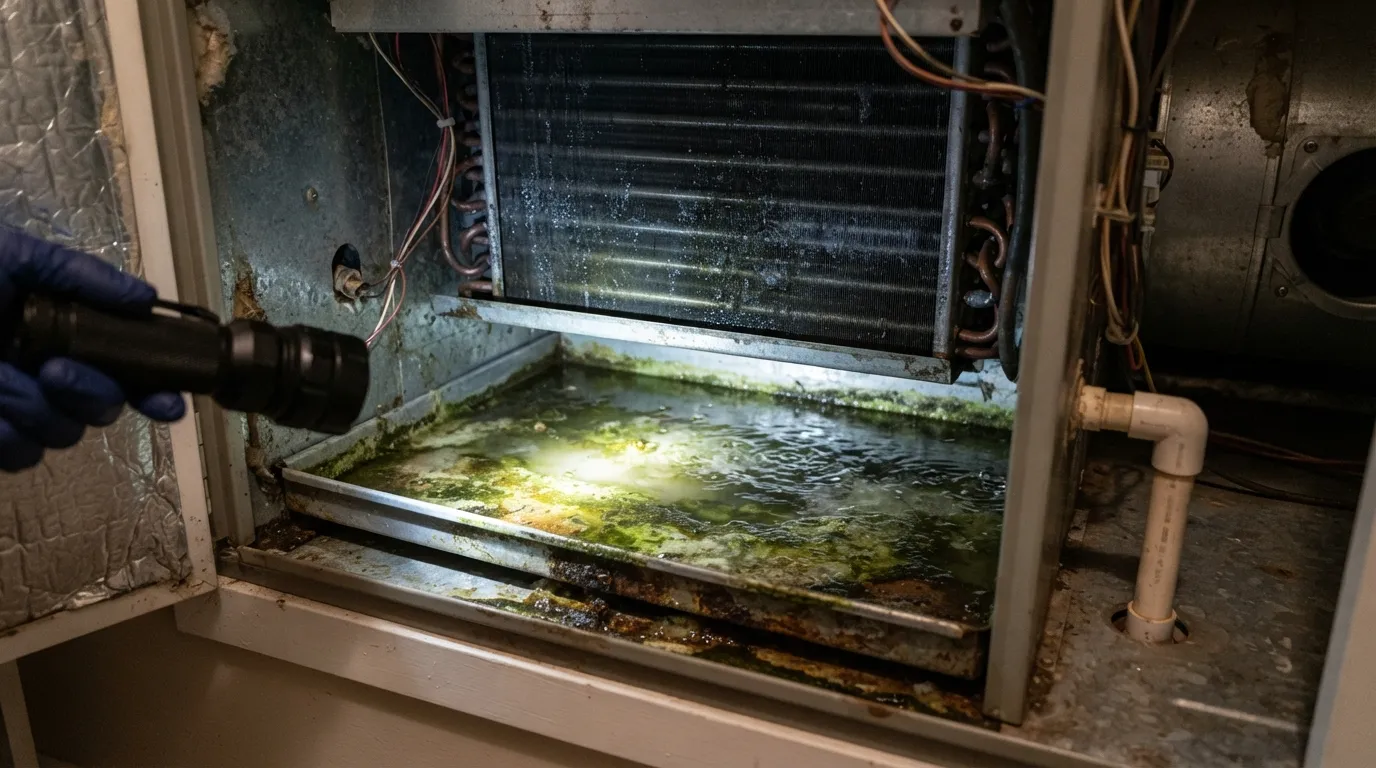
- Look at the drain pan. Standing water with a film on it is a stink factory. Sponge it out, wipe it down.
- Check the condensate line. If the pan refills or drains slowly, the line’s clogging; that same standing water is the smell’s water supply. The fix is a cup of vinegar and some suction, and it’s DIY you’re genuinely allowed to do; the full routine lives in our AC drain line cleaning guide.
- Smell the closet vs. the vents. Odor strongest right at the air handler points to coil or pan. Odor only from one or two room vents points at duct moisture, which is a pro look.
If water’s actually pooling around the unit rather than sitting quietly in the pan, you’ve graduated to a different article, our AC leaking water guide, and the smell will fix itself once the water does.
Dirty sock syndrome, by name
If the funk is sharper than musty (locker room, gym bag, wet dog), HVAC people have a technical term for it: dirty sock syndrome. Bacteria colonize the coil’s fins, and the smell blooms whenever conditions swing, classically in shoulder seasons when systems flip between heating and cooling from Lorena to Belton.
A filter won’t cure this one, because the colony lives on the coil itself. The real fix is a professional coil cleaning, which typically runs $150–$400 in our area depending on access. Here’s the honest trade-off nobody puts in the brochure: on some systems the smell comes back next season, because coil chemistry and duct moisture invite it back. UV lights mounted at the coil help keep it from re-establishing and are a reasonable add-on for repeat offenders — helpful, never magic. What we won’t tell you is that a $12 can of vent spray fixes it. Sprays are cologne on a gym bag: two weeks of vanilla, then the sock returns.
That’s also our stance on “deodorizing” duct treatments sold door to door. Fix the moisture. Skip the perfume.
AC smells burning: different rules entirely
Musty gets a checklist; burning gets a decision. Turn the system off at the thermostat immediately.
- Sharp, electrical, fish-adjacent smell: overheating wiring or motor insulation cooking. That one’s off-and-call, no exceptions; components that overheat once will do it again, hotter. This is licensed-tech territory, not a panel to open yourself.
- Dusty, toasty smell for a few minutes: that’s the classic first-cold-morning furnace smell, burn-off of a season’s dust. If it appears in cooling season, though, don’t borrow the furnace’s excuse; treat it as electrical until proven boring.
- Rubber or hot-plastic smell: often a belt or a straining blower motor. Off, then schedule.
A blower motor grinding toward failure frequently announces itself by smell and sound together; if there’s a soundtrack with your odor, our AC noise decoder pairs with this section.
And the one non-AC note that belongs here because noses find it during AC season: a rotten-egg smell isn’t your air conditioner — that’s the odorant added to natural gas. Leave the house and call your gas utility from outside. No troubleshooting step comes before that.
What a pro visit looks like for a smell
Good smell calls are detective work: coil inspection, pan and drain check, duct moisture look, and an honest verdict. Sometimes that verdict is “your coil needs cleaning,” sometimes it’s “your ducts are sweating in a 130° attic,” and sometimes it’s “a $20 filter habit ends this.”
Whatever it is, you should get it in a written assessment with a quote before any work happens — and if another company already diagnosed something dramatic, a second opinion here is free. Musty problems are real, and they’re also the single easiest upsell in this trade, which is exactly why the quote belongs on paper.
Common questions about AC smells
Why does my AC smell musty?
Can I spray something into the vents to fix the smell?
Is a burning smell from the AC dangerous?
What does dirty sock syndrome cost to fix?
Where to go from here
Musty: filter, pan, drain line, then coil — in that order, most of it yours to do. Burning: off now, diagnosed soon. If your nose says it’s past DIY, request a written quote or call for a straight answer, with our 10% senior and military discount on repairs.
The On Point Team · On Point Service Company — family-owned HVAC & appliance repair, McGregor, TX · Serving Waco, Temple, Belton, and surrounding Central Texas towns · Licensed & insured, TDLR License TACLB00069239E ·