






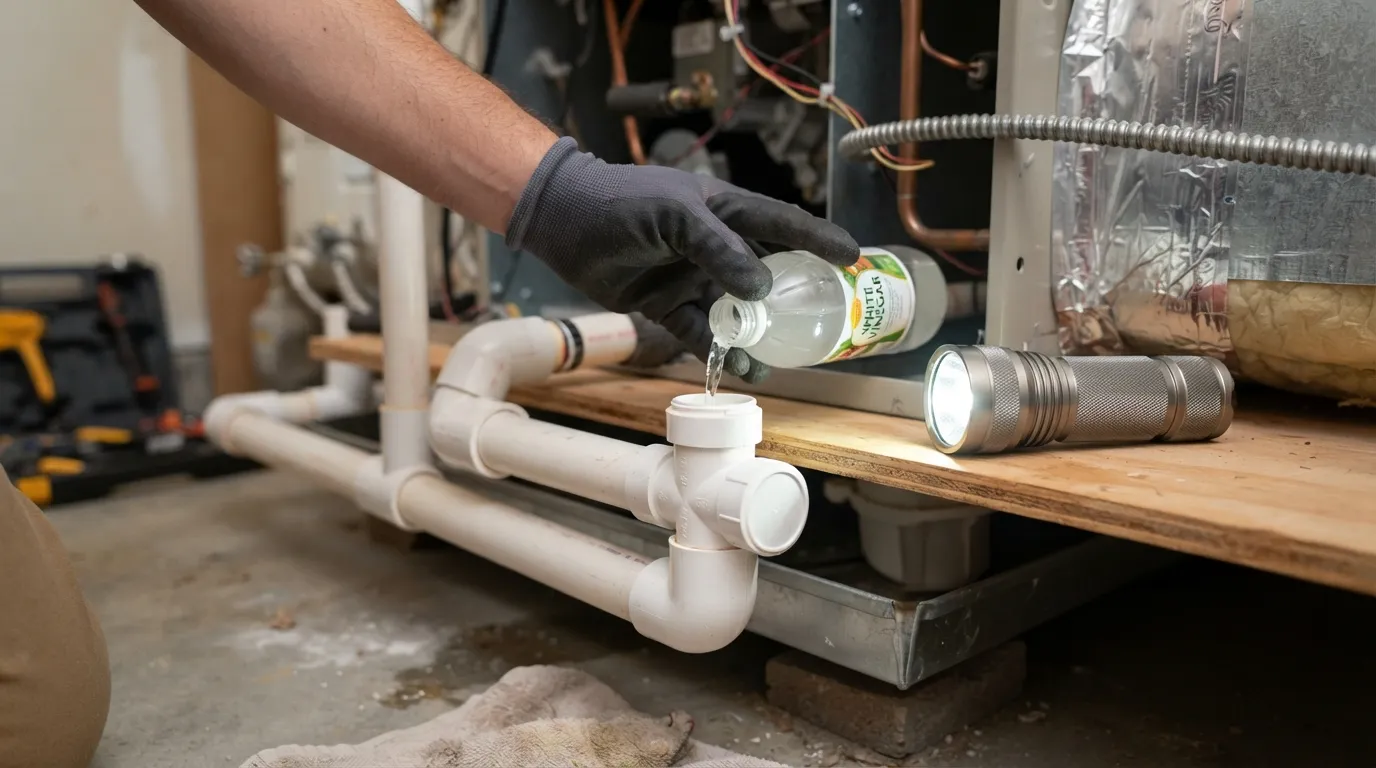
AC drain line cleaning is genuinely simple: find the PVC access tee near your indoor unit, pour in a cup or two of white vinegar, wait 30 minutes, and flush with water, twice a cooling season. That 10-minute habit prevents the clogged condensate line behind most “AC leaking water” calls we run, and it’s squarely on the short list of AC work you’re supposed to do yourself.
If every Central Texas homeowner did this on Memorial Day and Labor Day, we’d lose a chunk of our summer schedule and sleep fine about it. Here’s the routine, plus the honest version of the shop-vac trick.
Why this one chore earns its keep
Your AC pulls moisture out of the air all day (gallons of it in a humid Waco July), and every drop leaves through one modest PVC pipe. That pipe is dark, damp, and never dries out between June and September. Algae and bacterial slime treat it like a housing development.
When the line finally chokes, the water doesn’t stop coming; it backs up into the drain pan and then out onto whatever you love that sits below: hallway carpet, closet floor, or the ceiling under an attic unit. The repair math is lopsided in your favor: a jug of vinegar costs about $3, while the downstream version of this problem means a service visit plus, sometimes, drywall. We wrote up the mid-flood protocol in our AC leaking water guide; this article exists so you never need that one.
Find your drain line first
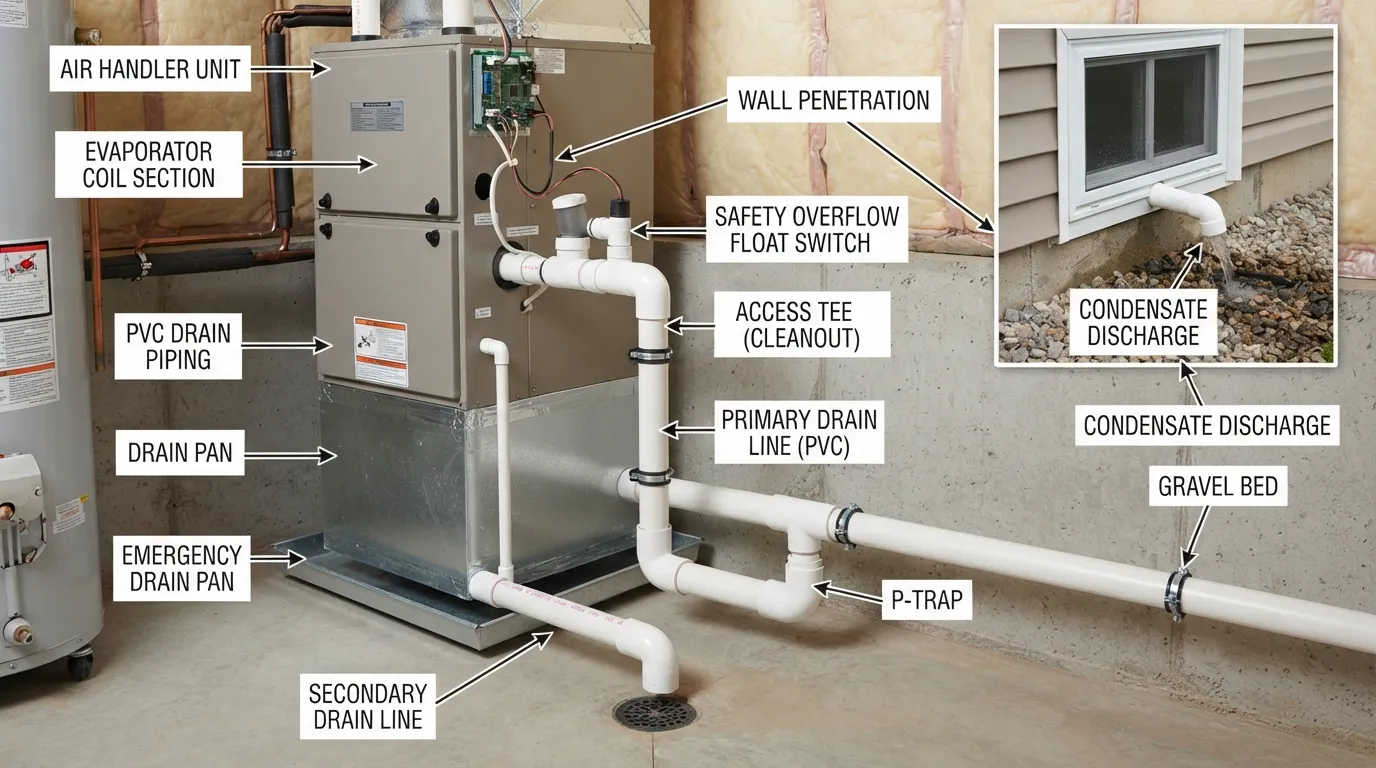
Three landmarks, one minute:
The access tee. Near the indoor unit (air handler in a closet, or the coil box on the furnace), look for white 3/4-inch PVC leaving the unit with an upside-down T fitting and a removable cap. That’s your pour point.
The outdoor exit. The same line ends outside near the foundation, often by a flower bed, dripping on humid days. A dripping exit is a working line. Bone dry during a muggy week the AC’s been running hard? Suspicious.
The float switch, if you have one. A small device on the pan or a raised section of the drain pipe. It kills the AC before an overflow; if your system “mysteriously dies” on sticky days, that switch may be saving you repeatedly and getting no credit.
The vinegar flush, step by step
- Turn the system off at the thermostat. No condensate flowing while you work.
- Pull the cap off the access tee.
- Peek in with a flashlight. Standing water in the tee means a clog is already forming downstream.
- Pour in 1–2 cups of plain white vinegar. Slowly, so it goes down the line instead of up into the pan.
- Wait 30 minutes. The acidity breaks down the slime. Go check the outdoor exit while you wait so you know where it should drain.
- Chase with a quart of water. If it flows freely and shows up outside, the line’s clear.
- Re-cap, restart, done. Put the next date on the calendar: twice a season in our humidity, spring startup and mid-summer.
That’s the entire skill. First time might take 20 minutes because you’re finding things; every time after is ten.
Why vinegar and never bleach? Bleach fumes in a small closet are unpleasant, it can be rough on some pan coatings and glued fittings over time, and the vinegar does the same slime-killing job without the collateral. Cheaper, gentler, no drama: the rare maintenance debate with a clean winner.
The shop-vac method, honestly assessed
Every list mentions the wet/dry-vac trick; fewer admit when it works. The move: outside at the line’s exit, seal the vac hose to the pipe end and run it for 2–3 minutes to yank the clog out backward. It’s genuinely effective on partial clogs — you’ll hear the slug of gunk arrive, and one look in the canister will make you a twice-a-season flusher for life.
The catch is the seal. Vac hose diameter never matches the pipe, and without a tight seal (a wrapped rag, a rubber coupling from the hardware store, or a palm pressed hard around it) the vac just breathes around the pipe and moves nothing. Two honest limits: a fully hardened blockage deep in a long run may not budge, and lines that run under slabs (common enough in older Waco ranch houses) give the vac a lot of pipe to fight through. Vinegar prevents; the vac rescues; neither is a guarantee on a line that’s been ignored for years.
Float switches: the $20 part that saves the ceiling
If your system has no float switch, put one on the list. It’s an inexpensive part, it installs cleanly during any service visit, and it converts “ceiling stain and a claim” into “AC won’t run until you clear the line” — an annoying afternoon instead of a repair bill with a deductible.
Already have one? When the AC quits on a humid day, check the pan and the switch before assuming a breakdown. Clear the water, and most switches reset themselves. That behavior pattern (dies, drains, runs again) is the switch pleading for exactly the flush this article teaches.
When the clog is past DIY
Some versions of this problem outgrow the vinegar jug, and pretending otherwise wastes your Saturday:
- The line won’t clear after vinegar plus a well-sealed vac attempt; the blockage may sit at the trap or inside the coil cabinet, where clearing means opening things up.
- Water returns within days every time. Repeat champions usually have a sag or a bad slope in the line where water pools and slime regrows; that’s a re-plumb, and it ends the cycle for good.
- The pan is rusty or cracked, so even a clear line leaks. Parts-and-labor fix, quoted in writing first.
- You can’t find or reach any of it — some attic installs are genuinely hostile.
A pro clear-and-treat typically runs $100–$250 around here, with pan or re-slope work quoted separately in writing before anything happens — that’s the standard at our air conditioner repair service, same as every visit. Drain treatment is also a line item in any decent seasonal service; our HVAC tune-up cost guide shows where it fits and what the whole visit should run.
Common questions about AC drain line cleaning
How often should I clean my AC drain line?
Should I use vinegar or bleach in my AC drain line?
How do I know my condensate drain is clogged?
What does professional drain line cleaning cost?
Where to go from here
Vinegar on Memorial Day, vinegar on Labor Day, and a glance at the outdoor drip when the weather turns sticky — that’s the whole discipline. If your line laughs at the flush or the pan’s seen better decades, request a written quote or call . Straight answer, honest scope, and a 10% senior and military discount on repairs.
The On Point Team · On Point Service Company — family-owned HVAC & appliance repair, McGregor, TX · Serving Waco, Temple, Belton, and surrounding Central Texas towns · Licensed & insured, TDLR License TACLB00069239E ·