



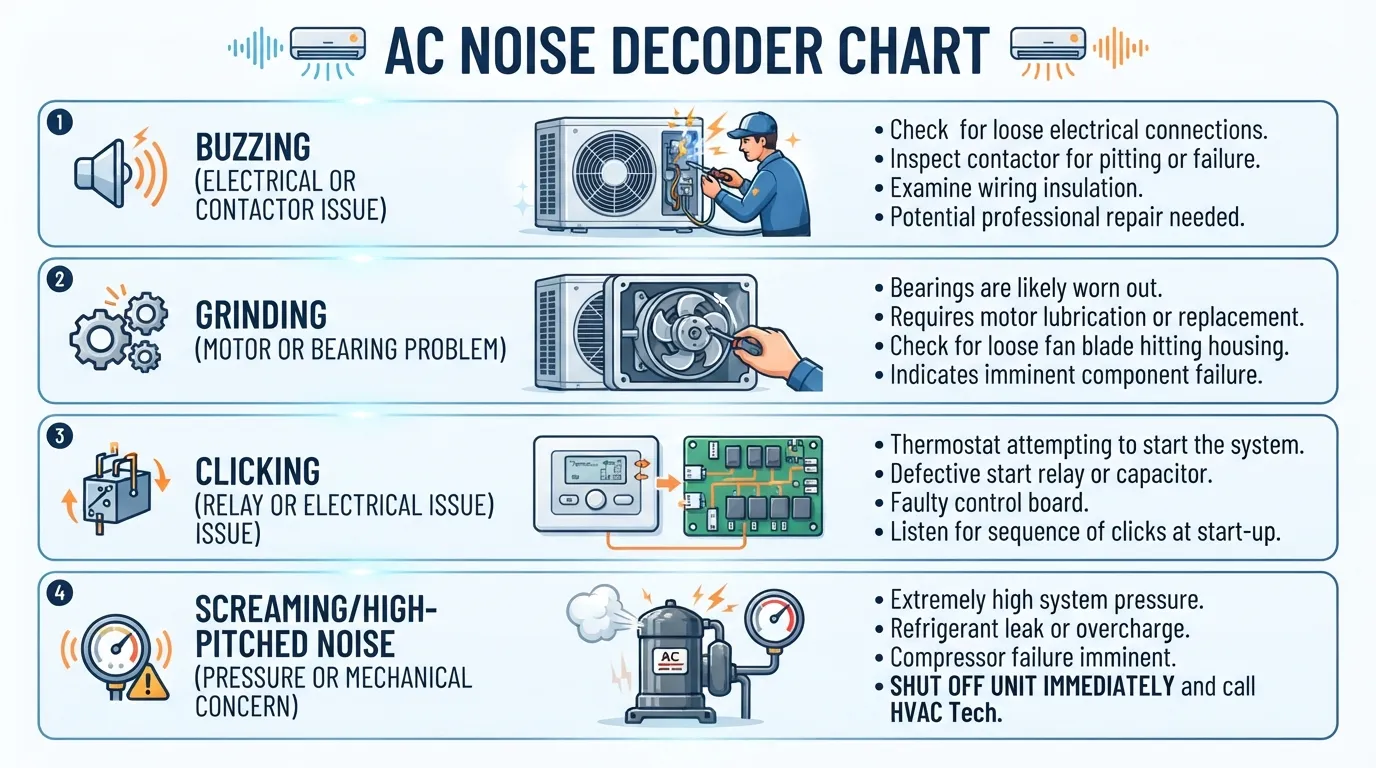
An AC making noise is telling you what’s wrong; the trick is matching the sound to the lane. Rattles and clicks are usually loose hardware or debris: annoying, rarely urgent. Buzzing points electrical. Grinding means a motor is eating its own bearings. And a scream or high-pressure hiss means shut it off at the thermostat now and make a call.
Here’s the decoder we’d run in your backyard, sound by sound.
The 10-second decoder
| Sound | Most likely cause | Your move |
|---|---|---|
| Rattle | Loose panel screws, debris in the unit | Tighten, clear it (DIY) |
| Click (once, at start/stop) | Normal relay operation | Nothing; that’s the AC talking |
| Click (rapid, nonstop) | Relay or control trouble | Schedule a tech this week |
| Buzz | Electrical: contactor, capacitor, wiring | Tech; don’t open the panel |
| Hum (won’t start) | Motor or capacitor straining | Turn it off and call; humming motors that don’t spin are cooking |
| Grind | Motor bearings failing | Turn it off soon, tech now |
| Squeal / scream | Blower belt or motor, or refrigerant pressure | Belt-pitch squeal: schedule. Metal scream or hiss: off, now |
| Gurgle | Refrigerant or condensate drain | Low-urgency, mention at next service |
Print that, stick it on the garage fridge, and you’re ahead of most of the internet. The sections below add the judgment calls.
Rattling: the mostly harmless bucket
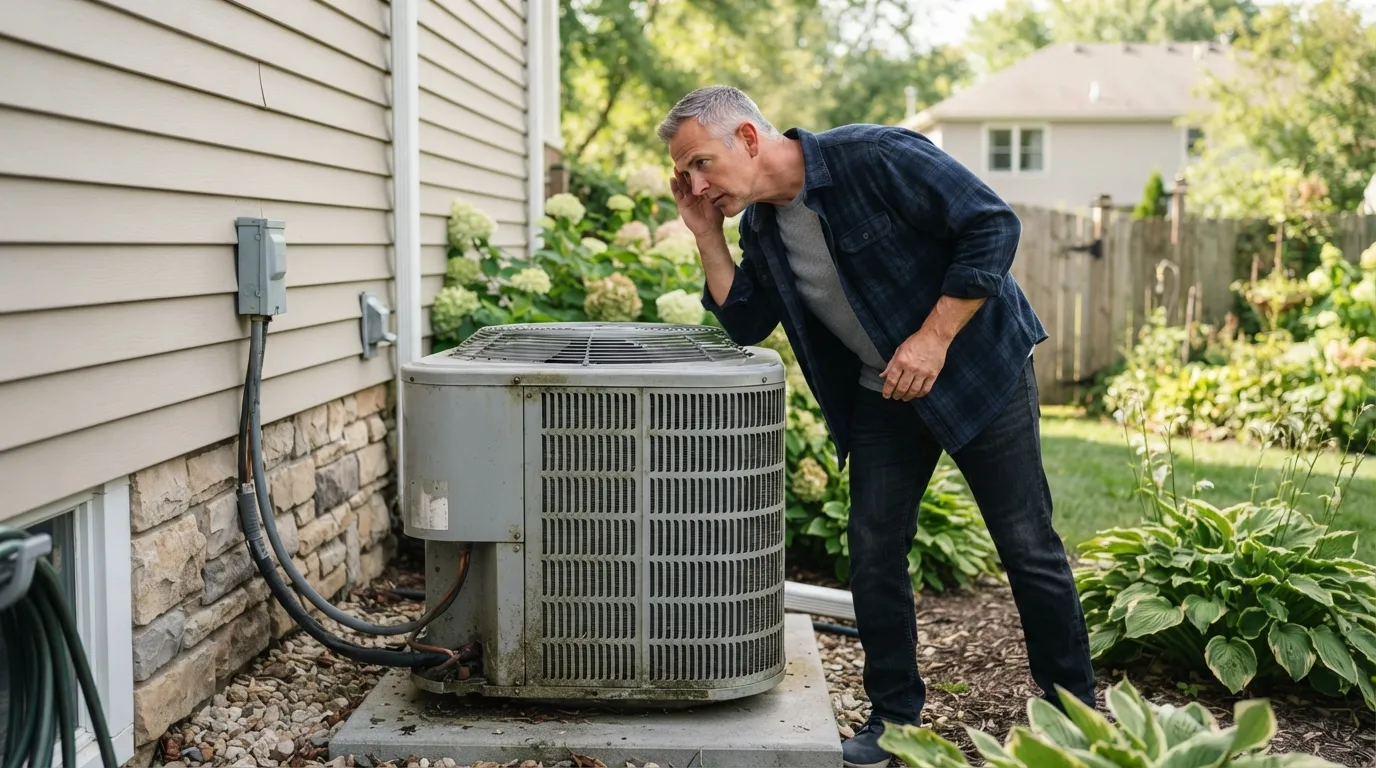
Outdoor units live a rough life here. Mowers throw pebbles at them, oaks drop twigs into them, and a spring hail run can leave a fan blade ticking against a bent guard. Most rattles are exactly that shallow.
Kill power at the outdoor disconnect box (the little pull-handle box on the wall by the unit), lift out visible twigs and leaves from the top grille, and snug the cabinet’s panel screws with a nut driver. Restore power. If the rattle survives, something inside (a fan blade, a mounting bracket, the compressor’s own feet) has worked loose, and that’s a quick professional visit rather than a deeper reach on your part.
One honest aside: a slightly noisy-but-functional unit isn’t a drop-everything problem, and nobody should pressure you into treating it like one. Rattles earn a spot on the to-do list, and that’s all.
AC buzzing: electrical territory, and where you stop
A steady buzz from the outdoor unit usually means electricity is somewhere it shouldn’t be, or a component is straining against failure — a pitted contactor chattering, a weakening capacitor, loose wiring, sometimes a compressor drawing hard against a bad start.
Here’s the line, stated plainly: don’t open the electrical panel on that unit. The capacitor inside stores a charge that stays dangerous after the power is off, and it does not care how many videos you watched. This is the one place we flat-out refuse to give steps, and any guide that walks you into that panel is doing you wrong. The Electrical Safety Foundation makes the same point about stored-charge components across the board.
What you can do: note whether the buzz happens while running or while failing to start, and whether the breaker trips with it. A buzzing unit that also keeps tripping the breaker is waving two red flags at the same wiring, and that combination moves it up the urgency ladder from “this week” to “today.”
AC grinding noise: bearings on borrowed time
Grinding is metal wearing metal: almost always the bearings in the condenser fan motor or the indoor blower motor. It tends to start as a rough whir on hot afternoons and graduates to a coffee-grinder growl over weeks.
Caught early, a motor swap is a routine repair; typical Central Texas ranges run $300–$700 depending on the motor. Ignored, the motor seizes on a 102° Saturday, and if it’s the outdoor fan, the compressor cooks in the heat it can no longer shed, which converts a mid-hundreds repair into a conversation nobody enjoys. Grinding is the sound of a cheap-now, brutal-later choice. Choose now: shut the system down when you hear true grinding and get it seen.
Screaming or hissing: shut it off now
A metallic scream, shriek, or loud sustained hiss from the outdoor unit can mean refrigerant escaping under pressure or a compressor in real distress. This is the one sound on the list with an immediate instruction attached: thermostat to OFF, right now, before anything else. High-pressure failures are the rare AC problem where continuing to run it risks turning a serious repair into a total loss.
Everything refrigerant-side is sealed-system work for EPA-certified hands — there’s no homeowner chapter to this one. Describe the sound and how long it ran, and let a licensed tech take it from there with a written diagnosis and quote before any work. Same-day slots are often available across the Waco area in season, from McGregor out to Troy.
A gentler cousin for contrast: a soft squeal that rises and falls with the blower indoors is usually a belt or motor pitch problem — worth scheduling, wrong to panic over.
Clicks, hums, and the sounds in between
One click at startup and shutdown is a relay doing its job. Ignore it.
Rapid or endless clicking, especially clicking with no start, points at a relay, board, or a thermostat trying and failing to launch the system. If the clicking pairs with the unit stopping and starting in short bursts, read our short cycling guide next, because those two symptoms often share one cause.
A hum from a unit that won’t actually start deserves respect: that’s often a motor pushing against a failed start component, heating itself the whole time. Don’t leave it humming for the afternoon hoping it catches. Off, then call.
Gurgling is the drain or refrigerant lines making conversation. Lowest urgency on the page; mention it at your next service visit.
Common questions about AC noises
Why is my AC buzzing?
Is it safe to run an AC that’s making noise?
What does a failing AC fan motor sound like?
How much does it cost to fix a noisy AC?
Where to go from here
Match the sound, pick the lane, and act at the lane’s speed — that’s the whole skill. If your unit is grinding, buzzing, or made you flinch just now, request a written quote or call . We’ll tell you what the noise was, what it costs, and whether it can wait — repairs carry our 10% senior and military discount.
The On Point Team · On Point Service Company — family-owned HVAC & appliance repair, McGregor, TX · Serving Waco, Temple, Belton, and surrounding Central Texas towns · Licensed & insured, TDLR License TACLB00069239E ·