



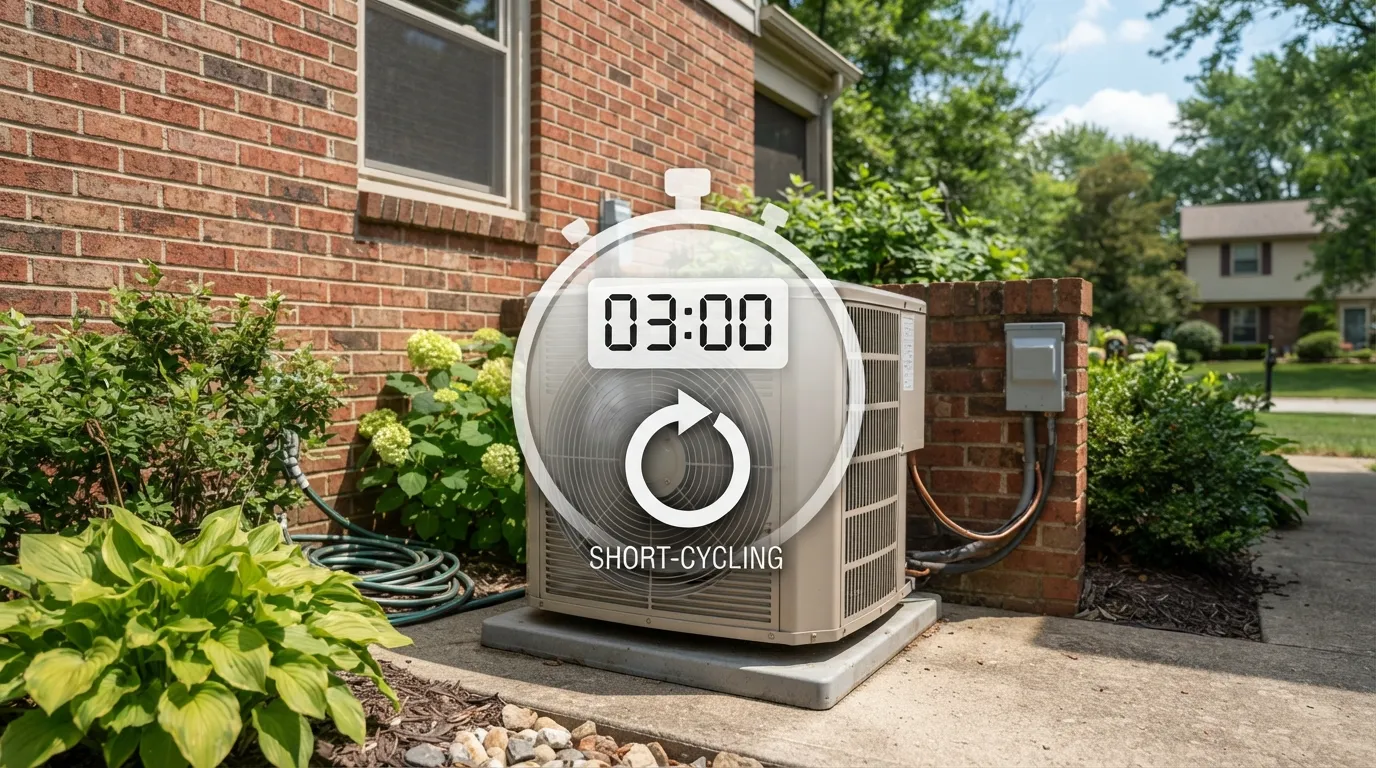
AC short cycling means the system starts, runs a few minutes, quits, then starts again — over and over, without ever finishing a real cooling cycle. A healthy AC in a Texas summer should run 10 to 20 minutes at a stretch. Short bursts usually trace to a dirty filter, a badly placed or dying thermostat, a tripped float switch, low refrigerant, or a system that was oversized from the day it was installed.
Every one of those start-ups is the hardest moment of a compressor’s life, so this is a symptom worth chasing this week, never “someday.”
What counts as short cycling
Put a timer on it tonight. From the moment the outdoor unit kicks on to the moment it stops: under five minutes, repeatedly, is short cycling. Ten to twenty minutes with breaks in between is a system doing its job. Running nearly nonstop through a 100° afternoon isn’t short cycling either; that’s August in McLennan County, and a different conversation about heat load.
Why the fuss over cycles? Start-up is when a compressor draws its biggest surge of power and takes its hardest mechanical hit. A short-cycling AC might start 15 times in the hours a healthy one starts 4. You pay for that three ways: a fatter electric bill, a house that never quite dehumidifies (the machine quits before it wrings the air out), and a compressor aging in dog years.
Check these four things first
The filter. A suffocating filter can overheat the works and trip safeties, and it’s the 30-second check that ends a surprising share of these calls. If it’s gray and matted, swap it and watch the next few cycles.
Thermostat batteries. A thermostat dying slowly does erratic things, and on-off-on behavior is one of them. Two fresh AAs are the best $4 diagnostic in HVAC.
Vents. Rooms of closed registers push the system toward overheat-and-quit behavior. Open them up, including the guest room nobody thinks about.
The float switch. If there’s a safety switch on your drain pan and the pan has water in it, the switch may be cutting the system off, letting it drain a little, then allowing a restart — a rhythm that looks exactly like mystery cycling. A clogged condensate line is the usual culprit behind that water, and it’s a fix you’re allowed to do yourself.
The thermostat’s real estate problem
Here’s one that gets missed on half the DIY checklists: where the thermostat lives matters as much as whether it works.
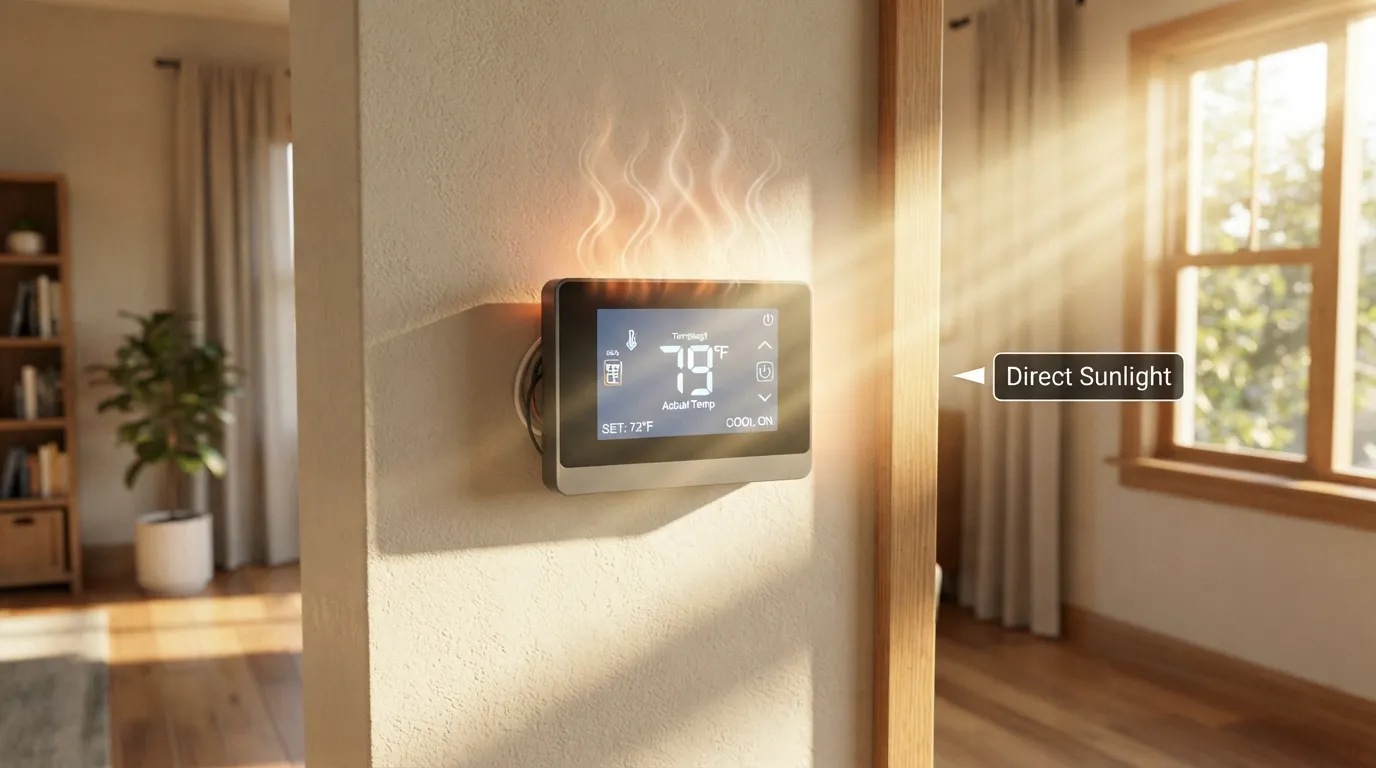
A thermostat catching afternoon sun from a west window thinks the house is hotter than it is; one mounted near a supply vent gets blasted with cold air two minutes into each cycle, decides the job’s done, and shuts the system down. The house warms, the cycle restarts, repeat until the electric bill files a complaint. Kitchens do the same thing on a smaller scale: a Saturday of game-day cooking with the oven cranked can fool a poorly placed thermostat all afternoon.
Watch yours through a few cycles. If it’s reading sun, vent air, or oven heat instead of the house, relocating it is a modest job. And if the unit itself is old or erratic, our thermostat replacement cost guide covers what a swap runs in Texas and when a Wi-Fi model earns its price.
The oversizing problem nobody says out loud
So here’s the sentence most installers won’t hand you: a lot of ACs in Central Texas short cycle because they’re too big for the house, and they’ve done it since the day they were installed.
An oversized system blasts the thermostat’s little corner of the house to temperature in minutes and shuts down before the rest of the home (or any of the humidity) catches up. You get short cycles, clammy rooms, and uneven cooling, forever, with no broken part to point at. Builders and some contractors round up on tonnage because nobody calls to complain that the AC is “too powerful.” Bigger sounds safer. It isn’t; sizing is a math problem, and rounding up is getting it wrong on purpose.
The honest trade-off: there’s no $200 cure for oversizing. You can soften it (longer fan run-times, better airflow, humidity-aware thermostats), but the real fix is a properly sized system when this one dies, chosen from an actual load calculation instead of a guess. If your AC has short cycled through every summer it’s owned, put it on the do-not-replicate list and make sizing the first question at replacement time.
The causes only a gauge can see
Low refrigerant makes systems cycle on safety switches, and diagnosing or correcting it is sealed-system work reserved for EPA-certified technicians. Same story for a failing compressor, a weak capacitor cutting starts short, or a control board losing its mind: those diagnoses take meters and training, and two of the four can bite an untrained hand badly. A capacitor holds a charge even with the power off; it is never a YouTube project, full stop.
This is where you stop and call. What you’ve done above tells the tech exactly where to start, and at our shop the visit ends in a written diagnosis and repair quote before any work happens, plus a free second opinion if someone else already pitched you a big-ticket fix. If the cold air itself has gone missing along with the rhythm, loop in our AC blowing warm air guide too; the two symptoms share several suspects.
What short cycling does to your bill
Those start-up surges add up. A system that starts four times an hour instead of once is paying the inrush penalty all day long while never running the long, efficient cycles it was designed for. Start-stop electrical patterns like this are one of the classic silent bill-inflators we cover in why your electric bill is so high. Fixing a $15 filter problem now beats discovering it in September’s statement.
Common questions about AC short cycling
Why does my AC turn on and off every few minutes?
Is short cycling bad for my AC?
Can a dirty filter really cause short cycling?
Will a bigger AC cool my house better?
Where to go from here
Time the cycles, swap the filter and batteries, peek at the drain pan, and watch what the thermostat’s actually reading. If the rhythm doesn’t settle, request a written quote or call for a straight answer on whether you’ve got a $15 fix, a repair, or a sizing mistake worth planning around.
The On Point Team · On Point Service Company — family-owned HVAC & appliance repair, McGregor, TX · Serving Waco, Temple, Belton, and surrounding Central Texas towns · Licensed & insured, TDLR License TACLB00069239E ·