



A frozen AC means one of two things: not enough warm air moving across the indoor coil, or not enough refrigerant inside it. Either way the fix starts the same. Switch cooling OFF and the fan to ON right now, because every minute a frozen AC keeps running pushes liquid refrigerant toward a compressor that isn’t built to swallow it — and compressors are the most expensive part in the system.
Yes, ice, in a Waco July. It surprises everybody. Here’s the thaw, the causes you can fix yourself, and the one cause you legally can’t.
What a frozen AC looks like
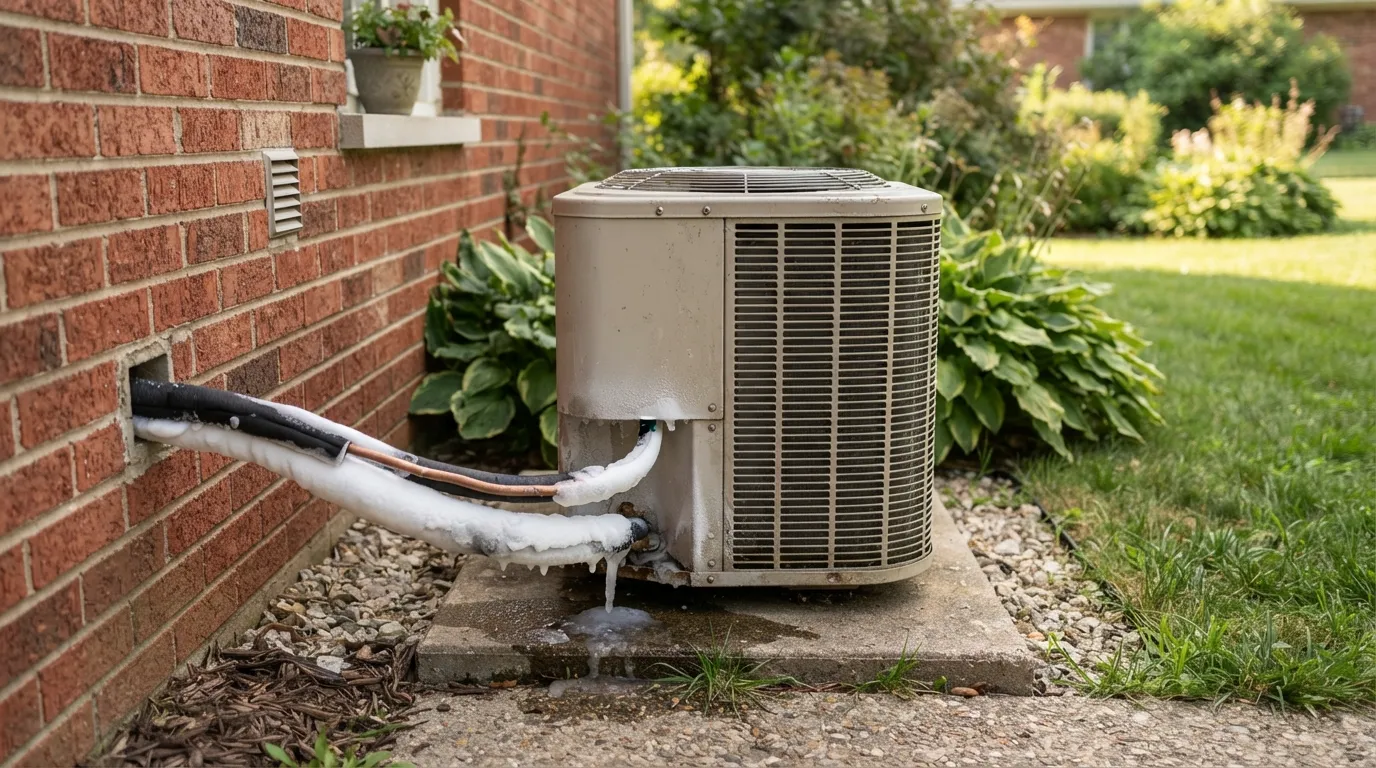
Sometimes it’s obvious: a frozen AC line wearing a white sleeve of frost at the outdoor unit, like the system grew a snow cone. Ice on AC pipes is the classic tell. Other times the ice hides on the evaporator coil inside the air handler where you can’t see it, and all you notice is the downstream symptom: vents barely breathing, or blowing air that isn’t cold.
Quick confirmation checklist:
- Weak or warm airflow from the vents while the system runs and runs
- Frost or ice anywhere on the copper lines, indoors or out
- Water around the indoor unit (that’s ice melting between freeze-ups)
- A hissing or gurgling sound near the air handler
If the air is warm but there’s no ice anywhere, you’re probably in different territory; start with our AC blowing warm air guide instead.
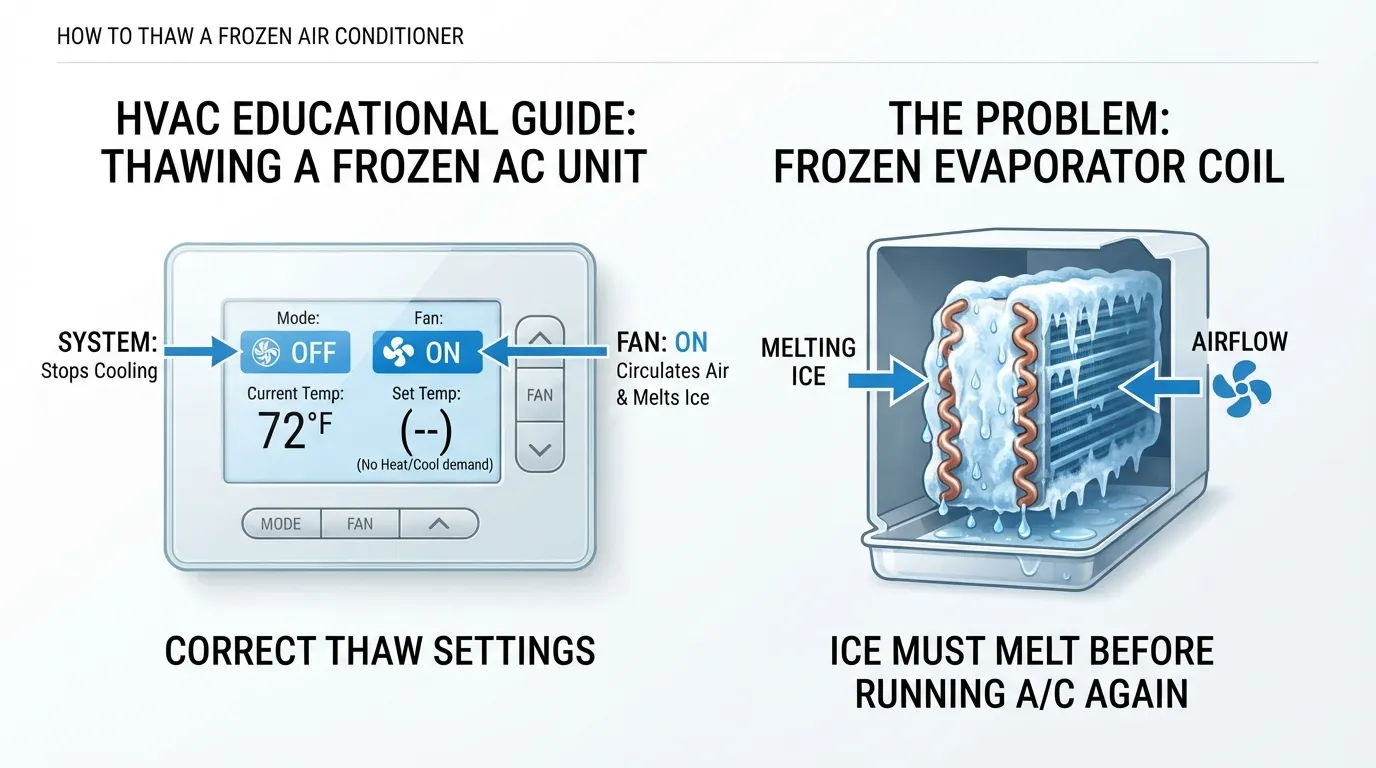
Step-by-Step Thawing Procedures by On Point Service Company
This is the part to do before you call anyone, because a tech can’t diagnose a coil they can’t see under ice. Thawing it yourself first can save the visit from becoming two visits.
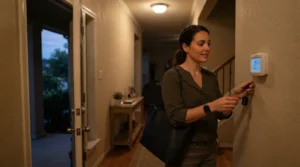
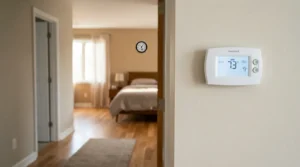
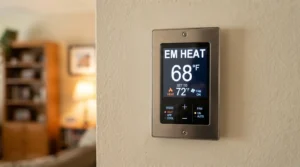
- Switch the thermostat from COOL to OFF. This stops the refrigerant cycle that’s making ice.
- Set the fan to ON. Warm indoor air blowing across the coil melts it from the inside out, hours faster than air-drying.
- Check the filter while you wait. If it’s gray and packed, you’ve likely found your cause. Put in a fresh one.
- Open every supply vent and clear the return grilles. Closed vents and blocked returns starve the coil of the warm air it needs.
- Put towels around the indoor unit. A fully iced coil can shed a surprising amount of meltwater, and drain pans overflow.
- Wait it out: 2 to 24 hours. Light frost clears in an afternoon. A solid block takes overnight. Don’t chip at it; fins bend and lines puncture.
- Restart cooling only when ice is completely gone, then watch it for the next few hours.
One warning worth its own paragraph: all that meltwater goes into a condensate drain that may already be struggling, and an overflowing pan turns a frozen AC into a water damage problem. If you see pooling, our AC leaking water guide covers the pan, the float switch, and the drain line flush.
Why it froze: the airflow causes (yours to fix)
A coil freezes when it gets too cold, and it gets too cold when not enough warm air passes over it. Most of the time, that’s an airflow problem with a cheap ending.
The filter, first and always. This is the cause in more frozen-AC calls than everything else combined. Central Texas springs load filters fast (oak pollen around here can choke a fresh filter in six weeks), and by the first 100° week, the coil is starving behind it.
Closed or blocked vents. Shutting vents to “push air” to other rooms drops system airflow across the coil. A few partially closed registers are fine; half the house closed is a freeze recipe.
A dirty coil. Years of dust act like a blanket between the air and the cold aluminum. If the filter’s clean and the vents are open but ice keeps returning, the coil likely needs a professional cleaning; that’s standard fare in a seasonal visit, and our HVAC tune-up cost breakdown shows what it should run.
A lazy blower. A failing blower motor or wrong fan speed moves too little air even with a clean path. That one’s a tech diagnosis.
Why it froze: the refrigerant side (where you stop)
If the system re-freezes with a clean filter, open vents, and a clean coil, the odds tilt hard toward low refrigerant. Less refrigerant means lower pressure in the coil, and lower pressure means colder copper — cold enough to freeze the humidity right out of the air.
Here’s where you stop, and here’s us saying it plainly: refrigerant is closed-system work that federal law reserves for EPA Section 608 certified technicians. There’s no homeowner version of this repair. No top-off kit worth trusting, no gauge set from the internet, no exceptions at our shop.
And one opinion that’ll save somebody a summer of grief: refrigerant doesn’t get “used up.” If you’re low, it leaked, and anyone who quotes a recharge without finding the leak is selling you the same repair again next June. A proper visit finds the leak, prices the fix in writing, and tells you honestly when a leaky coil on an old system means the money belongs in replacement instead — that’s exactly the math in our guide to whether a 10-year-old AC is worth repairing.
When to call it
Call a licensed tech when the ice comes back after a full thaw with clean airflow, when you hear hissing near the coil, when the copper frosts within minutes of startup, or when you never found an airflow culprit at all. Those all point inside the sealed system. Bring the symptoms to our air conditioner repair team and you’ll get a written diagnosis and quote before any work — and if someone else already quoted you a compressor, a second opinion here is free.
Same-day slots are often available across the Waco area in summer; a thawed, well-described system makes them count.
Common questions about a frozen AC
How long does it take a frozen AC to thaw?
Can I run my AC while it’s frozen?
Why is there ice on my AC pipes?
Will a frozen AC fix itself?
Where to go from here
Thaw it tonight, fix the airflow tomorrow, and let the pattern tell you the truth: one freeze with a filthy filter is a lesson, two freezes with a clean one is a leak. For the second kind, request a written quote or call and we’ll find where the refrigerant went before anyone talks about adding more.
The On Point Team · On Point Service Company — family-owned HVAC & appliance repair, McGregor, TX · Serving Waco, Temple, Belton, and surrounding Central Texas towns · Licensed & insured, TDLR License TACLB00069239E ·