



Running AC in winter is completely fine in Texas — on the warm days. When Thanksgiving hits 80° in Waco or a December afternoon steams up past 75, cooling the house is exactly what the system is for. The caution has a number attached: below roughly 60°F outside, air conditioners run outside their design range, and forcing cooling in genuinely cold weather can damage the compressor.
That one paragraph settles most of it. The rest of this guide covers the three situations that actually bring people here: the AC that won’t cool during a warm spell, the heat pump that’s been quietly misunderstood, and the “is this hurting anything?” worry.
Texas winters don’t read the calendar
Nobody in Central Texas needs convincing that shoulder seasons are chaos. We’ll take a 78° Christmas Eve week, drop to a hard freeze by New Year’s, and bounce back to shorts by Epiphany. Your comfort system flips between heating and cooling in the same week, sometimes the same day, and that’s normal life for equipment down here.
So ignore internet advice written for Michigan that says running cooling in December means something’s wrong with you or the machine. On a warm afternoon, cool the house. The system doesn’t know what month it is; it only knows the temperatures inside and outside. And it’s the outside number that carries the one real rule.
The 60-degree rule (and what a compressor lockout is)
Here’s the mechanical truth behind the caution, in plain words. Cold outdoor air changes the physics inside the system: refrigerant pressures drop, and the oil that lubricates the compressor thickens and stops circulating the way it should. Run cooling in those conditions and the compressor works unprotected, and it’s the one component whose failure regularly totals the system.
That’s also why many modern systems have a low-ambient control, informally a compressor lockout: below a set outdoor temperature, the system simply refuses to run cooling, no matter what the thermostat begs. If your AC “won’t turn on” during a cold snap, there’s a decent chance it’s protecting itself on purpose. That’s a feature behaving, and no repair is needed; just patience until the afternoon warms.
Rule of thumb we give from McGregor to Temple: cooling above 65° outside, no worries at all. Between 60 and 65, brief use is fine. Below 60, let the house be a little warm and open a window; the compressor’s oil matters more than two degrees of comfort.
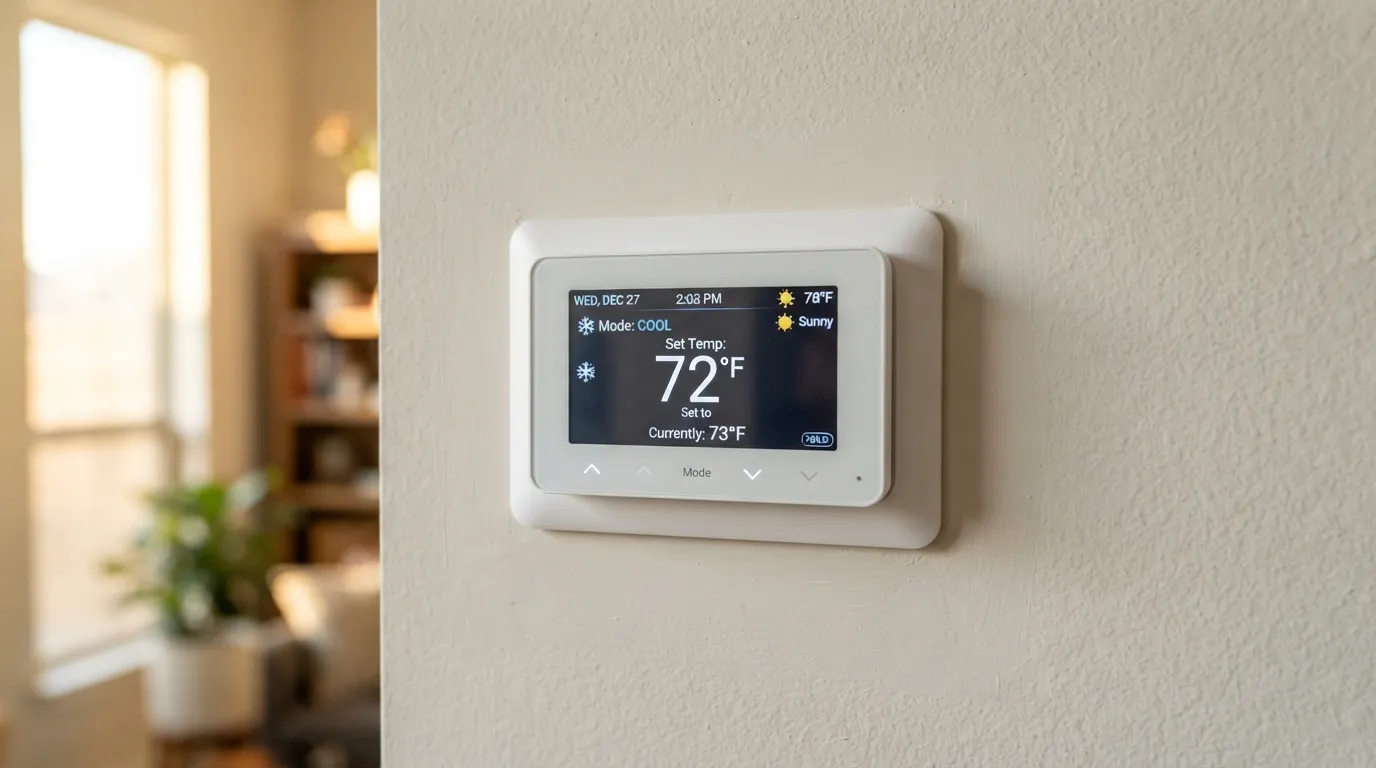
Hang on: do you have a heat pump?
Half the winter “AC problems” we see aren’t problems, and a good share of the rest trace to one fact: the homeowner has a heat pump and nobody ever explained it.
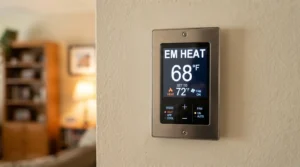
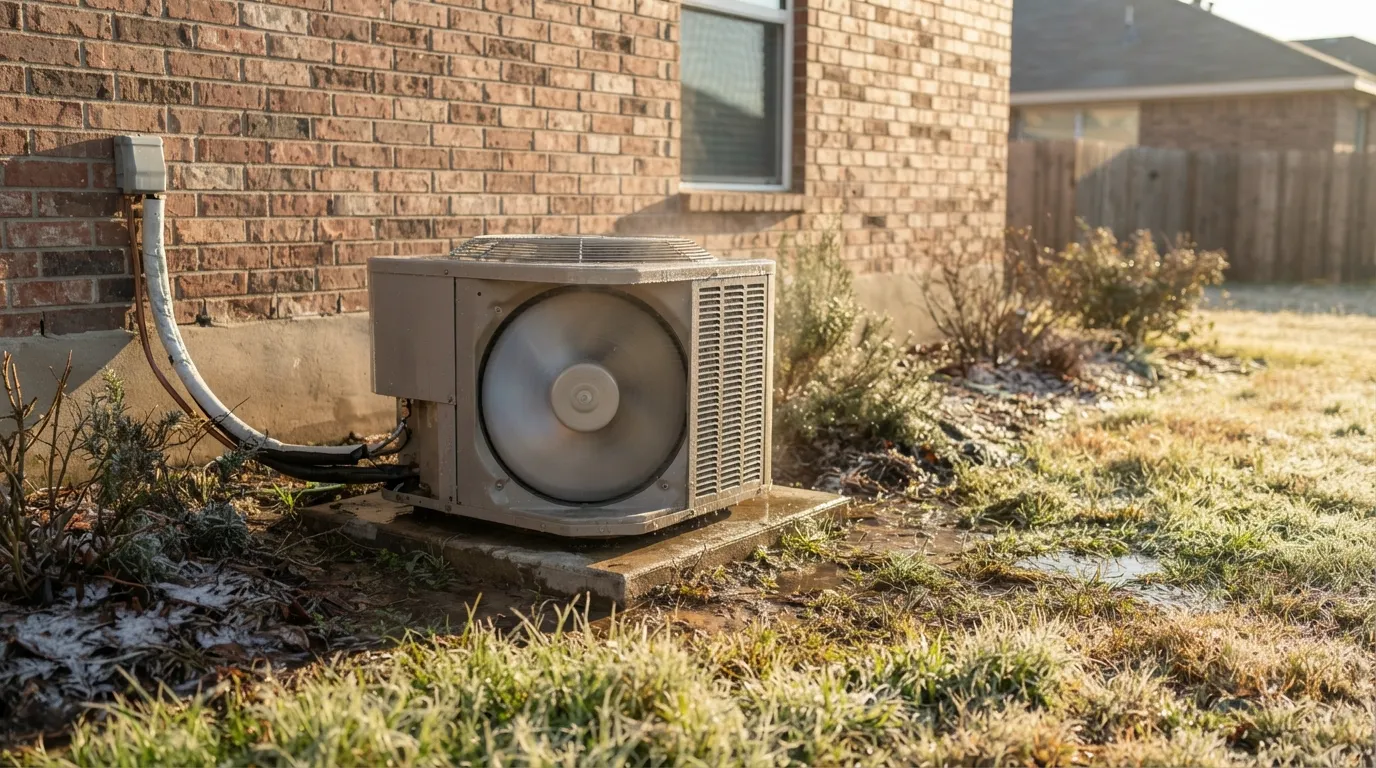
A heat pump is your AC. Same outdoor unit, same refrigerant loop, run in reverse to move heat indoors — the Department of Energy’s heat pump guide is a solid two-minute read on it. Which means in winter, that outdoor unit running is often correct and good. Steam rising off it during a defrost cycle: normal. A whooshing swing between modes: normal.
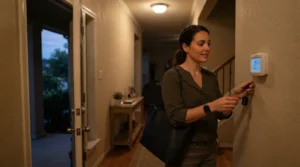
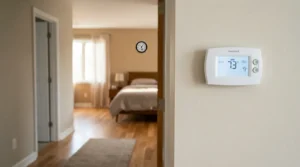
The confusion turns expensive at the thermostat. If the mode is set to COOL in January because someone assumed “the switch by the fan setting is the on switch,” you’ll get an outdoor unit faithfully cooling a cold house. If auxiliary heat is running nonstop because the mode’s wrong or the setpoint’s cranked, the electric meter will write you a strongly worded letter. Two minutes checking the mode (HEAT for heat, COOL for a warm spell) solves more winter tickets than any part we carry. If the thermostat itself is old, dying, or lying about the temperature, our thermostat replacement cost guide covers when a swap makes sense.
AC not working in winter: the real checklist
The most common AC problems in winter are settings and switches, not broken parts. For the warm-day scenario where you want cooling and can’t get it, run these in order:
- Thermostat mode and setpoint. COOL mode, setpoint below room temperature. Fresh batteries if the display looks sleepy.
- Outdoor temperature. Below about 60°? A lockout may be doing its job. Wait for the warm part of the day and try again.
- The breaker. Fall maintenance, holiday-light projects, and garage tinkering flip AC breakers that nobody notices until the next warm day.
- The filter. A filter that’s been ignored since September chokes airflow in either mode.
- The disconnect by the outdoor unit. If anyone worked around the unit this fall, make sure the pull-out disconnect got seated again.
If all five check out and a warm afternoon still gets no cooling, that’s a genuine fault with the same suspect list as summer (capacitors to charge), and we keep the full symptom walkthrough in our warm-air troubleshooting guide. From there it’s diagnosis territory: bring it to our air conditioner repair team and you’ll have a written quote before any work starts.
Why we’re careful testing cooling in winter
Here’s an honest industry note you won’t find on many company blogs. When a tech visits in January for a cooling complaint, there’s a real limit on what can be verified: running a full cooling test in 45° weather pushes the system into exactly the low-ambient conditions the last section warned about, and some readings only mean much above certain outdoor temperatures.
A good tech works around it (checks electrical health, airflow, controls, and the things winter can verify) and tells you plainly which cooling conclusions have to wait for a 70° afternoon. What you’re owed is that honesty in writing, not a January refrigerant top-off sold off a reading taken in the wrong season. (And if any company quotes major summer-system work off a cold-day test, a free second opinion here is exactly what second opinions are for.)
The flip side: winter is the slow season, scheduling is easy, and it’s a fine time for repairs you already know about. Just don’t let anyone diagnose peak-summer performance in a cold snap.
If heat is the thing that’s actually broken
Sometimes “running the AC in winter” is a workaround story: the heat’s been weak or dead for weeks and the warm days were carrying you. If that’s closer to your situation, jump to our heater not blowing hot air guide — eight causes, in order, same straight-answer format as this one.
Common questions about running AC in winter
Is it OK to run the AC in winter?
What temperature is too cold to run an AC?
Why won’t my AC cool during a warm December week?
Should I cover my AC unit for winter?
Where to go from here
Warm day, cool house, zero guilt — just respect the 60-degree line and check the mode before assuming the worst. If a warm afternoon proves something’s genuinely wrong, request a written quote or call . Winter scheduling is the easiest of the year, and repairs carry our 10% senior and military discount.
The On Point Team · On Point Service Company — family-owned HVAC & appliance repair, McGregor, TX · Serving Waco, Temple, Belton, and surrounding Central Texas towns · Licensed & insured, TDLR License TACLB00069239E ·