



Most mini split repair calls come down to a short list: a blinking indicator light throwing an error code, water dripping from the wall unit, a remote or sensor quirk that looks like a breakdown, or a genuinely failed board or refrigerant issue. The first three have homeowner-checkable steps. The last one is where ductless earns its reputation as tech-only territory.
These little systems are everywhere now: garage gyms in Waco, bonus rooms in Belton, additions and shops from Moody to China Spring. And they’re reliable right up until they’re weird. Here’s the field guide.
Why mini-splits fail differently than central AC
A ductless mini split isn’t a shrunken central system; it’s a different animal. Inverter-driven compressors that ramp instead of switching on and off, control boards in both the indoor and outdoor units talking to each other constantly, refrigerant lines running straight to the room, and no ducts anywhere.
That design is why they sip electricity — the Department of Energy’s ductless guidance notes duct losses can eat a big share of a conventional system’s output, losses a ductless unit never pays. But the same design changes how they break. Less “mechanical part wears out,” more “electronics act up.” A central AC fails like a truck; a mini-split fails like a laptop.
Two practical consequences. First, diagnosis is electronic (error codes, board voltages, sensor readings), so guess-and-swap repair gets expensive fast. Second, parts are brand-specific: a Mitsubishi board doesn’t cross to a Daikin, and less common brands can mean a parts wait measured in weeks, which is the honest downside of these systems nobody mentions at the sales stage. Worth knowing before your only source of cool in a garage office goes down in July.
The blinking light is talking to you
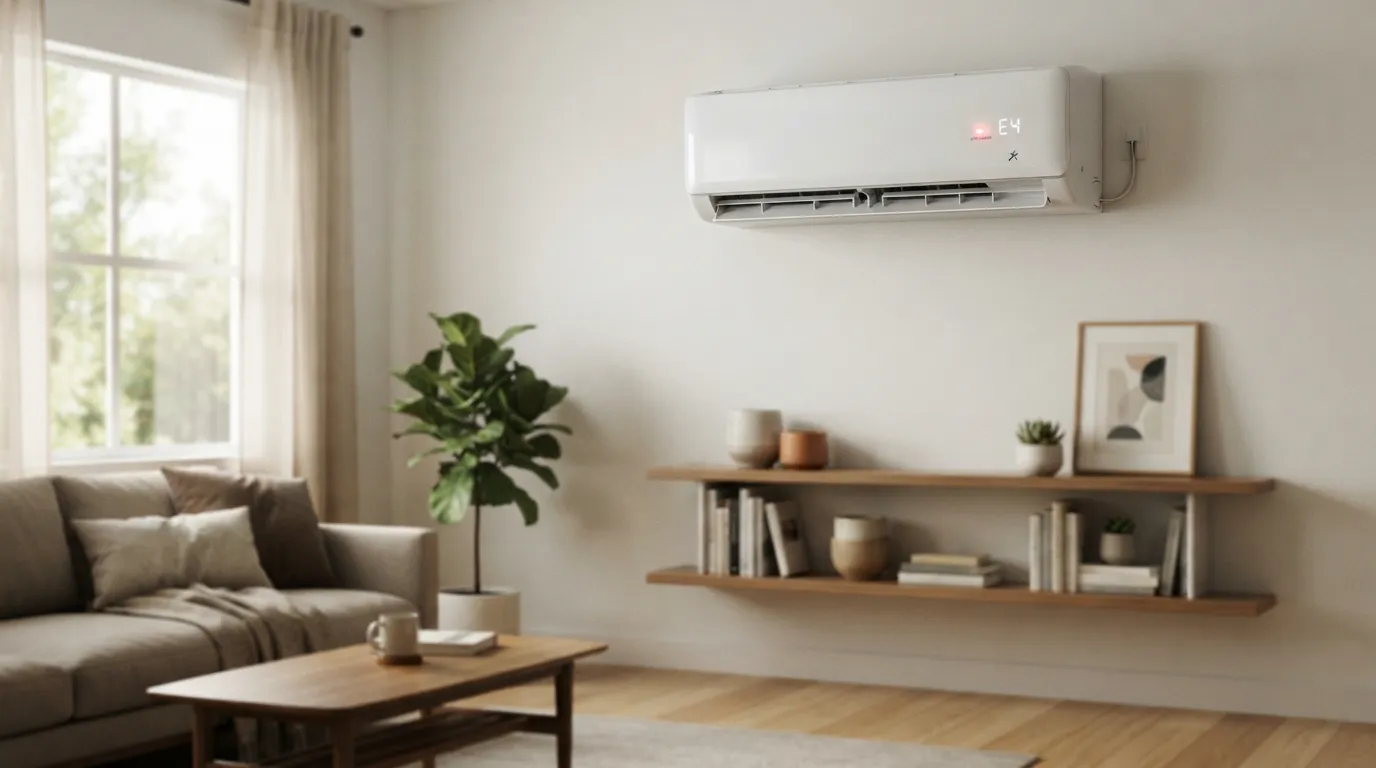
When a mini-split has a problem, it usually says so: the indoor unit’s indicator light blinks in a pattern, or the display shows a letter-number code. That pattern is a diagnostic code, and it’s the single most useful thing you can give whoever repairs it.
So before anything else: count the blinks (or photograph the code), write it down, and note what the unit was doing when it quit. Then, one honest tip: don’t keep cycling power to make the light stop. A reset that clears the code without fixing the cause erases the evidence and guarantees the problem comes back mid-heat-wave. One power-cycle attempt is fair; five is destroying the crime scene.
Codes differ by brand, so the translation lives in your manual or with a tech who works on that brand. Some codes are shrugs (a sensor hiccup), some are stop signs (compressor communication loss). The code decides the urgency, which beats guessing.
Water dripping from the wall unit
The indoor head pulls moisture out of the air just like any AC, and that water leaves through a small drain hose running out with the refrigerant lines. When the hose clogs, kinks, or grows algae (a Central Texas specialty in humid months), the water backs up and drips down your wall instead.
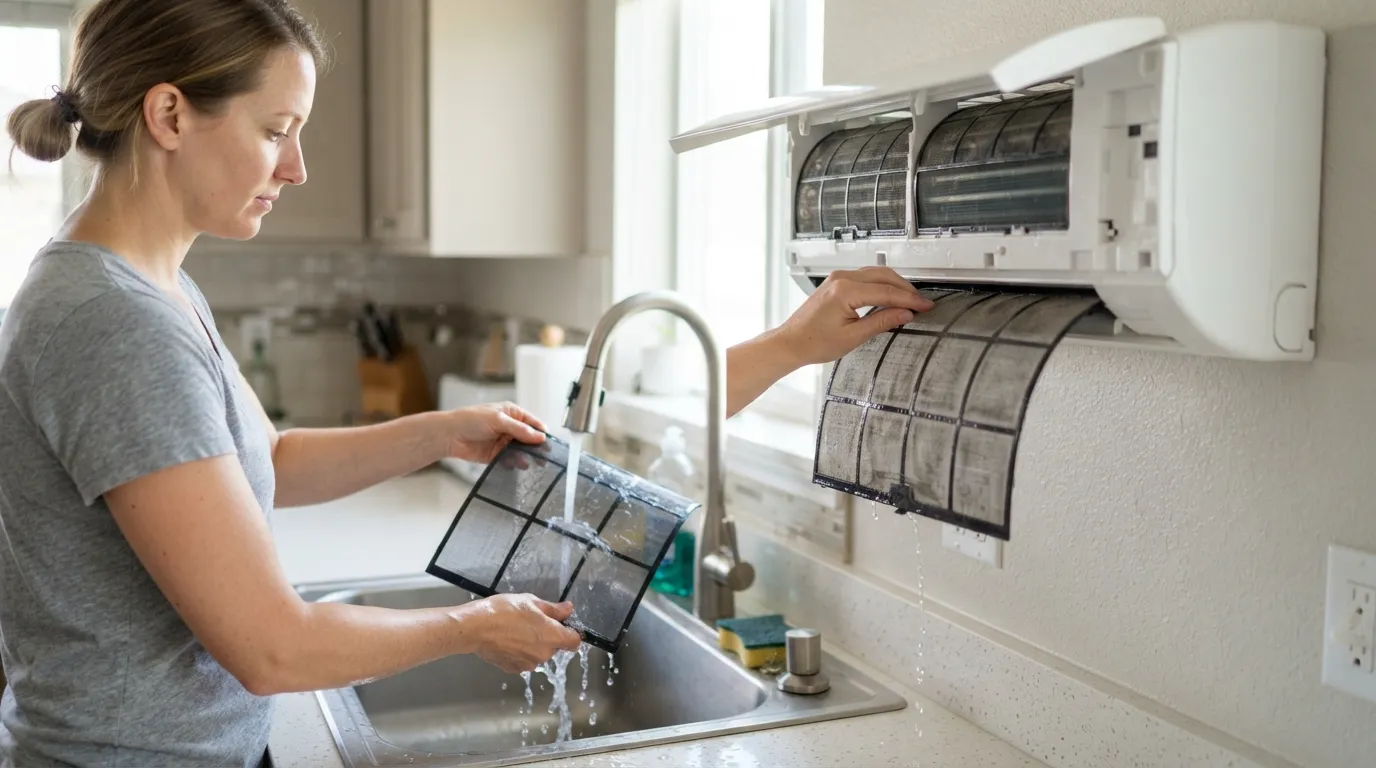
What you can check: pop the front panel, clean the filters (a packed filter makes the coil sweat harder), and follow the drain hose outside to make sure it exits downhill, isn’t pinched, and actually drips when the unit runs. A hose that ends in a flower bed can also get plugged by dirt and mulch; clear the end and watch for flow.
If the drip continues, some installations rely on a small condensate pump, and those pumps fail; that’s a quick pro fix. Whatever you do, don’t ignore wall-unit dripping — it’s directly over your drywall by design, and the stain always costs more than the fix. (Central-system version of this problem? That’s our AC leaking water guide.)
Remote and sensor quirks that fake a breakdown
An embarrassing share of “broken” ductless units are fine. Before assuming repair:
- Mode check. If the remote is on heat, fan, or dry mode, no cooling will ever arrive. Somebody always bumped it. Look for the snowflake.
- Remote batteries. Weak batteries send partial signals; the unit obeys commands you didn’t quite send.
- The “follow me” sensor. Some remotes measure temperature at the remote, so a remote left on a sunny windowsill tells the unit the room is roasting.
- Louvers and timers. A timer set months ago, or louvers aimed at the ceiling, both read as “it’s not working right.”
Five minutes with the manual beats a service fee. We’d rather say that plainly than collect the visit.
Where the DIY ends on a ductless system
Your lane, and it’s a real lane: rinse or vacuum the filters monthly in season (they’re small and clog fast), keep the outdoor unit clear of leaves and grass clippings, gently rinse its coil with a garden hose when it’s dusty (power off first), and keep the drain hose flowing.
Everything past that is sealed-system and electronics work. Refrigerant on a mini-split is even less forgiving than on central equipment (small charges, flare fittings that demand exact torque, vacuum-pump work on any line opening), and it’s all federally restricted to EPA-certified techs anyway. Boards carry both line voltage and fragile low-voltage circuits in one box. The wall of “how to recharge your mini split” videos is a wall of future coil replacements. That’s where you stop and call.
We work on ductless year-round across our Waco service area (ductless ac repair has quietly become one of the most common tickets we run), and with 20+ years of combined experience across HVAC and appliance electronics, the board-level weirdness doesn’t scare us. Every visit ends in a written diagnosis and quote before any work.
What mini split service costs around here
Typical Central Texas ranges, honestly framed: a diagnostic visit runs like any service call (we explained that fee’s anatomy in what an HVAC service call costs), while common repairs land roughly $150–$450 (drain/pump issues, sensors, capacitor-class parts) and board or compressor-level work runs $500–$1,500+ depending on brand and parts availability. Ranges bracket “normal”; the written quote is the number.
One planning note that surprises people: on an aging unit of a less common brand, a long parts wait can tip the repair-or-replace math toward replacement, especially since installing a new ductless mini split is a one-day job. If you’re doing that arithmetic, or thinking of adding a head to a garage or addition, our AC installation cost guide covers the buy side, and a second opinion on someone else’s replacement pitch is free here.
Common questions about mini split repair
Why is my mini split light blinking?
Why is my mini split leaking water inside?
How often does a ductless mini split need service?
Are mini splits worth repairing?
Where to go from here
Write down the code, check the mode, rinse the filters, follow the drain hose. If the unit’s still misbehaving, request a written quote or call — straight answers on ductless, same-day availability when the schedule allows, and a 10% senior and military discount on repairs.
The On Point Team · On Point Service Company — family-owned HVAC & appliance repair, McGregor, TX · Serving Waco, Temple, Belton, and surrounding Central Texas towns · Licensed & insured, TDLR License TACLB00069239E ·