


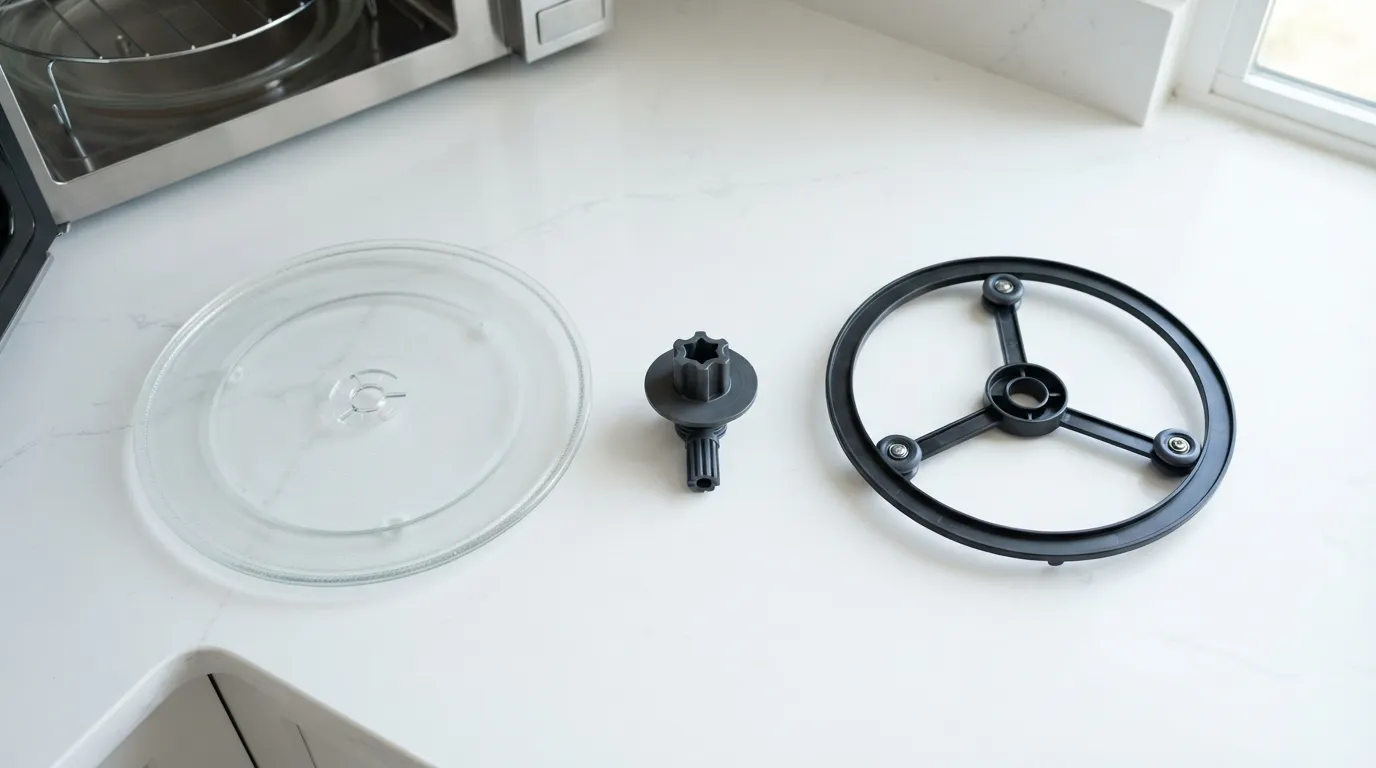
A microwave plate not spinning is one of the cheapest, safest appliance fixes there is. Nine times out of ten the culprit is the coupler (the little spinner under the tray) or the roller ring it rides on. Both are parts you can lift out, wash, or replace for $10–$20 without a single screw. Here’s the three-part check, plus the one case where it isn’t DIY anymore.
We spend a lot of words on this blog telling you where to stop. This post is the opposite: this one’s genuinely yours.
Does a stuck turntable even matter?
More than most people think. Microwaves heat unevenly by nature: the waves form hot and cold spots inside the box, and the spinning plate is what drags your food through all of them. Kill the spin and you get lava edges with a cold center.
With leftovers that’s an annoyance. With reheated chicken or that brisket from the weekend, cold spots are a food-safety problem; the USDA’s microwave guidance leans hard on even heating for exactly this reason. So no, don’t just live with it, especially since the fix costs less than the brisket did.
You can keep using the microwave in the meantime. Just pause halfway and rotate the dish by hand, like it’s 1985.
The three-part check (grab a towel first)
Everything the turntable needs to spin sits loose in the floor of the microwave. Pull the glass tray out and you’ll find:
- The glass tray itself. Check the underside: the molded center hub has notches that must seat onto the coupler. A tray sitting slightly off its seat spins badly or not at all. Also make sure it’s the right tray; they’re not universal, and a borrowed one from the garage microwave may not fit.
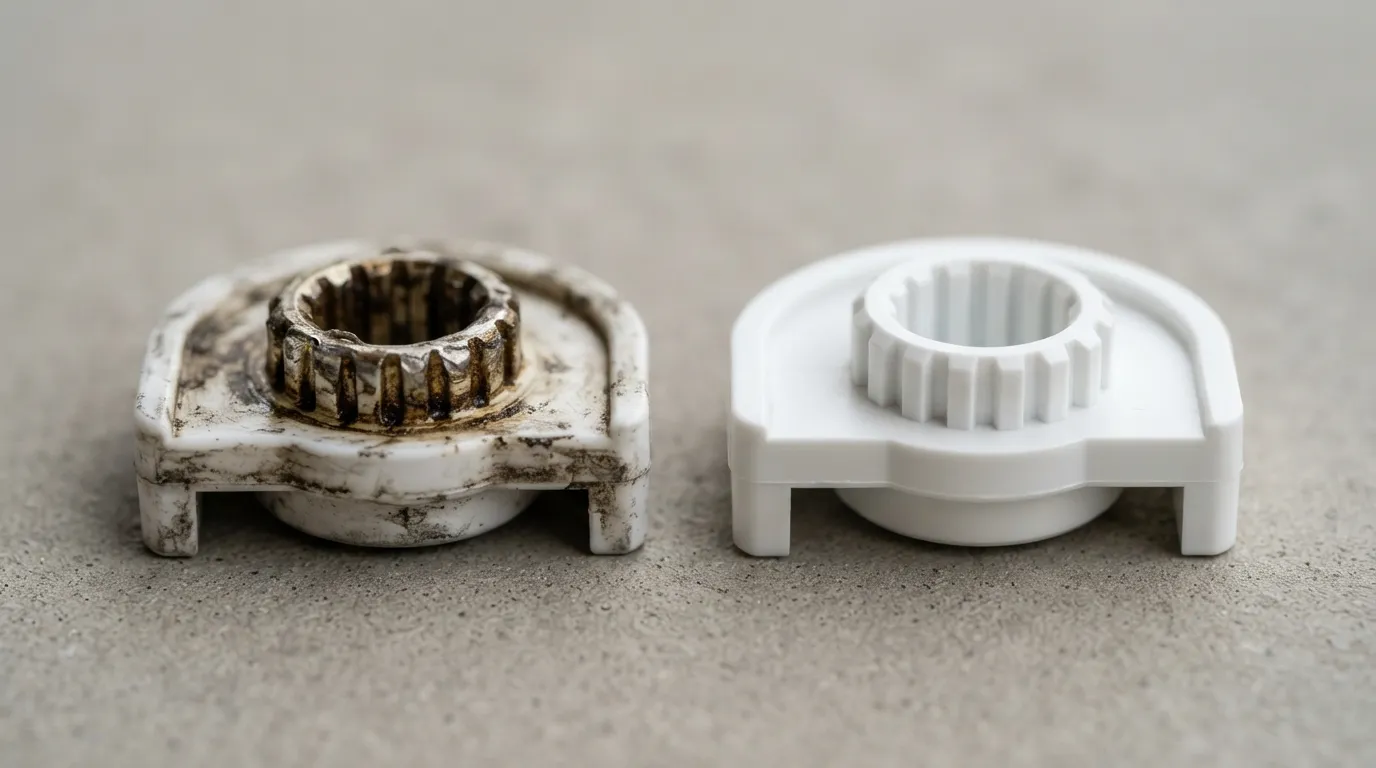
- The coupler. The small three-armed piece (usually gray or white) in the center. Lift it straight off. If its splines are rounded, cracked, or caked, it can’t grip. That’s your part. Couplers run $8–$15.
- The roller ring. The plastic ring with three small wheels that supports the tray’s weight. Dried food and our Central Texas hard-water film love to jam these wheels. Cracked ring or a wheel that won’t roll: $10–$20. Just dirty: it’s dishwasher-safe, top rack.
Wipe the circular track in the microwave floor while everything’s out; one seized wheel dragging on a dirty track is the whole story more often than you’d guess. Reassemble (ring, coupler, tray, in that order), press each wheel with a finger to confirm it rolls, and run a mug of water for 30 seconds.
Spinning again? Done. Total cost: a paper towel.
Buying the right part takes two minutes
Open the door and find the model number sticker. It’s usually on the door jamb or the cavity wall on the hinge side. Search the model number plus “coupler” or “roller ring” on any parts site, and match the photo before you order. OEM parts for common Whirlpool, GE, and LG countertop units are cheap enough that we’d skip the no-name versions; the fit of those splines is the entire job.
While you’re at it, the glass tray has a part number too. Replacing a chipped tray costs $20–$40 and beats microwaving on borrowed glass.
A hard-water note for Central Texas kitchens
One local wrinkle worth a minute. The white crust that builds up on the tray hub and roller wheels around here isn’t just food film; it’s the same mineral scale our hard water leaves on dishwasher racks and faucet heads. Scale is why a roller ring that looks clean can still drag.
The fix is cheap: soak the ring and coupler in plain white vinegar for 15 minutes, scrub with the rough side of a sponge, rinse, and dry completely before they go back in. If your kitchen’s other appliances are showing the same chalky buildup, our post on what hard water does to appliances covers which ones actually get hurt by it and which just look scruffy.
If the coupler spins but nothing else does, that’s the line
Put the coupler back on without the tray and run your mug of water again. If the coupler itself never turns (sometimes with a faint hum from below), the turntable motor has quit. The motor lives under the floor panel, inside the shell, on the wrong side of the capacitor that holds a lethal charge long after unplugging. Same stop-line as our microwave-not-heating cases: the outside parts are yours, the inside is not, no exceptions.
Here’s the honest math on a dead motor. On a countertop unit, motor replacement typically lands at $100–$200 in shop terms, which is most of a new microwave. Meanwhile a microwave with a dead turntable motor still heats; it just heats unevenly. So either rotate by hand until the unit earns retirement, or, if it’s a built-in or over-the-range model worth real money, get a proper written quote first. Our repair-or-replace guide walks the same decision for every appliance in the kitchen.
That’s the trade-off in daylight: we’d rather you fix the $12 part yourself and remember who told you how.
Common questions about a turntable that won’t spin
Why is my microwave plate not spinning?
Almost always a mechanical problem you can see: the tray isn’t seated on the coupler, the coupler’s splines are worn, or the roller ring is jammed with debris or cracked. All three lift out by hand. Only a dead turntable motor (coupler won’t turn at all) goes beyond DIY.
Can I use a microwave if the turntable isn’t spinning?
Yes, safely. The microwave heats fine, just unevenly. Stop halfway through cooking and rotate the dish by hand, and stir foods that can be stirred. Fix the spin soon, though; uneven reheating leaves cold spots that food-safety folks frown at.
How do I fix a microwave turntable that grinds or clicks?
Grinding usually means a dirty track or a roller wheel that’s stopped rolling, so the tray drags. Pull the tray and ring, wash both, wipe the track dry, and check each wheel spins freely. Clicking every rotation often traces to a worn coupler slipping under load. Replace it.
Are microwave turntable parts universal?
No. Couplers, rings, and trays vary by brand and model, and a near-fit spins crooked or walks the tray into the door. Match parts to the model number on the door-jamb sticker; repair microwave turntable searches with that number get you the exact piece the first time.
The $12 rule, one more time
A microwave plate not spinning is a tray, coupler, or ring problem until proven otherwise. Check them in that order and you’ll fix this for pocket change nine times out of ten. If it turns out to be the motor, or the microwave’s misbehaving in bigger ways, get a free second opinion or call before you spend real money. And when it’s the oven or stove acting up instead, that repair is squarely our lane: straight answers and a written quote either way, from Waco to Troy.
The On Point Team · On Point Service Company — family-owned HVAC & appliance repair, McGregor, TX · Serving Waco, Temple, Belton, and surrounding Central Texas towns · Licensed & insured, TDLR License TACLB00069239E ·