


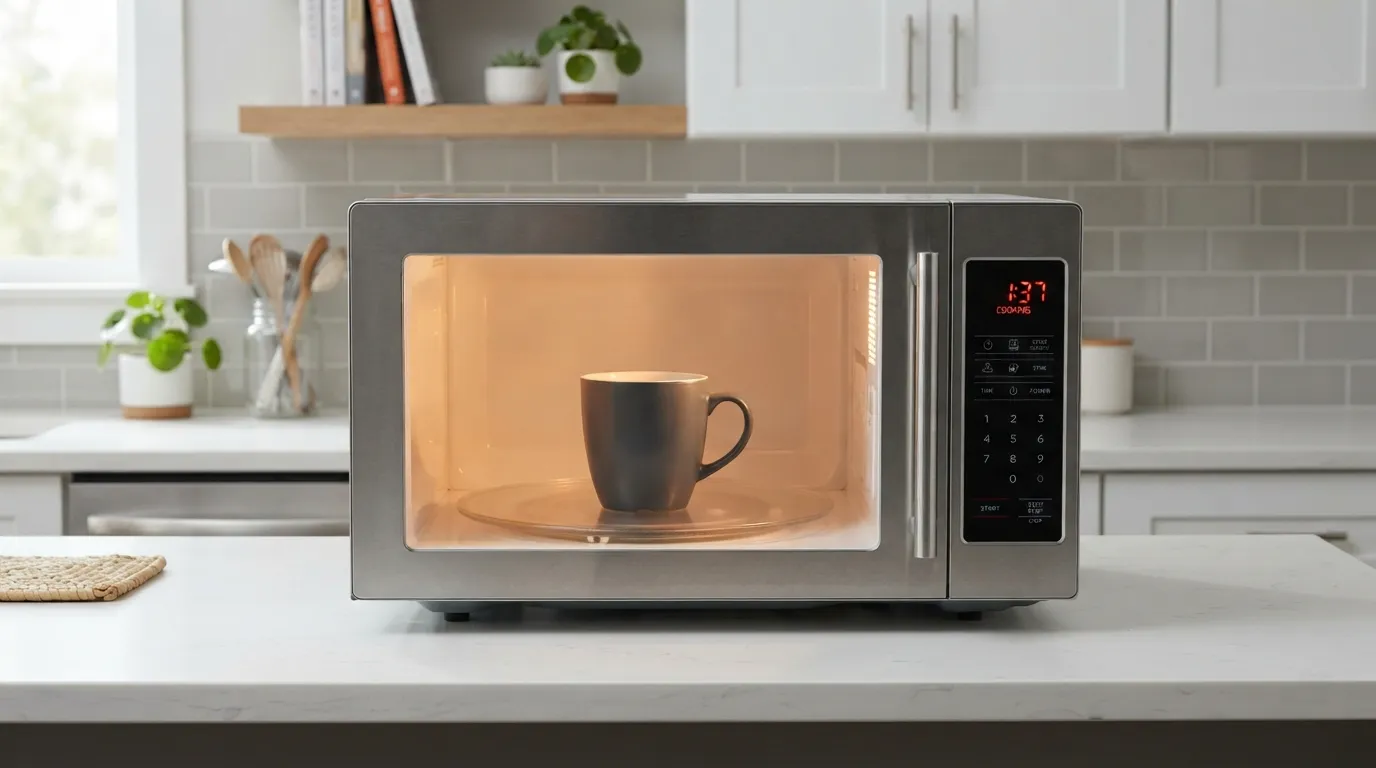
A microwave not heating while the light, fan, and turntable all run is almost always one of three parts: the magnetron (the part that actually makes the heat), the high-voltage diode that feeds it, or a door switch that’s quietly failed. Before you price any of those, check one silly thing first. Then read the honest math, because most microwaves that stop heating shouldn’t be repaired at all.
That’s an odd thing for a repair company to say. Stay with us.
First, rule out the two dumb ones
No shame in either of these. We’ve all been there.
Demo mode. After a power blink (and Central Texas summer storms hand those out freely), some microwaves reboot into a showroom demo setting: display works, timer counts down, zero heat. Check the manual or search your model number plus “demo mode.” The fix is a button sequence, and it’s free. The giveaway is timing: if the microwave “broke” the same week a thunderstorm rolled through and flickered the lights from Waco to Belton, check this before anything else.
The door. Microwaves refuse to heat unless the door is fully, positively latched. A cracked handle, a worn latch, or a door that needs a firmer push than it used to can leave everything running except the part that matters. Open it, look at the latch hooks, close it until it clicks like it means it.
Still cold after both? Then it’s a real failure, and here’s what’s likely going on.
The usual suspects, in plain English
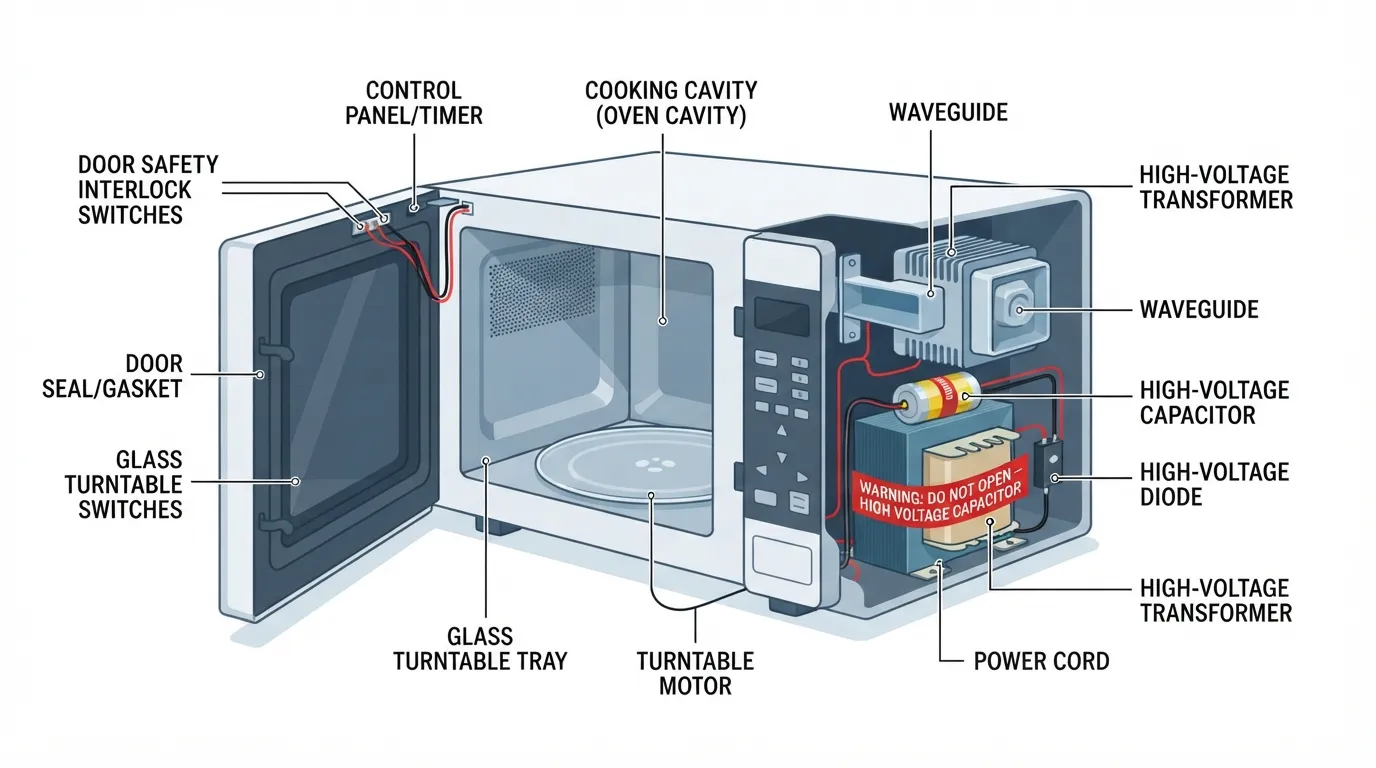
The magnetron. This is the heart of the machine, the tube that turns electricity into microwaves. When it dies, everything else keeps working; the box just becomes a very elaborate kitchen timer. A magnetron can fail silently or with a hum that’s louder than usual. Running the microwave empty, even once or twice, is the classic way to kill one early.
The high-voltage diode. A small, cheap part that helps deliver the massive voltage the magnetron needs. When it fails, you often get a loud electrical buzz and no heat. The part costs less than lunch; the problem is where it lives, which we’ll get to.
A door switch. There are usually three, and they’re the safety interlock that proves the door is shut. One bad switch can allow the turntable and light to run while blocking the heating circuit. If your microwave also sometimes dies completely or blows a fuse, switches move up the list. (Sound familiar? Door trouble has its own post; our microwave door, turntable, and heating guide covers how these symptoms overlap.)
You don’t need to know which one it is to make a smart decision. You need the next section.
Why you never open a microwave (this is the stop-line)
For most appliances we’ll tell you which checks are safe. For microwaves, the checklist above (demo mode, door latch) is the whole list, and it ends at the outer shell.
Here’s why we’re absolute about it: inside the cabinet is a high-voltage capacitor that can hold a charge measured in thousands of volts for days after the unit is unplugged. Unplugging it does not make it safe. It is the one common household appliance where a confident YouTube afternoon can be fatal, and the FDA’s microwave oven guidance treats servicing accordingly.
So: no opening the shell, no testing the diode, no poking at switches, no matter how cheap the part or how good the video. If a microwave needs its insides looked at, it needs a tech with a discharge tool and the habit of using it. This is the hardest stop-line we publish, harder than gas.
The honest math on fixing it
Now the part the brand blogs won’t print.
A basic countertop microwave runs $60–$150 new at any Waco big-box store; a decent mid-size one, $150–$250. Professional repair on a magnetron typically lands between $150 and $300 anywhere in Central Texas once parts and bench time are counted. You can see the problem: the repair frequently costs more than the machine.
Our standing rule from the repair-or-replace guide: if the fix approaches half the replacement cost, replace. For a $90 countertop unit, almost no repair passes. Recycle it (Waco’s curbside won’t take it, but the city’s e-waste drop-off will) and put the money toward one with a better door.
When repair genuinely makes sense: over-the-range units, built-ins, and drawer microwaves. Those run $400 to well past $1,000 installed, plus trim kits and cabinet fitting, and a $200-class repair on a $900 built-in is easy math in the other direction. If yours matches the kitchen, get a quote before you get a sledgehammer.
That’s the trade-off, told straight: we’d rather lose a small repair ticket than have you pay us more than the machine is worth. It’s also why folks from China Spring to Temple call us for a second opinion before touching anything with a plug.
Repair or Replace: Expert Advice from On Point Service Company
Check demo mode. Check the latch. Then decide by price bracket. Countertop under $200: replace it, guilt-free. Built-in or over-the-range: stop and get a real opinion, because the math flips.
Second opinions are free here, and if what’s actually misbehaving is the bigger stuff in your kitchen, oven and stove repair is squarely our lane. Either way you get a straight answer and a written quote before anyone spends a dollar.
Common questions about a microwave that won’t heat
Why is my microwave running but not heating?
The heating circuit has failed while the low-voltage side (light, fan, turntable) still works. The usual causes are the magnetron, the high-voltage diode, or a door interlock switch. Rule out demo mode and a half-latched door first; both mimic the same symptom for free.
How do I know if my microwave magnetron is broken?
Honestly: you don’t, from outside, and you shouldn’t try from inside. No heat with normal operation is consistent with a dead magnetron, but a diode or switch shows the same face. Diagnosis requires opening the cabinet, which is capacitor territory. Tech only.
How much does it cost to replace a magnetron?
Typically $150–$300 in our area, parts and labor. That’s more than most countertop microwaves cost new, which is why we usually steer countertop owners toward replacement and reserve repair for built-in and over-the-range units.
Is it dangerous to use a microwave that won’t heat?
Running it won’t hurt you; it’s just not cooking. The danger is exclusively in opening the cabinet, where the capacitor holds a lethal charge long after unplugging. If it sparks, smokes, or smells burnt, stop using it entirely and unplug it.
Where to go from here
A microwave not heating is rarely worth a repair bill. If it’s a $90 countertop unit, let it retire with dignity. If it’s built into your kitchen, ask us for a free second opinion or call before you buy anything. Worst case, you’ll know exactly what it costs before deciding, in writing, like always.
The On Point Team · On Point Service Company — family-owned HVAC & appliance repair, McGregor, TX · Serving Waco, Temple, Belton, and surrounding Central Texas towns · Licensed & insured, TDLR License TACLB00069239E ·