





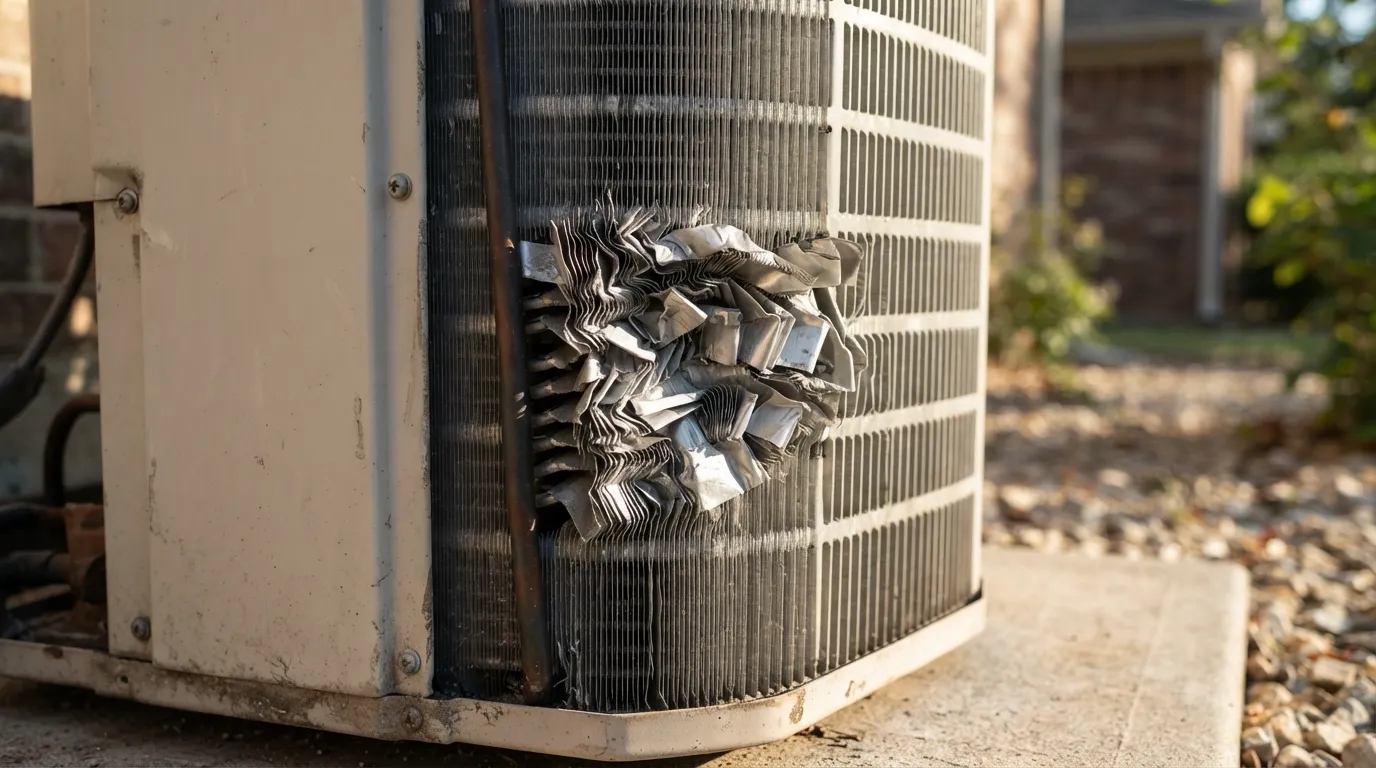
Here’s the calming fact first: most hail damage to an AC unit is bent aluminum fins, and bent fins are fixable, sometimes with a $15 comb, sometimes free of consequence entirely. The damage that actually matters is rarer: punctured coil tubing, a cracked fan blade, or a dented cabinet pressing into moving parts. Knowing which one you’re looking at decides whether you’re doing nothing, booking a repair, or starting an insurance conversation.
Central Texas earns this article every spring. March through May is our hail season, and after a good stone-thrower rolls through McLennan or Bell County, half the driveways in the neighborhood have someone standing over the condenser, squinting.
What Hail Actually Does to a Condenser
Your outdoor unit’s sides are wrapped in thousands of paper-thin aluminum fins whose whole job is shedding heat. Hail flattens them the way a thumb flattens window-screen mesh. The NOAA severe weather folks note hail starts denting soft metal around quarter size; fins, being the softest metal on your house’s exterior, record every storm faithfully.
Three tiers of damage, in order of how much they should worry you:
Flattened fins. The common case. A few scattered flat patches barely matter. Large matted areas block airflow, which makes the system run longer and hotter, and that’s an efficiency tax you pay all summer.
Punctured coil tubing. The rare, serious case. Big hail driven sideways can pierce the copper or aluminum tubing behind the fins, and now you’re losing refrigerant. That’s a real repair with real money attached.
Collateral hits. A cracked condenser fan blade, a dented top grille pressed down into the fan’s path, a knocked-loose disconnect box. Rare, obvious, and worth a photo.
The Fin Comb Reality Check
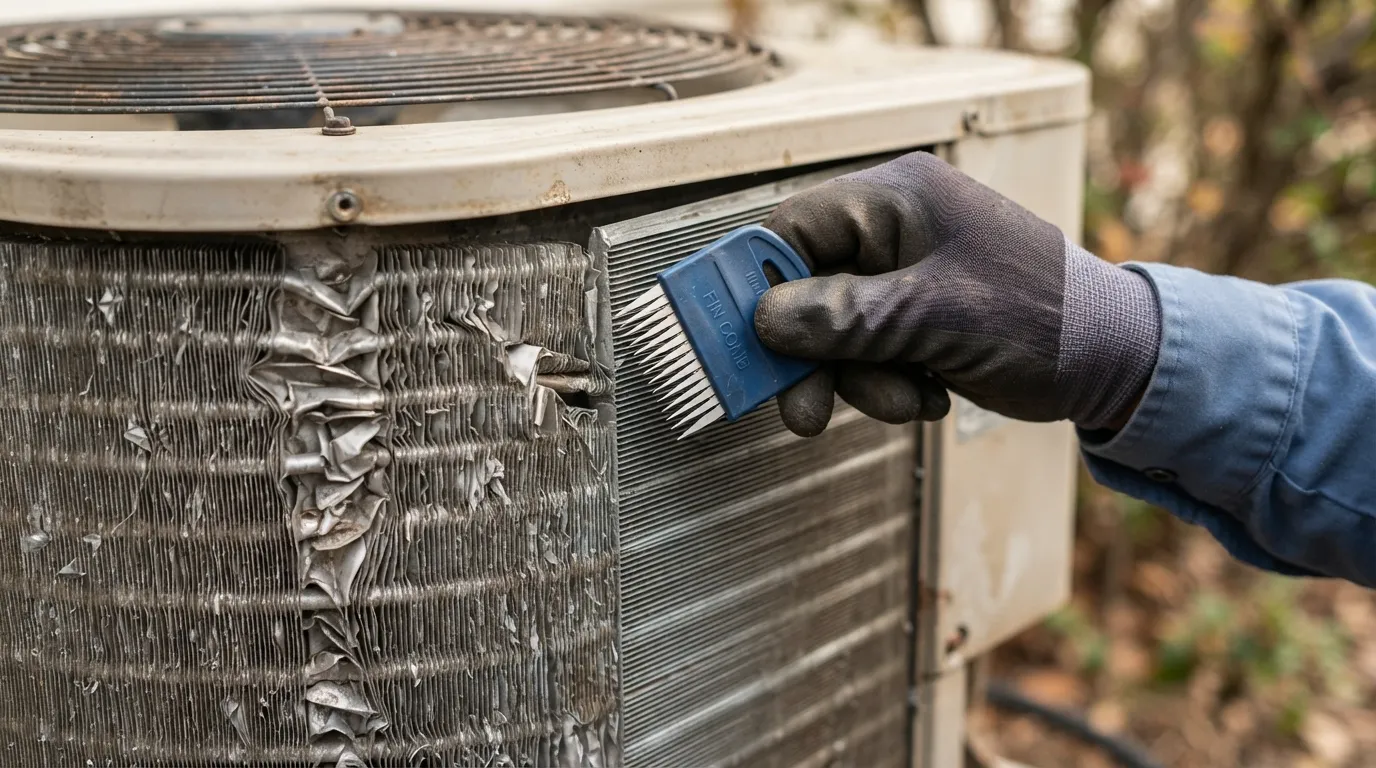
A fin comb is a plastic rake that straightens bent fins, and it works better than most people expect on scattered damage. Breaker off at the disconnect, match the comb to the fins-per-inch, work gently in the fins’ direction. Patience required; it’s meditative or maddening depending on your personality.
Now the reality check, because the SERP won’t give it to you. Combing a few palm-sized patches: absolutely worth it. Combing all four coil faces after a violent storm: hours of tedious labor that still won’t restore crushed fin rows, and on heavy damage the honest question shifts from “can these fins be straightened” to “how much coil surface is actually gone.” A tech can measure what the damage is costing you (head pressures and temperatures tell the truth) rather than eyeballing it.
One hard stop while you’re out there: if you see oily residue on the coil, or the system’s stopped cooling since the storm, put the comb down. Oil at a fin line usually marks a refrigerant leak, and refrigerant is EPA-licensed territory, full stop.
How to Tell the Damage Went Past Cosmetic
Watch for these in the days after the storm:
- Warm air from the vents when it cooled fine before the storm.
- Hissing near the outdoor unit, or oily streaks on the coil.
- Ice on the copper lines. Low refrigerant dressed up as a freeze.
- New noises. A ticking fan blade counts, and a blade contacting a dented grille needs the breaker off today, not Friday.
- Longer runtimes and a warmer house at the same thermostat setting.
Any of those, book a diagnostic. Cosmetic dents don’t change how a system cools; anything that changes performance wasn’t cosmetic. Our rundown of warning signs an AC is about to quit overlaps here for a reason: hail just compresses the timeline.
The Insurance Process, Described Factually
We fix air conditioners; we don’t adjust claims, and we won’t pretend to. Whether hail damage is covered is strictly between you and your policy. What we can describe is how the process typically runs, because we’re often the third party standing at the condenser:
- Document before you touch. Photos of the unit from all four sides, the hail on the ground next to something for scale, and the date. Do this before any combing or cleanup.
- Report it to your insurer and ask how they want AC damage documented.
- The adjuster inspects, usually alongside the roof if the storm earned one.
- Get a licensed contractor’s written assessment. A performance-based evaluation (what’s bent, what’s punctured, what it changed) gives everyone real information to work from. Written, itemized, boring. Boring is what a claim file wants.
- Decisions follow the policy, and the Texas Department of Insurance keeps a plain-language storm claim resource if you want the state’s version of the playbook.
Two honest cautions from the sidewalk seats we’ve had: storm-chasing outfits that appear after big hail events and promise a “free new unit through insurance” are writing checks your policy may never cash. And exaggerating cosmetic fin damage into a replacement claim is the kind of move that follows a homeowner around. Get the real assessment; argue from facts.
When Replacement Talk Is Legitimate
Sometimes hail genuinely totals a condenser: coil punctures on a unit past its prime, or fin destruction across most of the coil surface where the labor to restore it rivals its value. The math is the same math we always run: repair cost against remaining life. A punctured coil on a 4-year-old system is a repair. The same puncture on a 14-year-old system is a replacement conversation, and pretending otherwise wastes your money in a different direction.
If you’re somewhere in between, our AC repair team will put both numbers in writing, and what the common repairs cost in this market is already public in our Waco repair cost guide. Second opinions on someone else’s storm quote are free, and after a big hail event, they’re popular.
Should You Put a Hail Guard on It?
The trade-off, honestly: hail guards and cages protect fins, and they also restrict the airflow the condenser lives on, especially the cheap wrap-around kinds. In a hail-prone spot, a properly fitted top-and-sides guard sized for the unit is reasonable insurance. A DIY cage that hugs the coil trades storm protection for a permanent efficiency tax. And never tarp or cover a unit that might run — a covered condenser cooking itself does more damage than most hailstorms manage.
FAQ: Hail and Your AC
Can hail total an air conditioner?
Will insurance pay for a hail-damaged AC unit?
Can I straighten AC fins myself?
How do I know if the coil is punctured?
After the Next Storm
Walk the unit, take the photos, comb the small stuff, and let performance — never panic — decide the rest. If the vents went warm after the hail or a storm-chaser’s quote needs a sanity check, get a straight answer and a written quote. Hail damage to an AC unit is usually a smaller story than the dents suggest, and you deserve to know which story yours is.
The On Point Team · On Point Service Company — family-owned HVAC & appliance repair, McGregor, TX · Serving Waco, Temple, Belton, and surrounding Central Texas towns · Licensed & insured, TDLR License TACLB00069239E ·