



Most heat pump repair calls land on a short list: capacitors and contactors worn out by long cooling seasons, defrost boards that quit the first cold week, reversing valves stuck between modes, and refrigerant charge lost to slow leaks. Central Texas skews that list toward plain wear, because a heat pump here works both shifts — cooling from March into November, then heating the rest.
Before you book anything, though, rule out the three “failures” that are actually normal behavior. They fool somebody every winter.
Why Central Texas is hard on heat pumps
A heat pump is one machine doing the job a furnace and an AC split between them. Mild winters make them a natural fit for our climate (DOE’s air-source heat pump guidance says as much), but there’s a bill for that convenience: run hours. The compressor that cooled your house through a 100-degree August is the same compressor heating it in January.
So while a lightly used furnace can coast to year 20, heat pumps around here tend to live 10 to 15 years, and their wear parts fail on AC-country schedules. From Moody to China Spring, the pattern on our invoices is the same: it’s usually the small electrical stuff, and it’s usually earned its retirement.
Three fake failures to rule out first
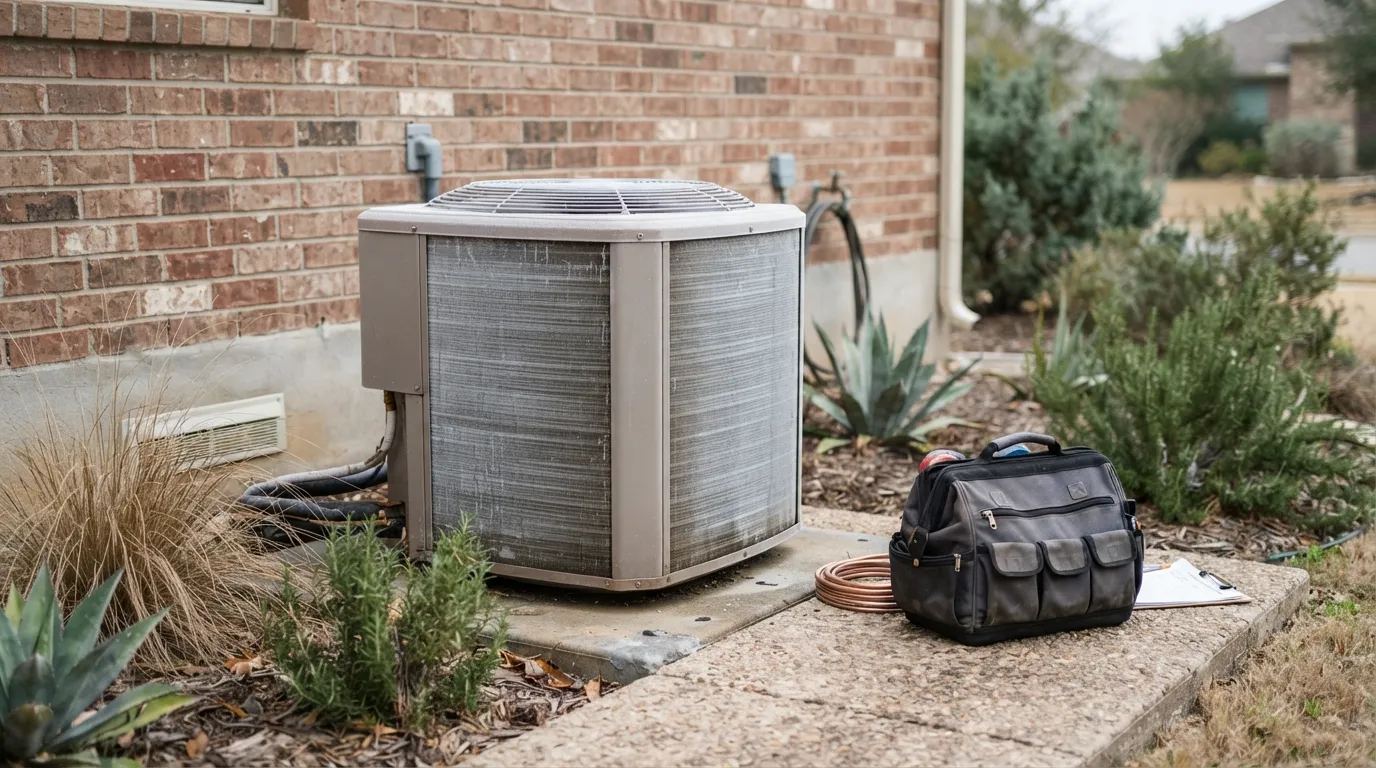
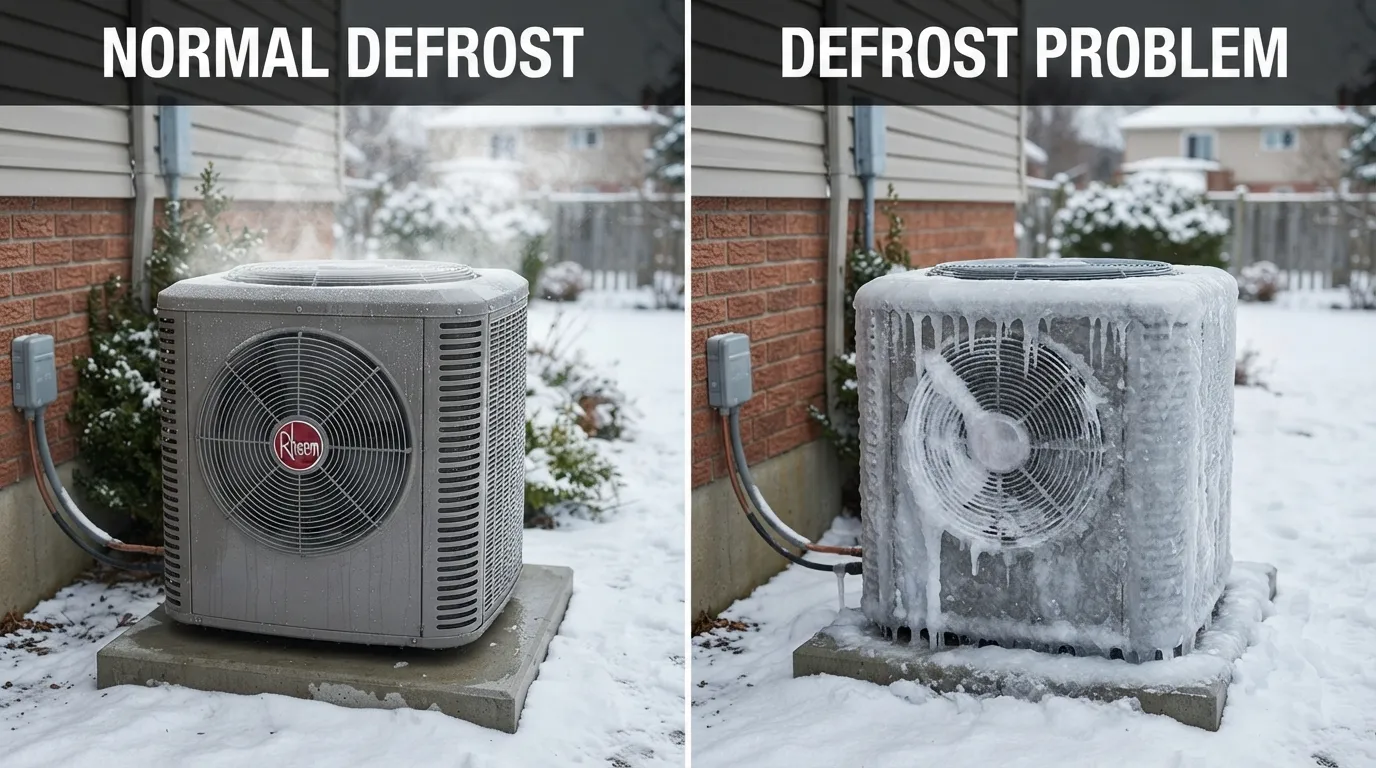
Steam and a strange pause on a cold morning. A frosted heat pump periodically stops heating, hisses, and billows steam like a kettle. That’s the defrost cycle melting frost off the coil, and it’s normal. It lasts a few minutes and the frost should be gone after. Ice that never leaves is the problem version.
Vent air that feels cool. Heat pump supply air typically comes out in the 85-to-95-degree range: warmer than the room, cooler than your skin, so your hand reads it as “meh.” Furnace people expect a hot blast and call this broken. It isn’t. That milder, steadier air is the trade you make for cheaper heat, and it’s worth making in our climate.
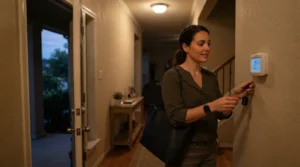
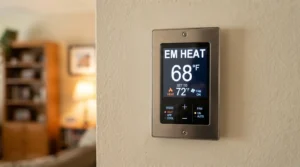
“AUX” glowing on the thermostat. In real cold, the system automatically adds backup strip heat while the heat pump keeps working. Normal. Its manual cousin is the emergency heat setting, which we covered separately, including the one time you should use it.
If your vents blow warm but the house still won’t hold temperature, that’s a different investigation — usually ducts, insulation, or sizing — and we walk it in heater running but the house stays cold.
What actually breaks on a heat pump
Capacitors and contactors. The disposable heroes of the outdoor unit. Symptoms: humming without starting, clicking, a unit that runs only when it feels like it. These wear out on a schedule set by run hours, which is why Texas eats them faster. Cheap parts, quick visits, and no, they’re never a reason to replace a system.
The defrost board or sensor. When defrost control fails, frost armor builds until heating collapses, usually during the first real freeze, which is also the worst possible week for it. If your unit is a solid block of white every cold morning, this is the suspect.
The reversing valve. The part that makes a heat pump a heat pump; it flips the machine between cooling and heating. Stuck valves give you cold air in January or a system that can’t commit. Replacing one is real surgery on the sealed refrigerant circuit, and on an older unit it opens the repair-or-replace conversation.
Low refrigerant charge. A slow leak weakens both heating and cooling and can ice the coil in either season. Here’s where we plant a flag: a heat pump that needs refrigerant every year doesn’t need refrigerant, it needs the leak found and fixed. Anyone happy to sell you an annual top-off without a leak search is renting you your own equipment. Refrigerant work is EPA-certified-tech territory, full stop; there’s no DIY version of this one.
What you can check yourself, and where you stop
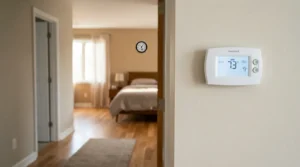
Yours to check: the filter (a choked filter fakes a dozen bigger problems), the thermostat mode (HEAT, not COOL or backup-only, and fresh batteries), the breakers, and the outdoor unit’s clearance: leaves, cottonwood fluff, and fence panels crowd coils out here. If the unit is iced over, switch the system off at the thermostat and let it thaw; never chip at the coil.
Not yours: anything behind a panel. Capacitors hold a charge even with the power off, the refrigerant circuit is sealed for a reason, and the defrost board diagnosis requires putting meters on live equipment. This is the stop-and-call line, and it’s not about gatekeeping; it’s about which mistakes can’t be undone.
Summer failure, winter failure: same machine, same visit
When a heat pump quits in July, everyone calls it an AC problem. In January the identical machine is your furnace. That’s worth knowing because it means the crew that handles your air conditioner repair is the same crew for a January no-heat call, with the same parts on the truck. The straight answers in our AC repair in Moody writeup apply to heat pumps all twelve months.
On cost, typical ranges tell the story better than promises: wear-part fixes usually land in the low hundreds in our area, defrost boards in the middle hundreds, and reversing valves or coil work climbs toward four figures. Those are industry-typical Central Texas ranges, not our menu; the real number is the written quote you get before any work starts. Repairs carry our 10% senior and military discount, and if a quote anywhere feels off, free second opinions exist for exactly that.
At 12 to 15 years old with a four-figure repair on the table, run replacement math before you approve anything. On a five-year-old unit, fix it and don’t look back.
Common questions about heat pump repair
Why is my heat pump blowing cold air in winter?
Why is my heat pump steaming?
How long do heat pumps last?
How much does heat pump repair cost?
Where to go from here
Rule out the fake failures, check the filter and the thermostat, then let the diagnosis happen with a meter instead of a guess. For heat pump repair anywhere on our map, request a written quote or call — same-day slots are often available, and you’ll hear the honest version even when it’s “leave it alone, that’s just defrost.”
The On Point Team · On Point Service Company — family-owned HVAC & appliance repair, McGregor, TX · Serving Waco, Temple, Belton, and surrounding Central Texas towns · Licensed & insured, TDLR License TACLB00069239E ·