






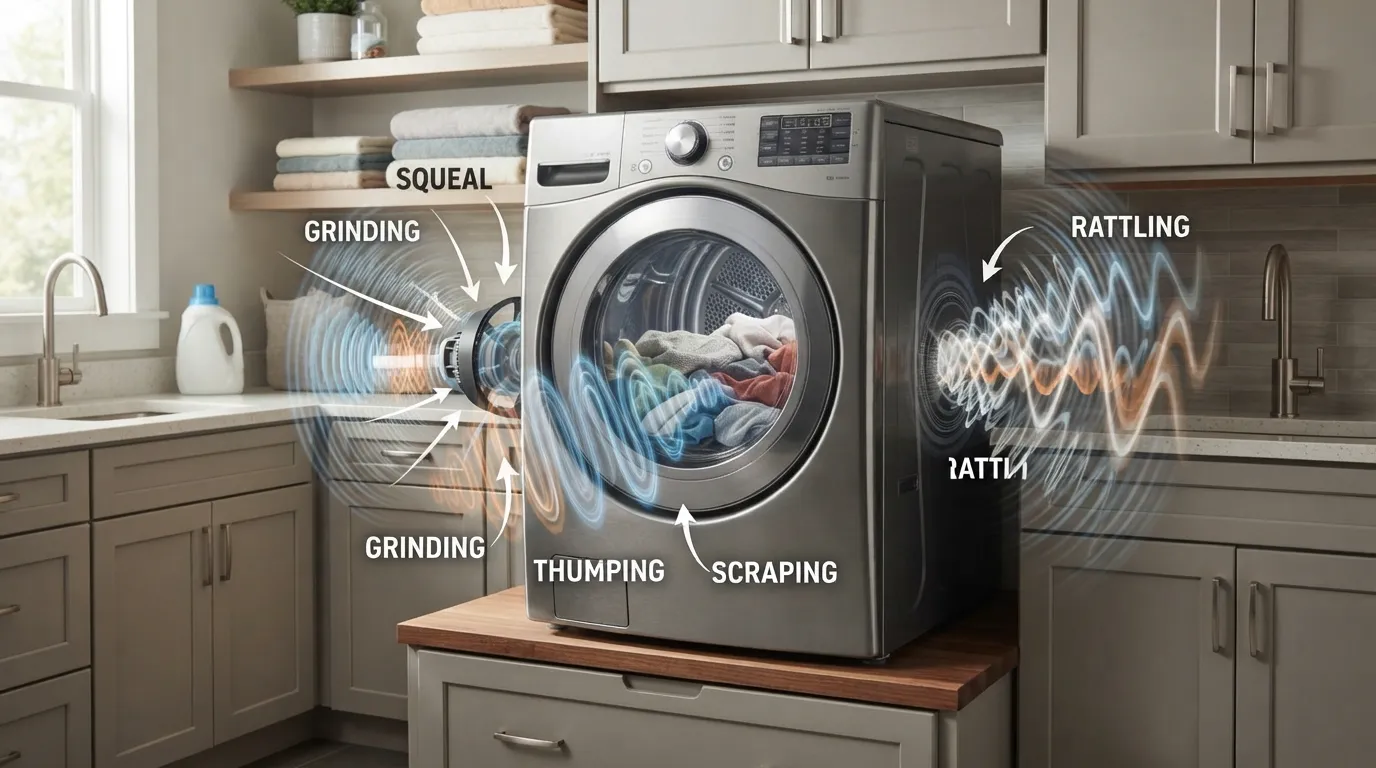
With a dryer making loud noise, the sound itself is the diagnosis. Squealing points to the belt or idler pulley, grinding to the drum glides or bearing, rhythmic thumping to the support rollers, and irregular clanking to something loose in the drum. Only that last one is a free fix, but naming the sound before you call keeps every quote honest.
So put this page down for two minutes, go run the dryer empty, and listen. Then come back and find your noise.
The two-minute check that solves the embarrassing ones
Before assigning blame to any part, rule out the freeloaders:
- Empty the drum completely and run it. Noise gone? It was the load: a zipper, a belt buckle, one sneaker on a solo mission.
- Shine a light along the drum seam and fish out coins with needle-nose pliers if you can reach them without removing anything.
- Pull the lint screen and look down its slot. Underwire and pen caps slide in there and tick against the drum forever.
- Clear the top of the machine. A detergent jug vibrating on the cabinet has fooled sharper people than any of us.
A dryer making noise only with clothes in it, and only sometimes, is usually carrying the problem in the load. That one’s free, and nobody needs to know how long it took to find.
Squealing or squeaking: the belt and the idler
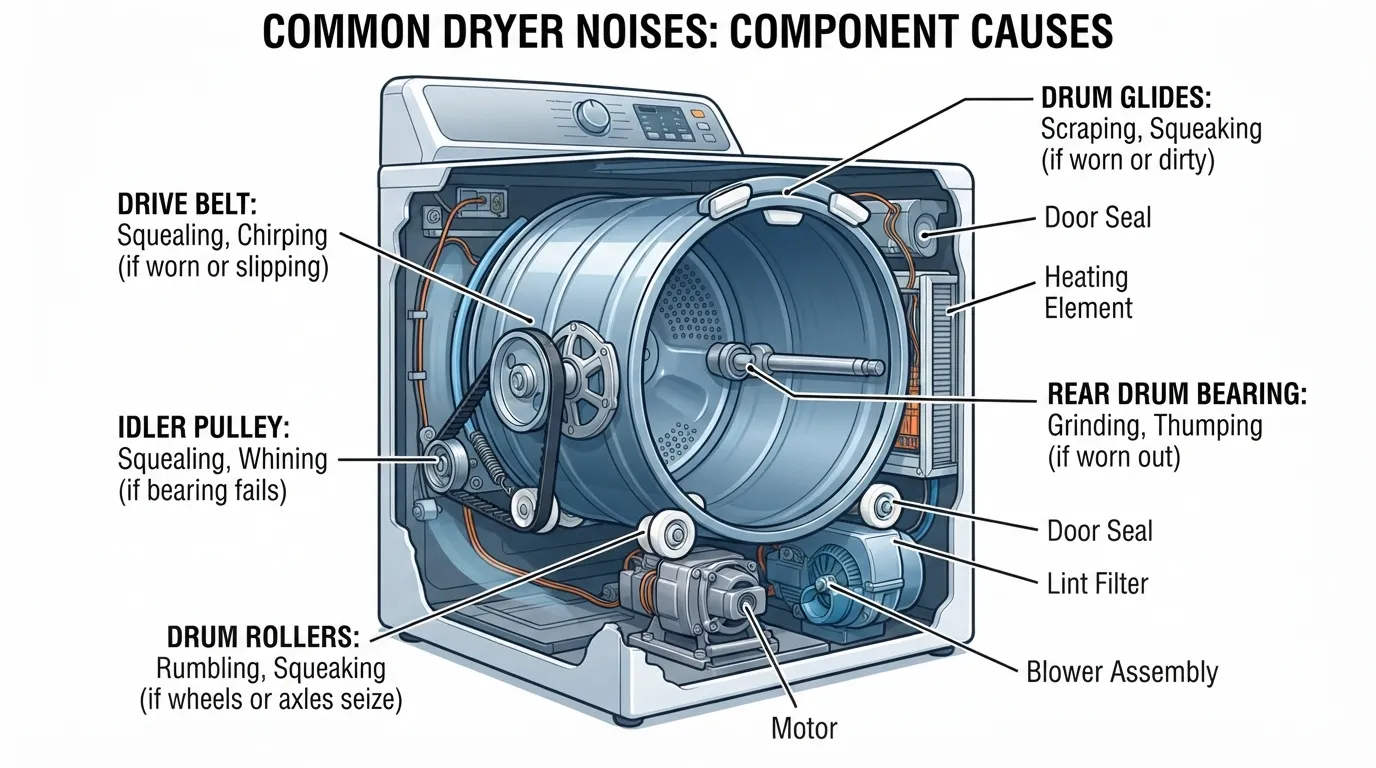
A high squeal, worst at startup and sometimes fading as things warm up, is the classic sound of a worn drive belt or a tired idler pulley. The belt wraps the whole drum; the idler keeps it tight. When either glazes or wears, they sing, and heavy loads make the song louder. Manufacturer troubleshooting pages, Maytag’s among them, point at the same two parts, so the squeal diagnosis isn’t controversial.
Cold mornings sharpen it too. In an uninsulated garage laundry room, a February cold snap stiffens an aging belt enough that the first load of the day announces itself through the wall. If your dryer squealing is seasonal like that, the belt’s not failing today, but it’s declaring a timeline.
Here’s our opinion, earned the hard way: a squeal is a two-week warning, never a personality quirk. Belts snap at full speed on Sunday nights with the week’s uniforms wet in the drum. Replacing a belt or idler means opening the cabinet and threading the new one around the drum, which is licensed-tech work, and it typically runs $125 to $250 in Central Texas, parts and labor, as an industry-typical range.
Grinding: glides, bearing, and a hard deadline
Metal-on-metal grinding is the noise that costs money by the hour. Front drum glides wear down to their rivets; the rear bearing dries out and starts machining itself. Either way, the drum is now sanding its own supports, and every additional load turns a $150-class repair into a drum replacement that isn’t worth doing.
Park it today. Not after the towels. A grinding dryer that keeps running is the appliance version of driving on a flat, and we’ve quoted the sad second half of that story often enough to be blunt about it. Glide and bearing work typically lands between $150 and $300 around here, and it holds only if the drum hasn’t been grinding for a month.
Thumping: rollers, or a comforter doing its best
A steady thump-thump-thump matched to drum speed usually means a support roller has worn flat. It’s especially common after a dryer sits unused for a while, since rollers develop flat spots where they rested; think of the machine in a Crawford rental that sat empty over the summer.
Irregular thumping is happier news. A wadded comforter or a heavy hoodie balled against the drum wall thumps too, so rebalance bulky loads before diagnosing hardware. Roller replacement is cabinet-open work in the same range as glides, and rollers and belt often get done together since the labor overlaps. Worth asking for in one written quote rather than two visits.
Rattling and vibrating: feet, duct, and the vent again
A buzzy rattle that changes when you press a hand on the cabinet is usually the machine itself: leveling feet gone loose, or the dryer touching the washer or a wall. Level the feet, snug the lock nuts, leave a hand’s width of clearance. You’re allowed all of that.
A metallic flap-flap from behind the machine is often the duct, and sometimes it’s a screw or a toy riding the airflow. Check the duct run while you’re back there; a lint-choked vent makes its own set of problems, from loads that take two cycles to dry to a machine that eventually quits heating altogether. Something whirring inside the blower housing itself, though, is cabinet territory, and it goes on the tech’s list.
Where the DIY ends, in one paragraph
You handle: the drum check, the lint screen slot, the feet, the duct, and load balance. A tech handles: belts, idlers, rollers, glides, bearings, and anything behind a panel, because the drum has to come out and the wiring comes with the job. If the machine is past 12 years and needs belt plus rollers plus a bearing, run it through the repair-or-replacement math first; that bundle can reach half the price of a decent new dryer, and we’d rather say so upfront. Either way, you’ll get a written quote before any work starts, same-day slots are often available across the Waco area, and repairs carry our 10% senior and military discount.
Common questions about a noisy dryer
Why is my dryer making a loud noise?
Why does my dryer squeal until it warms up?
Is it safe to keep running a noisy dryer?
How much does it cost to fix a squeaky dryer?
Where to go from here
Empty drum, listen, name the sound. If it’s cargo or feet, you’re done for free. If it’s a squeal, book it this week; if it’s a grind, stop the machine and get a straight answer today or call . Naming the noise when you call means the quote you get is for the part you actually need.
The On Point Team · On Point Service Company — family-owned HVAC & appliance repair, McGregor, TX · Serving Waco, Temple, Belton, and surrounding Central Texas towns · Licensed & insured, TDLR License TACLB00069239E ·