






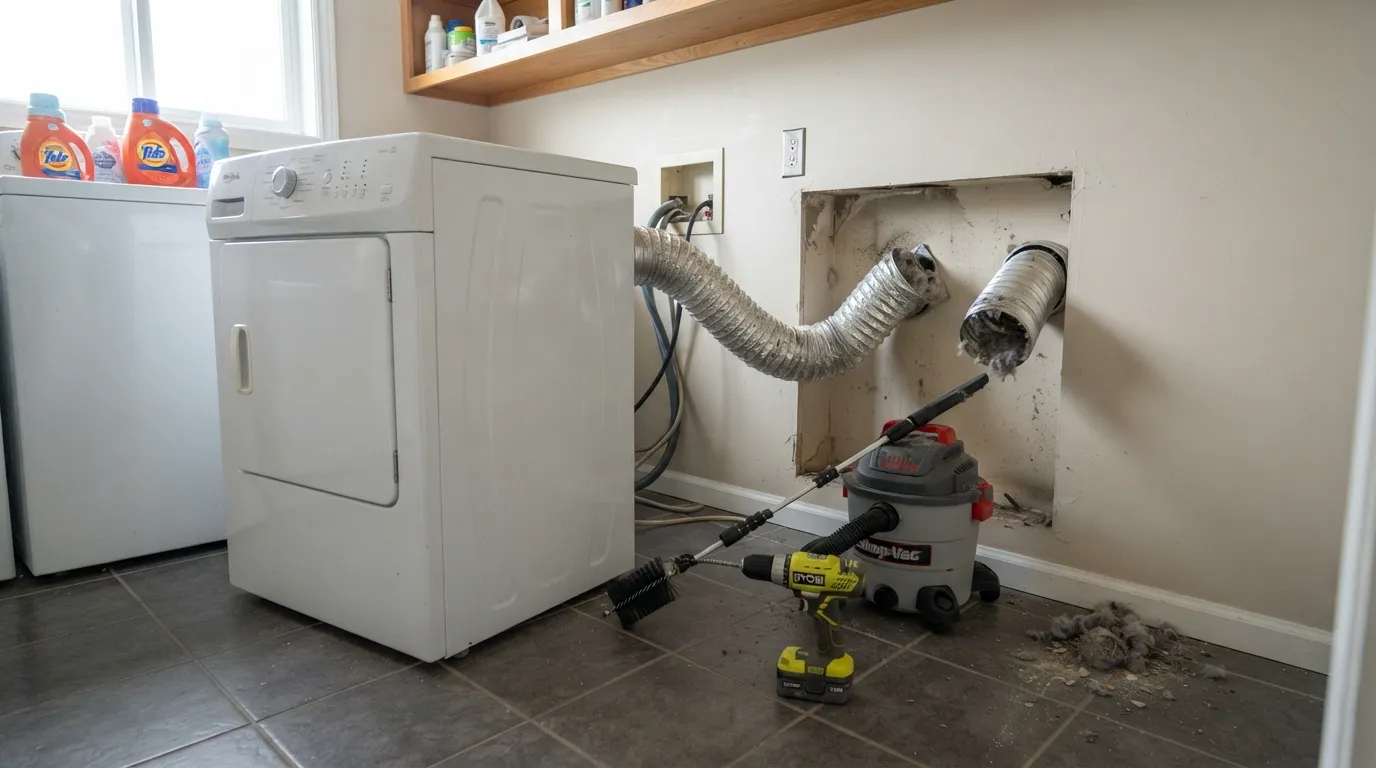
If your dryer takes too long to dry a load, the machine usually isn’t broken. The vent is clogged. Dryer vent cleaning fixes it, and for most Central Texas homes it’s a $25 brush kit and half an hour, no service call needed.
That second cycle is your vent begging for help. Here’s how to answer it yourself, and the two situations where paying a pro genuinely makes sense.
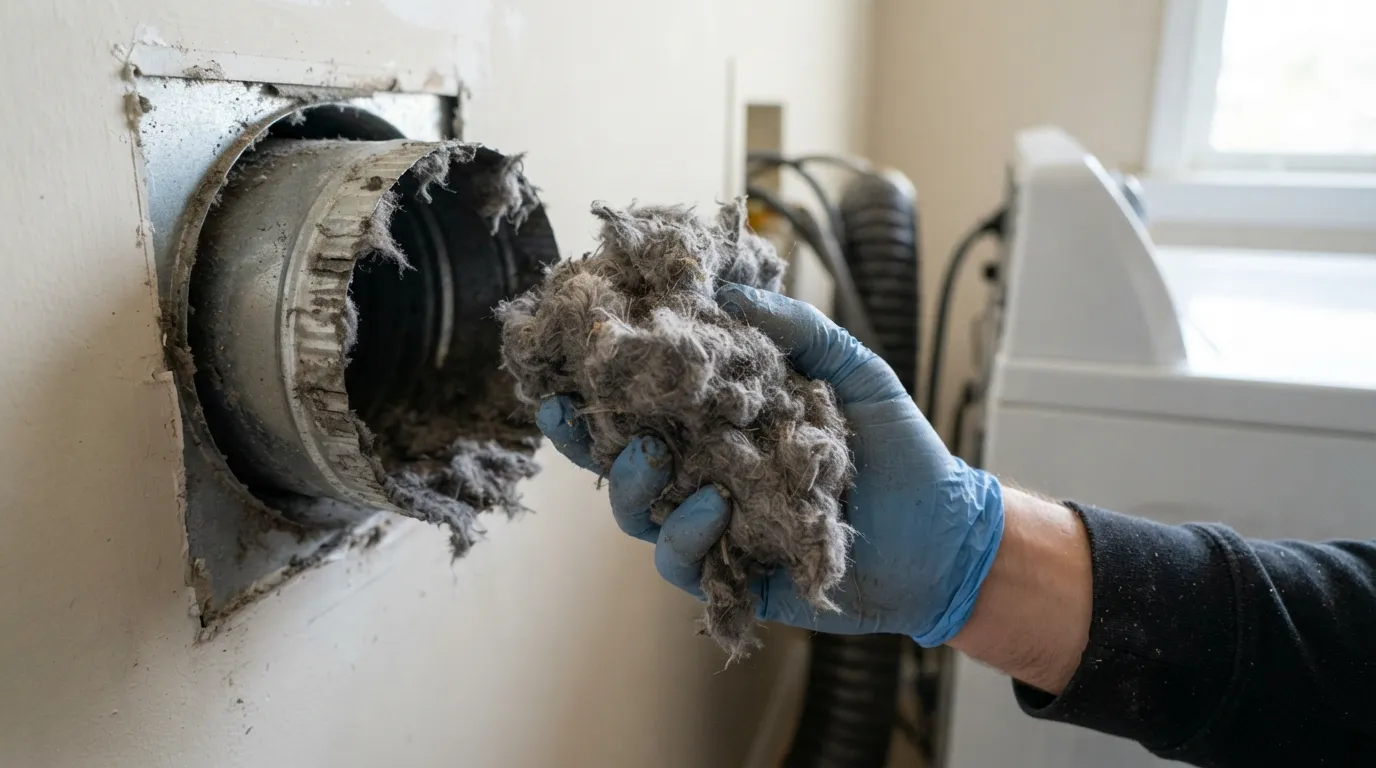
Why the second cycle happens
A dryer is a moisture mover, and the heat is only half the job. Hot air picks up water from your clothes and carries it out through the vent. Choke that exit with lint and the wet air has nowhere to go, so it circles the drum while your towels steam instead of dry.
The dryer isn’t weaker. It’s suffocating.
This is why a dryer taking too long to dry gets worse so gradually that nobody notices for months. Lint builds in layers. Forty-five minute loads become sixty, then two cycles, then someone in the house finally says the thing out loud.
Five signs the vent is the problem
You don’t need a gauge to diagnose this. Any two of these together make it near-certain:
- Clothes come out hotter than usual but still damp
- The top of the dryer is hot to the touch mid-cycle
- The laundry room feels humid while it runs
- The outside flap barely moves, or lint whiskers hang from it
- A faint hot, dusty smell during loads
That last one deserves respect. A burning smell that lingers after the cycle ends means stop using the dryer today, before any cleaning, and let someone look at it.
Clean it yourself first: the brush kit method
Hardware stores in Waco and Temple sell flexible dryer vent brush kits for $20 to $30, and honestly, that kit beats hiring anyone for a typical short run. Here’s the whole job:
- Unplug the dryer (gas models: also close the appliance’s gas shutoff, then don’t touch anything else gas-related).
- Pull the machine away from the wall and detach the duct from the back.
- Vacuum the port on the dryer itself; lint packs right at the exit.
- Brush the duct from the inside end, rotating as you push through.
- Find the outside vent, pop the cover, and brush from that end too.
- Clear the flap or louvers so they swing freely.
- Reconnect everything without crushing the duct against the wall.
- Run the dryer empty for five minutes and feel for strong, warm airflow outside.
Do that once a year and a slow dryer stays a memory. If your loads were bad enough that the heat eventually quit entirely, that’s a different article, and we wrote it: why a dryer stops heating after months of slow loads.
When paying for professional dryer vent cleaning makes sense
Two situations, and we’ll be straight that they’re the minority.
Roof vents. Plenty of two-story homes vent the dryer through the roof, and lint plus vertical run plus ladder work is a genuinely bad DIY combination. This is the rare job where the fee buys real safety, and it’s worth it.
Long or hidden runs. Some older Waco houses route ductwork under the floor or through a wall chase for 20 feet or more, farther than any $25 brush reaches. Newer builds out toward China Spring mostly have short, straight runs, which is exactly why we tell those owners to keep their money.
Professional dryer vent cleaning typically runs $100 to $200 in Central Texas as an industry-typical range, not our menu. If your run is long, vertical, or a mystery, request a written quote and you’ll get a real number before anyone climbs anything. We’d rather sell you nothing here than a service your vent didn’t need.
The fire part, said once and calmly
No sirens, just the numbers. The U.S. Fire Administration reports about 2,900 home clothes dryer fires a year, and failure to clean the dryer is the leading cause at roughly a third of them. That’s the entire case for taking a slow dryer seriously, and it’s enough.
While you’re back there, look at the duct itself. If it’s the shiny foil accordion type, replace it. Foil flex duct sags, traps lint in every ridge, and crushes flat the moment the dryer gets pushed against the wall. Semi-rigid metal duct costs about $15, installs in ten minutes, and removes the worst link in the chain. This is the strongest opinion in this post, and we’ll stand on it.
Keep it from clogging again
The habits cost nothing. Empty the lint screen every single load, not every third. Wash the screen with dish soap every couple of months if you use dryer sheets, because softener film seals the mesh in a way you can’t see. Leave a hand’s width behind the dryer so the duct never kinks.
And each spring, glance at the outside flap. Oak pollen season around here gums up vent screens and louvers surprisingly fast, the same way it packs your AC filter. Thirty seconds with a brush handles it.
We put this on the same list as the rest of the cheap, boring upkeep that prevents expensive calls: the maintenance mistakes that lead to costly repairs. Slow dryers are the most preventable problem we get called for.
Common questions about dryer vent cleaning
How often should dryer vents be cleaned?
Once a year for most households, twice if you dry heavy loads daily, have pets, or your run is long. The lint screen is every load, no exceptions. If dry times start creeping up before the year is out, clean it early; the dryer is telling you the schedule.
Can I clean my dryer vent myself?
Yes, for a typical ground-floor vent with a short run: a $25 brush kit, a vacuum, and 30 minutes. Leave roof vents and long hidden runs to a pro; ladders plus lint isn’t a place to save $150.
How much does dryer vent cleaning cost?
Hiring it out typically runs $100–$200 in Central Texas depending on the run’s length and access. Doing it yourself costs the price of a brush kit. Get any quote in writing, and be suspicious of anyone quoting before they’ve seen where your vent exits.
Why does my dryer take two cycles to dry?
Because the moist air can’t escape. A lint-restricted vent keeps humidity trapped in the drum, so clothes tumble in their own steam. Clean the vent and the duct behind the machine; if loads are still slow after that, the machine itself deserves a look.
Where to go from here
Buy the brush kit before you book anybody, including us. If the run turns out to be long, vertical, or the airflow’s still weak after a proper cleaning, get a straight answer on what’s actually wrong or call . Same-day slots are often available across the Waco area, and the quote comes in writing before any work does.
The On Point Team · On Point Service Company — family-owned HVAC & appliance repair, McGregor, TX · Serving Waco, Temple, Belton, and surrounding Central Texas towns · Licensed & insured, TDLR License TACLB00069239E ·