






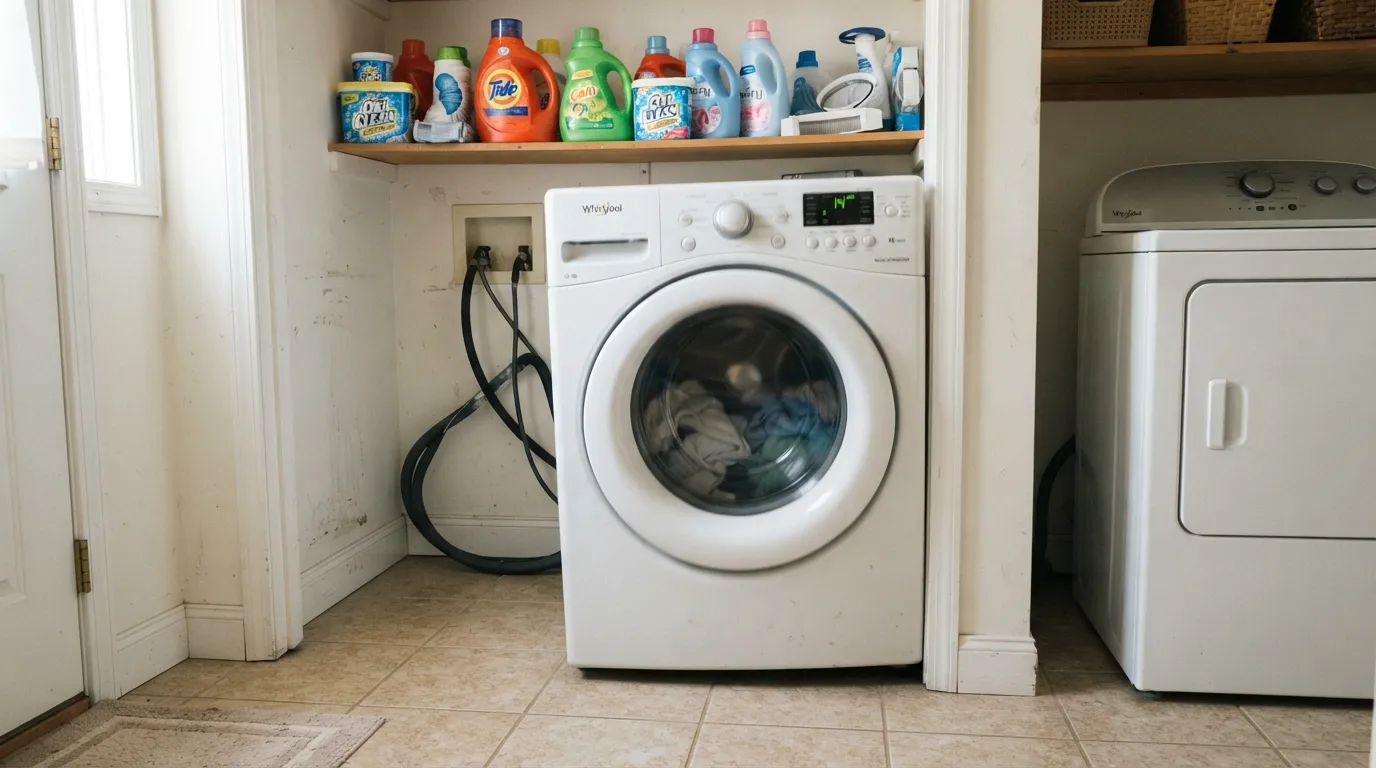
Why is my washing machine shaking? Four usual reasons: an unbalanced load, feet that aren’t level, shipping bolts still installed on a new or recently moved machine, or worn suspension parts. The first three cost nothing and take minutes. Only the fourth needs a technician.
A little drum wobble during spin is normal. A machine that bangs, walks, or rattles the dishes in the next room is not, and it’s doing damage to itself with every load. Work down this list and you’ll know which problem you have before dinner.
Start with the load, because it’s the answer half the time
Wet fabric is heavy, and a spin cycle is a scale spinning at hundreds of RPM. One waterlogged towel wadded on one side, a single pillow, a comforter that’s folded itself into a crescent: any of these throws the balance off, and the machine shakes trying to spin an off-center weight.
Open the door, spread the load evenly, and add two or three towels if you’re washing one bulky item. That’s the whole fix. Newer HE top-loaders without agitators are especially touchy about single heavy items, so a bath mat washed alone will rock a machine that behaves perfectly with normal loads.
If the washer shaking only happens on certain loads, stop here. You’ve found it, and it was free.
Check the feet with the rock test
Grab the machine by opposite corners and push diagonally. Any rocking at all means the feet aren’t sharing the weight, and an unlevel washer amplifies every spin into a drum solo.
Each front foot screws in and out; spin them until all four sit solid, then snug the lock nuts up against the body so vibration can’t wander them loose again. Check side-to-side and front-to-back with the bubble-level app on your phone or the real thing. Machines on pedestals need the same check up top and down below, because a level washer on a rocking pedestal still walks.
Sixty seconds with a wrench. It fixes more shaking washers than any part ever sold.
New or recently moved machine? Shipping bolts
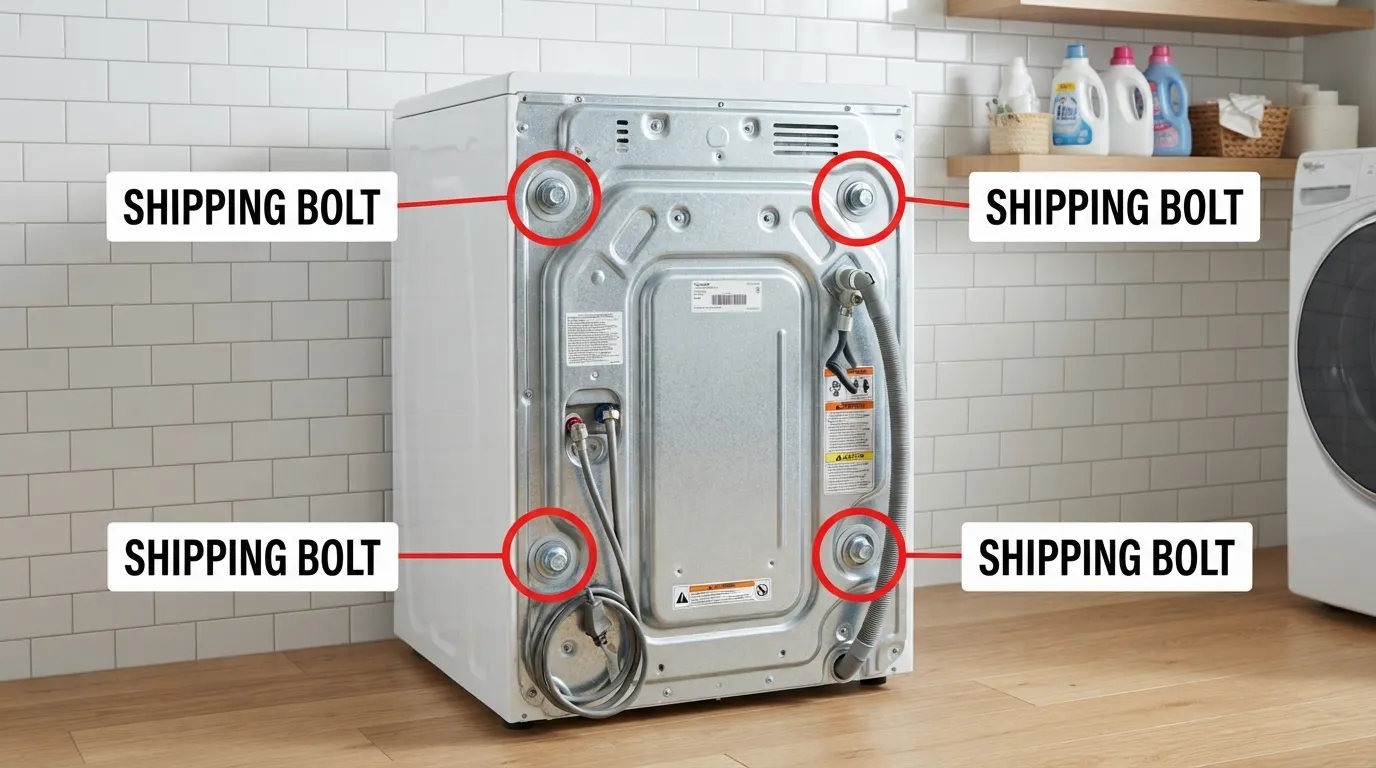
Front-loaders ship with three to five heavy bolts through the back panel that lock the drum solid for the truck ride. Miss them during install and the machine tries to spin a drum that’s bolted to its own cabinet. The result is spectacular: violent banging from the very first spin, sometimes a machine that lunges forward like it’s leaving.
Say your new front-loader lands in a China Spring laundry closet on Tuesday and it’s walked out of the alcove by Friday. That’s not a defect. That’s bolts. Look at the back panel for large plastic-headed bolts, remove them with the wrench that came taped to the machine, and pop in the cover plugs. Samsung’s install guides show the exact spots, and every brand’s version looks about the same.
This is the most common fake breakdown in new machines, and we’d rather you catch it than pay anyone, including us, to turn a wrench four times. Keep the bolts taped to the back panel afterward; the drum needs them locked again for the next move. And since moves also kink hoses and knock feet out of level, a just-moved machine that shakes and drains slowly has two cheap problems, both covered between this post and the washer drain checks.
When it’s the suspension, and the free fixes stop
If the load is balanced, the feet are solid, the bolts are long gone, and the washing machine is shaking violently anyway, the suspension is worn. Top-loaders hang the tub on rods or springs; front-loaders use shocks and dampers. All of them age, and when they go soft the tub slams instead of floats.
The louder cousin is bearings. A roar or grinding during spin that’s grown worse for months, sometimes with a drum you can lift and clunk by hand, means the bearings are failing, and the shaking is coming along for the ride.
Both are real repairs behind the cabinet panels, and that’s the stop line: suspension and bearing work means tearing the machine down around spring-loaded parts and wiring, and it’s a licensed tech’s job, full stop. Typical Central Texas ranges run $150 to $300 for suspension parts and $300 to $500 or more for bearings, parts and labor, as industry-typical figures rather than anyone’s menu. Bearings on a mid-priced machine past eight years usually lose the repair-or-replace math, and we’ll say so in the quote even though it costs us the job; the repair-or-replacement guide walks that decision. Either way, you’ll get a written quote before any work happens, and repairs carry our 10% senior and military discount.
The floor underneath matters more than people think
Same machine, two houses, different behavior. Plenty of older Waco homes sit on pier-and-beam floors that flex under a spin cycle, while newer slab builds out toward Temple and China Spring give the washer nothing to bounce. A second-floor laundry adds its own trampoline effect.
Anti-vibration pads under the feet genuinely help on wood floors, and they cost about $20. But they’re a mask, never a cure. Pads quiet a healthy machine on a lively floor; they can’t fix worn shocks or a drum that’s out of balance. Put pads under a shaking machine without finding the cause and you’ve muffled a warning, and muffled warnings mature into bigger invoices.
While the machine’s pulled out anyway, it’s a good moment for the monthly cleaning routine most of us skip. A balanced machine that also doesn’t smell is a good week’s work.
Common questions about a shaking washer
Why is my washing machine shaking violently during the spin cycle?
How do I stop my washer from shaking and walking?
Are washing machine shipping bolts really that important?
When is a shaking washer worth repairing?
Where to go from here
Load, feet, bolts. Ten minutes covers all three, and most shaking washers never need step four. If yours does, or the shaking comes with grinding, get a straight answer from a real person or call . We’ll tell you honestly whether it’s a suspension fix or a machine that’s earned retirement.
The On Point Team · On Point Service Company — family-owned HVAC & appliance repair, McGregor, TX · Serving Waco, Temple, Belton, and surrounding Central Texas towns · Licensed & insured, TDLR License TACLB00069239E ·