




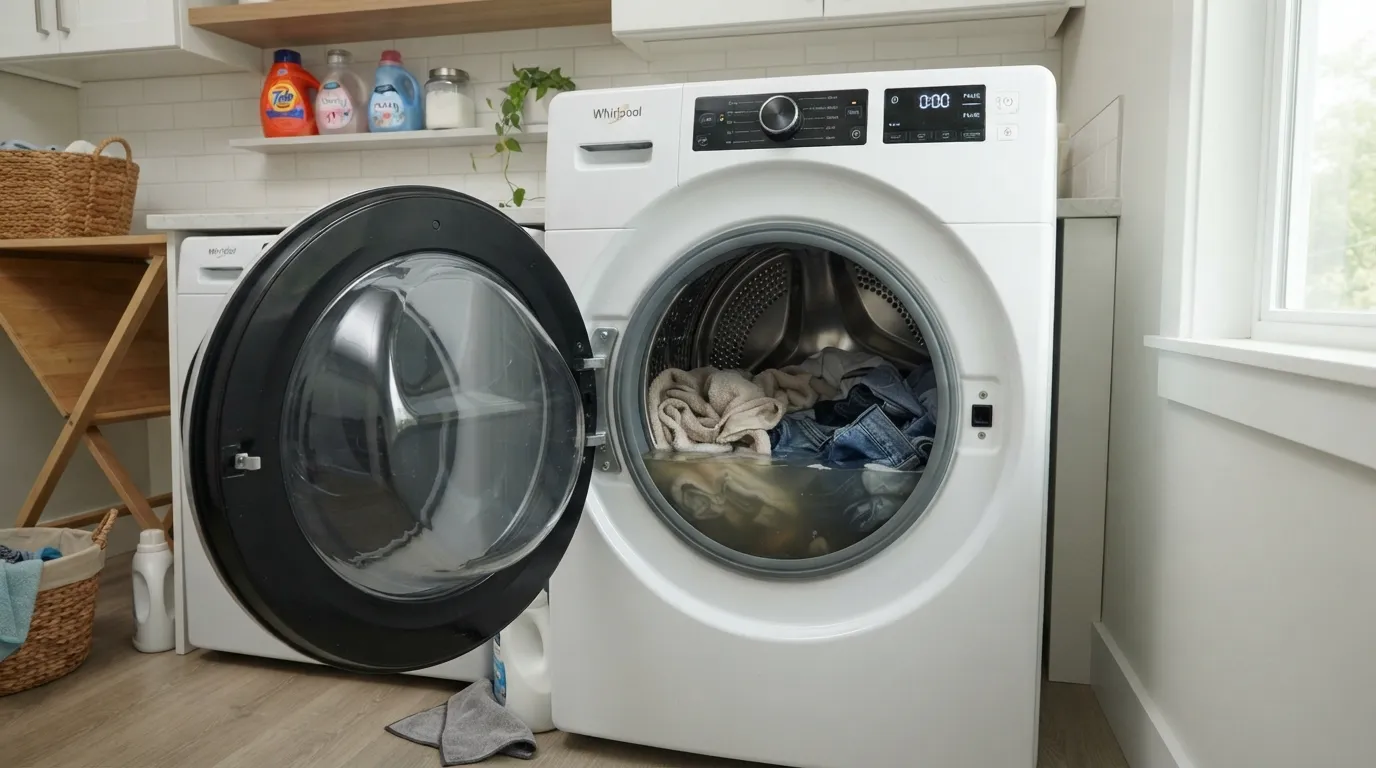
A washer that won’t drain usually has one of three problems: a packed drain pump filter on front-loaders, a kinked or clogged drain hose, or a lid switch that thinks the lid is open on top-loaders. All three are checkable at home. The fourth possibility, a dead drain pump, is where you stop.
Front-loader owners, take some comfort: your machine keeps the door locked while it holds water, which is annoying and also correct. Here’s the order that finds the problem fastest.
First, get the water out
Don’t troubleshoot over a full drum. Unplug the machine, then drain it the low-tech way: most front-loaders hide a small drain hose or cap behind the same bottom panel as the filter, and gravity does the rest into a baking pan, slowly, a pan at a time. Top-loaders are easier; bail with a pitcher and finish with towels.
Yes, it’s tedious. It also means the filter check that comes next doesn’t flood the laundry room, and wet floors around a plugged-in appliance are exactly the situation we want you nowhere near.
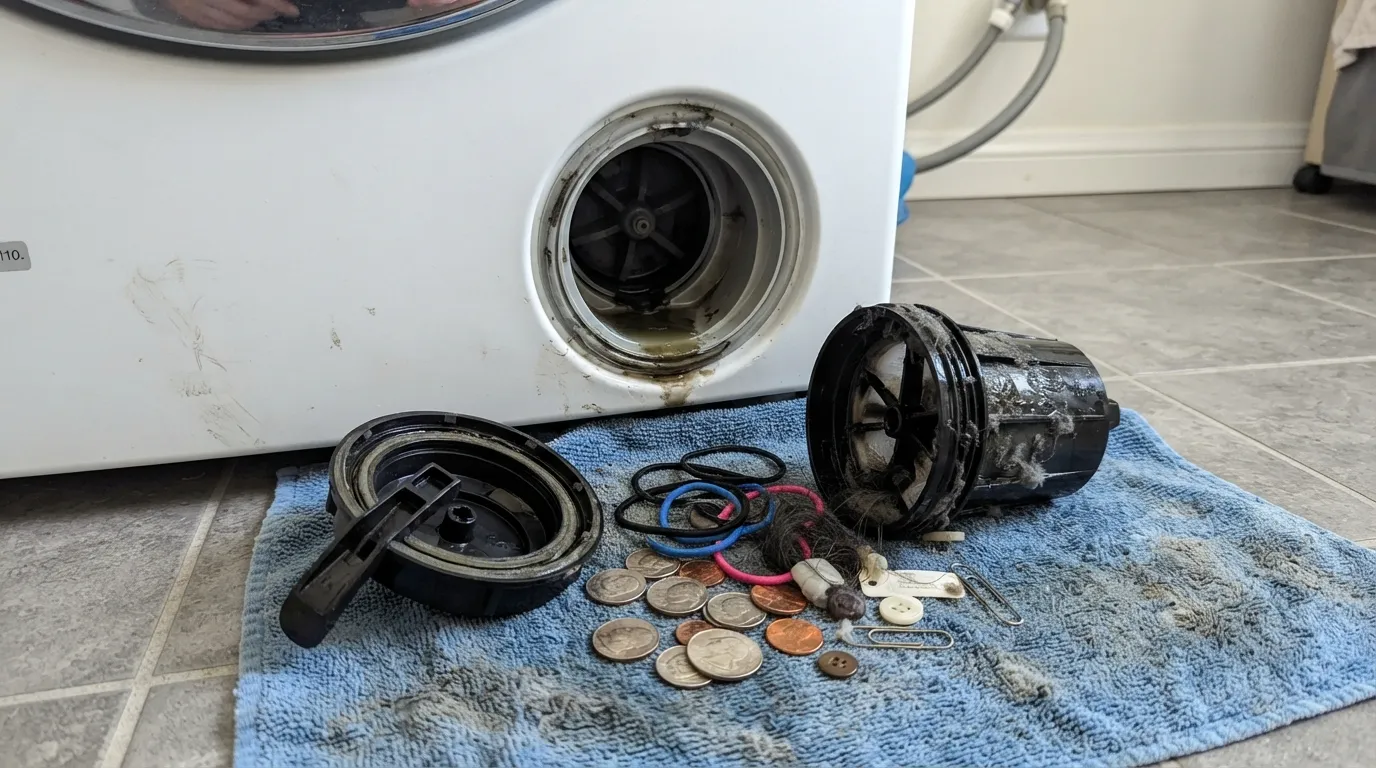
Check 1: The drain pump filter, also called the coin trap
The name is the diagnosis. Down behind the little panel at the bottom front of most front-loaders sits a screw-out filter whose whole career is catching coins, hair ties, bobby pins, and socks before they reach the pump. Pack it full and the water simply stops leaving.
Towels down, unscrew it slowly, let the last water burp out, and see what you’ve caught. Summer is peak season for this around here; Lake Waco weekends send home towels full of sand and swimsuits with gravel in the pockets, and every bit of it ends up in this trap. Our hard water adds its own crust to the mesh, so rinse it under the tap and scrub it with an old toothbrush before it goes back in.
We’d put the coin trap on a quarterly chore list, honestly. Almost nobody cleans it until the machine strikes, and it’s a five-minute job that belongs in the same monthly washer routine as the vinegar cycle. Manufacturers agree; Whirlpool’s own care pages tell owners to clear it regularly, and nobody reads that page until today.
Check 2: The drain hose
Pull the machine forward and look at the corrugated hose running to the standpipe or sink. You’re checking three things:
- A kink or crush point from the washer being shoved against the wall
- A hose jammed so deep into the standpipe that water can’t get past it (the hose should sit loosely, a few inches in)
- A clog you can feel: detach the hose end and sight through it, or flex it and listen for a sock sliding around
That last one is real and almost funny. Small items ride over the tub on some top-loaders and end up lodged in the hose or the pump inlet, and the machine drains fine one day and never again. If you can reach the blockage from the hose end, pull it. If it’s disappeared toward the pump, leave it; that’s disassembly work.
Check 3: The lid switch (top-loaders)
A top-loader refuses to drain and spin when it believes the lid is open. Close the lid and listen for a soft click near the hinge or strike. No click, no drain, and the water sits there looking innocent.
Your part of this check is simple: clean lint and detergent grit out of the strike area, close the lid firmly, run a drain/spin cycle. If it clicks and drains, done. If there’s no click at all, the switch has likely died, and here’s where we plant a flag: don’t replace it yourself, even though the part costs $30 online and the video makes it look like ten minutes. The switch is a safety interlock wired into the machine’s controls. Wiring plus a tub of standing water is tech territory, every time.
The one repair to leave alone
If the filter’s clean, the hose runs clear and straight, and the lid switch clicks, what’s left is the drain pump itself, or the wiring that feeds it. That’s the stop line. Pump work means laying the machine open around water and live connections, and it’s the reason washing machine repair exists as a trade.
The honest math: a drain pump replacement typically lands between $150 and $350 in Central Texas, a lid switch between $100 and $200, industry-typical ranges, not our menu. You’ll get the real number in a written quote before any work starts, same-day slots are often available from Waco to Temple, and repairs carry our 10% senior and military discount.
And the trade-off we’ll admit out loud: sometimes the fix was a kinked hose, the visit costs you a trip fee, and that stings. It’s exactly why the three checks above come first, and why our techs tell you what they found even when it’s embarrassing for the machine, never for you. If you’re weighing whether any of this is worth doing yourself, our DIY-or-call decision guide draws the same lines for every appliance in the house.
Keep it from happening again
Pockets. That’s most of the sermon. Coins, gravel, hair ties, and one missing sock cause the bulk of drain calls, and a $6 mesh bag for small items ends the sock migration entirely.
Then the boring rest: clear the coin trap quarterly, wash the machine monthly, and re-check the hose for kinks any time the washer gets moved. The dishwasher next door fails the same way for the same reasons, and the four-check drain routine for it looks deliberately familiar.
Common questions about a washer that won’t drain
How do I force my washing machine to drain?
How do you fix a washing machine that’s not draining?
Why is my washer full of water and won’t spin?
What does it cost to fix a washer that won’t drain?
Where to go from here
Filter, hose, lid switch, in that order, with the water bailed first. You’ll clear it yourself more often than not. If the pump’s the problem, get a straight answer and a written quote or call , and we’ll tell you plainly whether the fix is a $150-class part or a machine worth a bigger conversation.
The On Point Team · On Point Service Company — family-owned HVAC & appliance repair, McGregor, TX · Serving Waco, Temple, Belton, and surrounding Central Texas towns · Licensed & insured, TDLR License TACLB00069239E ·