






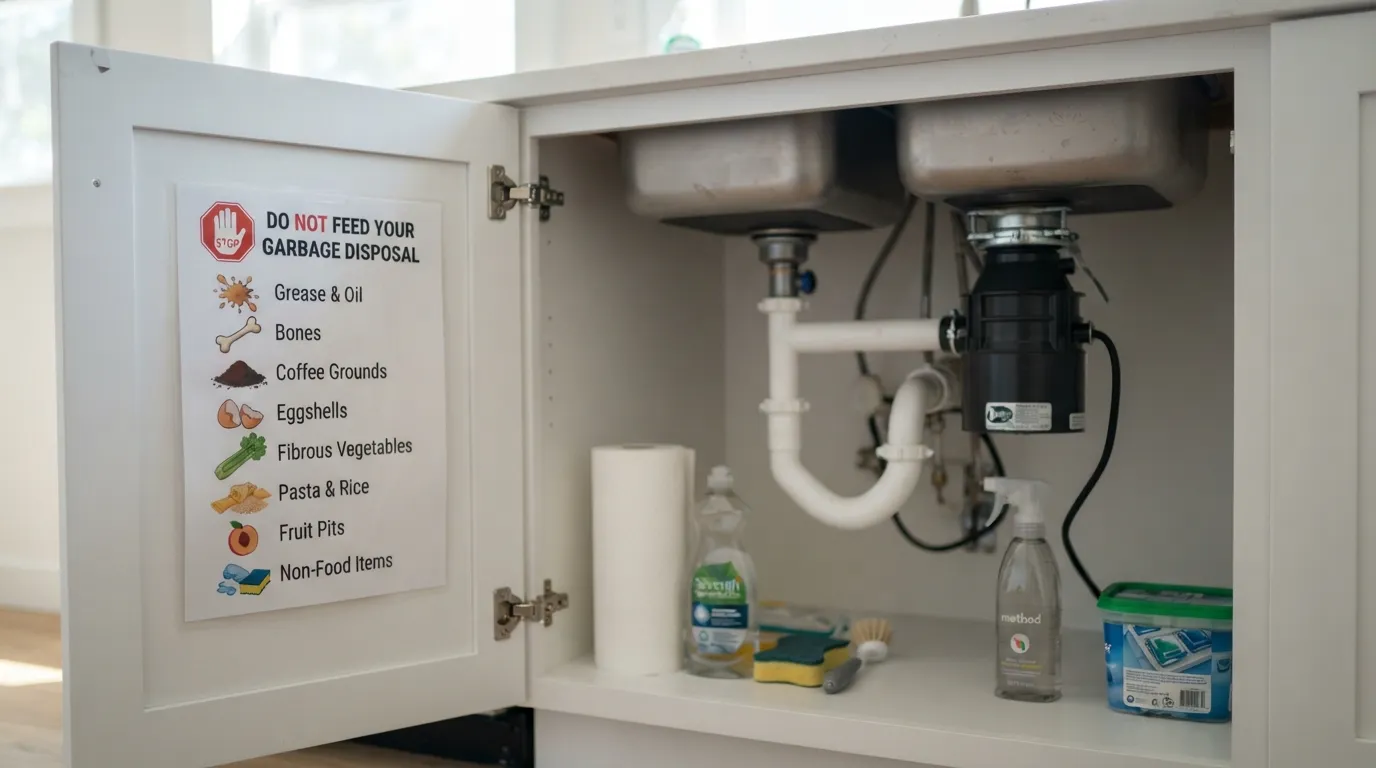
Here’s the do-not-feed list, in order of the damage done: grease, coffee grounds, pasta and rice, potato peels, fibrous vegetables, bones and fruit pits, eggshells, stringy fat, and anything that was never food. Most of these don’t hurt the disposal itself. They hurt the pipe right after it, which is why the “but mine handled it fine” argument keeps ending in standing water.
The one-line version of each, then the two myths that refuse to die.
The full list, with reasons attached
- Grease and cooking oil. Sails through the disposal, then sets up like a candle in the drain line.
- Coffee grounds. Turn into sediment sludge that packs the trap. The sink smells great for an hour and drains slow for a week.
- Pasta, rice, and oatmeal. They keep swelling after you rinse them down, then bind into paste.
- Potato peels. Starch glue, plus thin peels that slip past the grind and mat together.
- Fibrous stuff. Celery, corn husks, onion skins, artichokes, banana peels: the strings wrap the impellers like fishing line on a prop.
- Bones and fruit pits. The classic jam-makers. Small chicken bones sometimes survive the trip; rib bones and peach pits don’t.
- Eggshells. Contested, we’ll settle it below. Short version: skip them.
- Stringy fat and gristle. Half grease problem, half wrapper problem, all regret.
- Not-food. Paint, solvents, medications, cigarette butts, produce stickers, twist ties. The disposal grinds; the water system downstream doesn’t forget.
Tape that to the cabinet door if the household needs a treaty. Now the physics.
Grease ruins the pipe, not the disposal
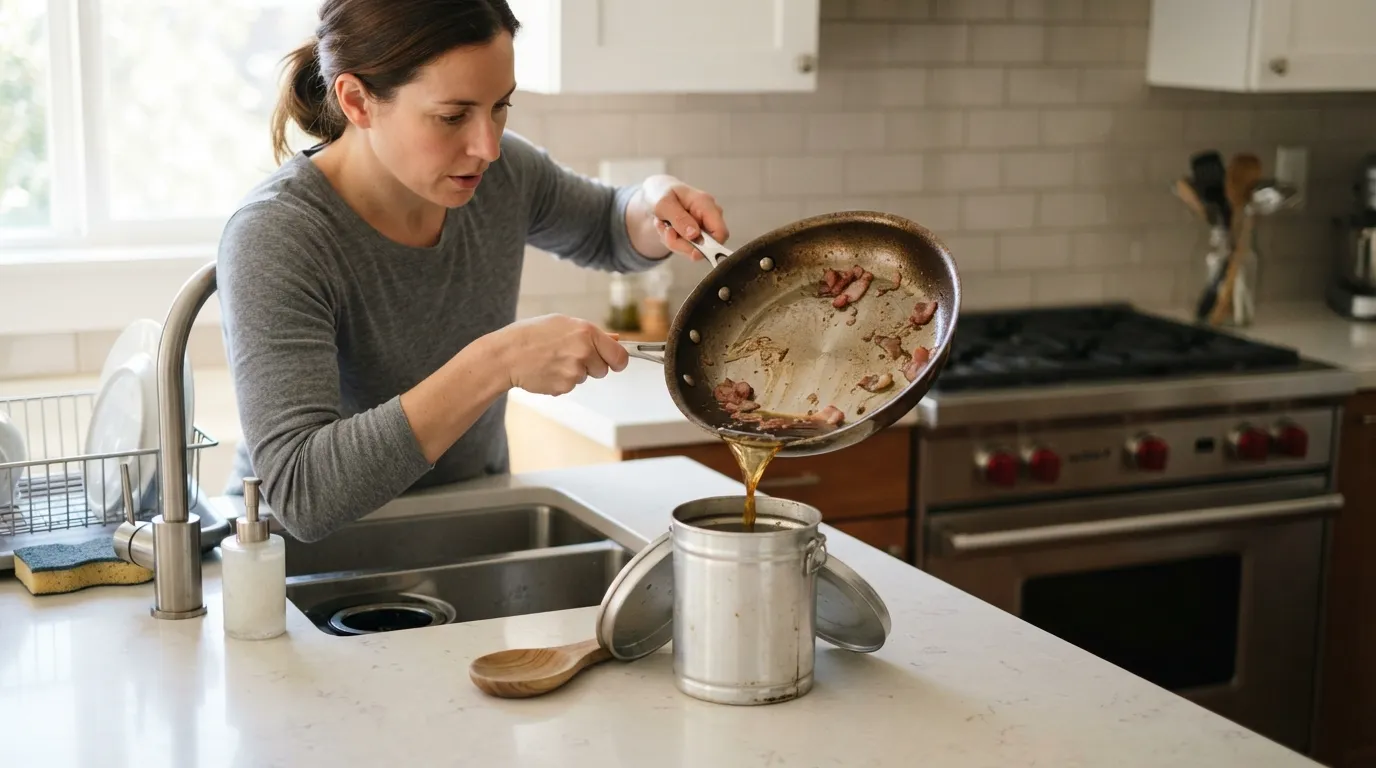
Warm bacon grease is a liquid with plans. It coats the drain line as it cools, each pour adds a layer, and Waco’s older neighborhoods with decades-old cast iron drains feel it first; those pipes are already rough inside, and grease treats rough like scaffolding. The EPA’s sewer-overflow material calls fats, oils, and grease a leading cause of line blockages (their FOG guidance is blunt about it), and the fix costs you nothing: pour it into a can, wipe the pan with a paper towel, done.
Running hot water while you pour doesn’t help, by the way. It just moves the candle-making twenty feet down the line, where the rodding bill is bigger.
The sludge-makers: coffee grounds and starch
Coffee grounds feel virtuous, they’re small, they smell good, and they’re the number-two ingredient (after grease) in the gray concrete we pull out of kitchen traps. Grounds don’t dissolve. They settle.
Pasta, rice, oatmeal, and potato peels play a different instrument in the same band: they absorb water and expand for hours after they disappear. A cup of rice down the drain is two cups of paste by bedtime. If your garbage disposal is clogged and nobody fed it anything “wrong,” last night’s spaghetti water is the usual confession.
Compost the grounds, trash the starch. Your trap stays boring, which is the goal.
The wrappers: fibrous vegetables
Celery strings, corn silk and husks, onion skins, and artichoke leaves don’t grind so much as braid. They wind around the impellers and the shaft until the motor’s dragging a rope skirt, and that’s a common backstory for the humming-disposal jam you fix with an Allen wrench. Trimming for a big cook, like half of Central Texas does before Thanksgiving or a Baylor watch party, fill a bowl for the trash as you go. The disposal is for what’s left on plates, and honestly not even most of that.
Our actual stance, as the people who get the callback: a disposal is a finishing tool, not a trash can. Scrape first, grind the remainder.
Bones, pits, and shells: the jam-makers
This is the category that stops the flywheel mid-spin. Peach pits are basically wooden ball bearings, rib bones wedge sideways, and shrimp shells pack into the grind ring. Some disposals claim they’ll take small bones, and the premium ones mostly can, but “can survive it” and “should eat it daily” are different sentences. Every jammed flywheel shortens motor life, and enough of them ends at the repair-or-replace math, which for disposals usually says replace.
Eggshells and ice: two myths, one funeral
Eggshells “sharpen the blades.” They don’t, and they can’t, because a garbage disposal has no blades. It has blunt impellers that fling food against a stationary grind ring. There’s nothing in there to sharpen. Meanwhile the shell’s membrane wraps the impellers and the ground shell joins the coffee-ground sediment downstream. An occasional shell won’t kill anything; the habit is what costs you. Our verdict: compost pile or trash, not the drain.
Ice sharpens them too. Same anatomy problem, nothing to sharpen. But here’s the twist: ice is genuinely useful anyway. A tray of cubes with cold water running knocks stuck gunk off the impellers and the chamber walls, which is why the tip survives, it works, just for the wrong stated reason. Ice yes, sharpening no.
Already clogged? Do this, not that
Slow or standing water at the disposal side: run the disposal with cold water in short bursts, then try a sink plunger with the other basin’s drain blocked. Baking soda and vinegar, fine, mostly harmless. What never goes in: chemical drain cleaner. It sits in the chamber, eats the seals, and greets the next pair of hands that works on the unit; we banned it in dishwashers in the drain-check post and the disposal ruling is identical.
If the clog laughs at the plunger, or the backup is on both basins, the blockage is down the line and it’s tool work. Get a straight answer and a written quote before anyone sells you a mystery flat rate. Fair warning that cuts against our own tickets: most bad-diet clogs are fixed permanently by a $0 habit change, and we’ll tell you which habit while we’re under the sink.
Common questions about disposal do’s and don’ts
Can you put coffee grounds in a garbage disposal?
Is ice good for a garbage disposal?
What do I do if my garbage disposal is clogged?
Are lemon peels OK in the disposal?
Where to go from here
Grease in a can, grounds in the compost, starch in the trash, and the disposal gets the scraps too small to argue about. That diet alone keeps most units out of trouble for a decade. When one misbehaves anyway, request service or call for a straight answer and a written quote — and a 10% discount on repairs for seniors and military.
The On Point Team · On Point Service Company — family-owned HVAC & appliance repair, McGregor, TX · Serving Waco, Temple, Belton, and surrounding Central Texas towns · Licensed & insured, TDLR License TACLB00069239E ·