

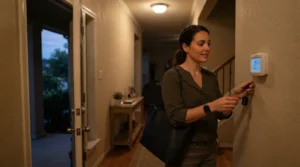
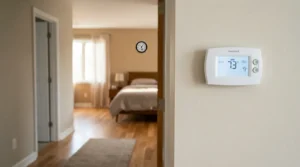

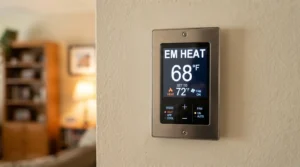

A heater running but the house staying cold means one of two things: the system is making less heat than it should, or the house is shedding heat faster than the system can replace it. In a real Texas cold snap, it’s often both at once. The fix depends on which story is yours, and you can start telling them apart in the next two minutes with nothing but your hand.
So start there.
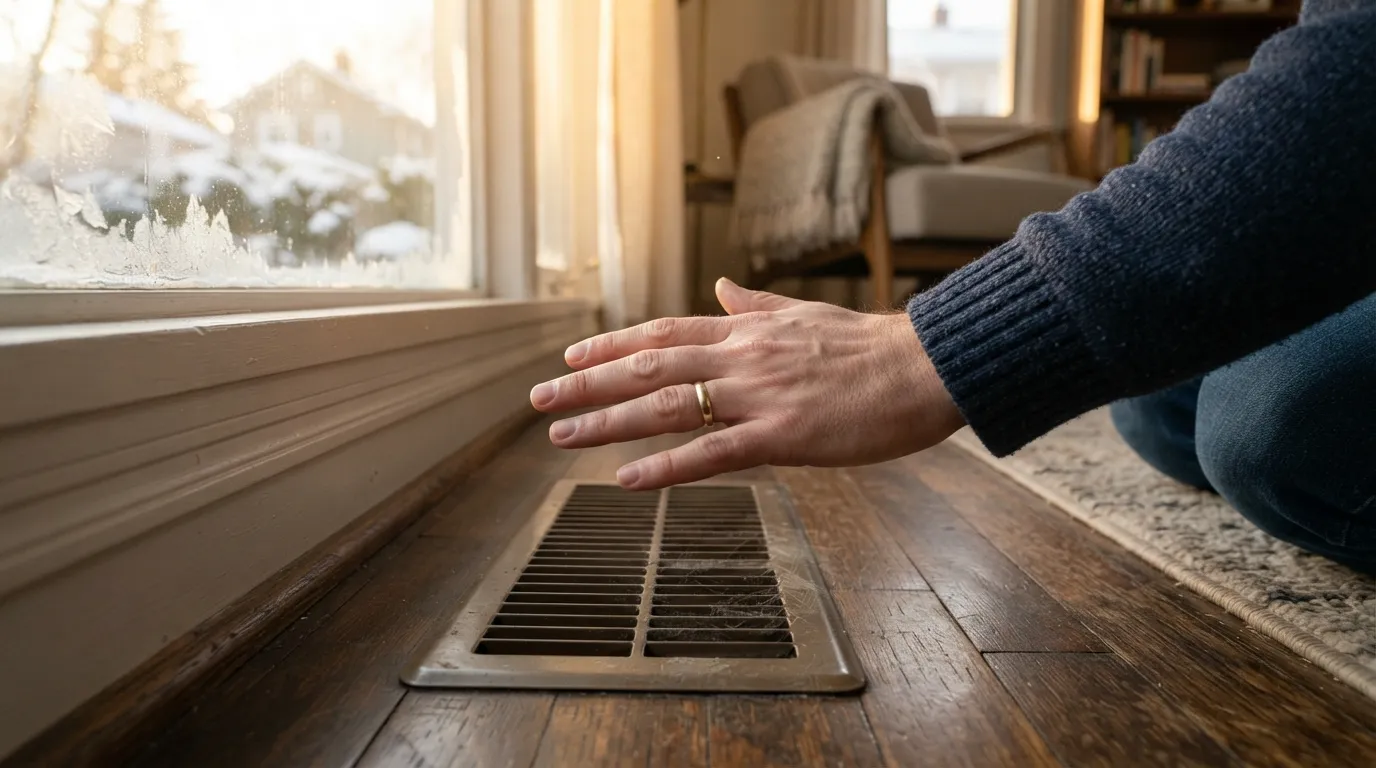
Put your hand on a supply vent first
Three possible readings, three different roads.
Cold air. The system is running without making heat — that’s the “heater blowing but no heat” problem, and it has its own checklist covering the fan switch, the filter, and the ignition side. We wrote it up in furnace blowing cold air. Start there instead.
Weak air, or none. The “heater on but not blowing air” complaint is a blower or airflow story: a filter packed solid, a tripped breaker on the air handler, or a blower motor giving up. Check the filter and the breaker yourself. If the burners fire and air still won’t move, stop and call it in.
Warm air, cold house. The system is doing its job and losing the war anyway. Keep reading, because the rest of this post is about where that heat is going.
If you have a heat pump: meet the balance point
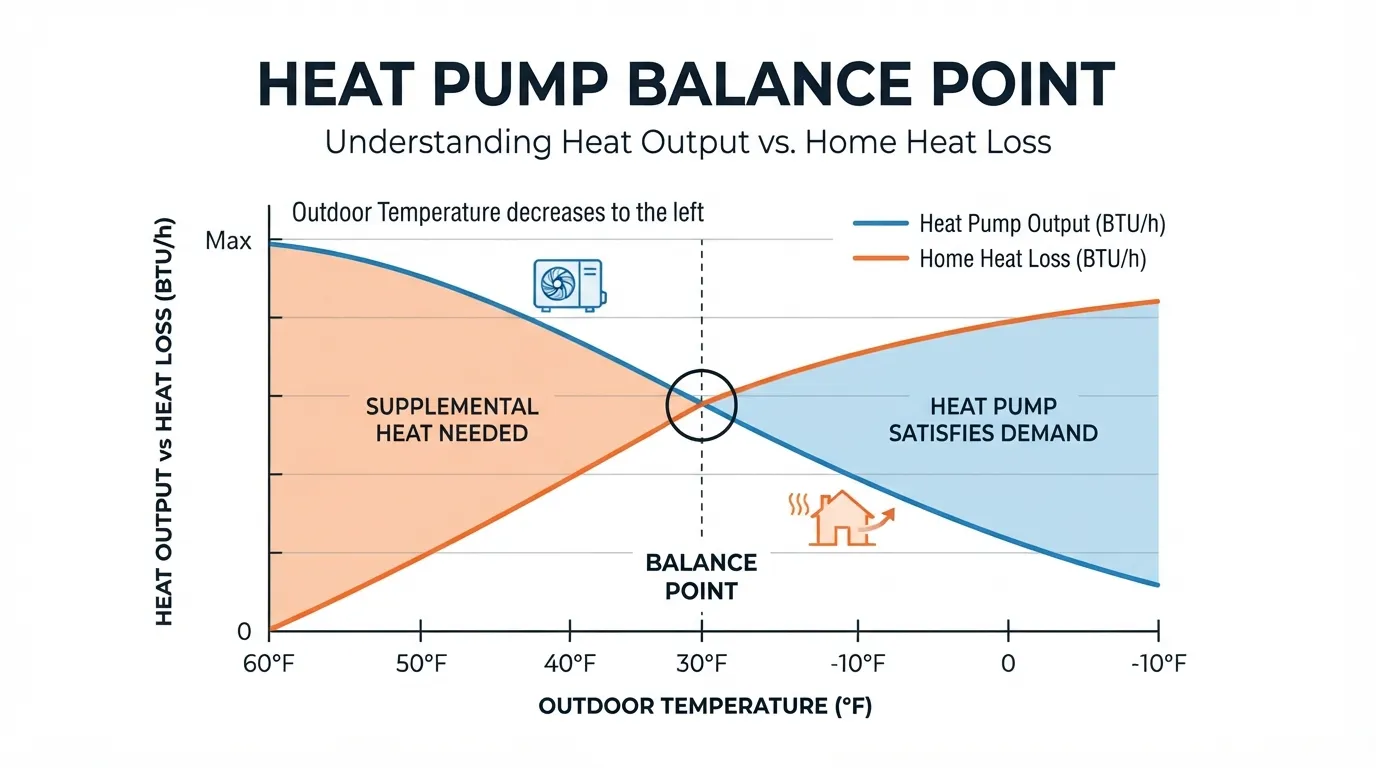
A heat pump doesn’t make heat so much as move it indoors, and the colder it gets outside, the less there is to move. Every house-and-heat-pump pairing has an outdoor temperature where the system’s output exactly matches the house’s heat loss. Techs call it the balance point, and for many Central Texas homes it sits somewhere in the 25-to-40-degree range.
Above that number, the house warms normally. Below it, the heat pump runs continuously and gains ground slowly, with the electric backup strips filling the gap. During a teens-and-twenties stretch like the February freezes this area catches every few years, a healthy heat pump running near-constantly while the house holds a degree or two under the setpoint isn’t failure. It’s physics.
Don’t let one polar week talk you into replacing a machine that works fine the other 51. But if the system also struggles on mild days, or the air never feels even slightly warm, that’s a real symptom; our guide to heat pump repair covers what actually breaks.
Your ducts are in the attic, and they’re probably leaking
Here’s the number that reframes this whole problem: in a typical house, about 20 to 30 percent of the air moving through the duct system never arrives, lost through leaks, gaps, and loose connections. That’s ENERGY STAR’s figure, not ours.
Now add the Central Texas twist. Most of our ductwork runs through unconditioned attics, so every supply leak dumps heated air into a 40-degree attic instead of your hallway, and every return gap pulls cold, dusty attic air back into the system. The furnace can be perfect and the house still loses.
The telltale signs point away from the equipment: rooms farthest from the furnace run coldest, bills climb while comfort falls, and the attic feels suspiciously warm on a cold morning. Duct sealing is the least glamorous fix in heating, and dollar for dollar it embarrasses most equipment upgrades. We’d rather find a torn duct than sell you a bigger blower.
The house is half the heating system
Waco proper carries a lot of housing from the 1950s through the ’80s, and plenty of it still has single-pane windows, original weatherstripping, and attic insulation that was thin the day it was installed. A correctly sized, correctly running furnace can lose that fight on a 25-degree night. The newer builds out toward China Spring and Temple mostly don’t have this problem; the older blocks near downtown do.
Here’s the honest part, and it cuts against our own invoice: some cold-house calls shouldn’t end in an HVAC repair at all. Hold your hand near window frames and exterior door bottoms on a windy day. If you feel moving air, the cheapest fix comes from the hardware store — weatherstripping, door sweeps, attic insulation — and it beats anything we could sell you for ten times the price.
When it really is the equipment
Two equipment stories produce warm vents and a cold house.
Undersized for the load. Sometimes the furnace was borderline from day one. More often, the house grew around it: an enclosed porch, a garage conversion, a new sunroom, and now the system is heating rooms it was never sized for. We see this in older Robinson and Lorena homes that have been added onto twice.
Aging out. Furnaces last roughly 15 to 20 years. Near the end, blowers weaken, burners drift out of tune, and the system that used to catch the house up by 7 a.m. just doesn’t anymore. A furnace running nearly nonstop on a mild 50-degree day is having a capacity conversation with you.
Either way the path is the same: a furnace repair visit that starts with a written quote and ends with a straight answer about whether the problem is a part, the sizing, or the ductwork. If anyone jumps straight to “you need a whole new system” without ever looking at the ducts, get a free second opinion. We give those.
What “normal” looks like when it’s 20 degrees outside
Set expectations honestly: on the three or four coldest mornings of a Central Texas winter, long or continuous run times are normal for heat pumps and common even for gas furnaces. Systems here are sized for our typical winter, not the once-a-decade freeze, and that’s the right engineering call — a unit big enough for the rare 10-degree night would short-cycle through the other 360 days and heat your rooms unevenly the whole time.
The line between normal and broken is direction. Holding steady a degree or two low while running hard: normal. Losing ground all day while running hard: problem. Ice that sits on a heat pump for hours, or a burner smell you’ve never noticed before: problems, and worth a call.
Common questions about a heater running but the house staying cold
Why is my house cold when the heater is on?
Why is my heater on but not blowing air?
Should my heater run constantly during a freeze?
Will a bigger furnace fix a cold house?
Where to go from here
A heater running while the house stays cold is an argument between what the system makes and what the house keeps. Check the vents, respect the balance point, suspect the attic. When you want it settled in one visit, request a written quote or call — we’ll tell you which side of the argument is losing, even when the answer isn’t something we sell.
The On Point Team · On Point Service Company — family-owned HVAC & appliance repair, McGregor, TX · Serving Waco, Temple, Belton, and surrounding Central Texas towns · Licensed & insured, TDLR License TACLB00069239E ·