

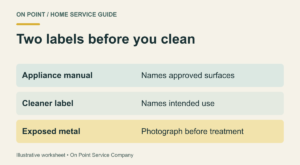





A photograph can record where a mark appears and whether its appearance changes. It cannot reliably identify the material or prove that a rack coating is safe. Send useful views with a short description instead of trying to diagnose the rack from its color.
Photograph a rack mark
A tightly cropped white patch could be on a tine, a wheel or the tub. Start with the whole rack, then move closer without changing which end of the rack faces you. Include an adjacent undamaged tine under the same light. If the patch disappears into the flash, take a second photo with the light coming from the side. Save the originals so a reviewer can enlarge the edges.
| Wide view | Shows upper or lower rack |
|---|---|
| Close view | Shows edge and surface |
| Side light | Reveals a ridge or flake |
Build a repeatable pair of rack photographs
Pull the cool rack only as far as the normal loading position permits. Pick one permanent landmark, such as the front-left wheel. Frame the entire row of tines with that wheel in view, then take the close image from the same side. If the mark is only visible in side light, note that in the filename or message. A bright flash can disguise texture and make an intact shiny patch look like missing coating.
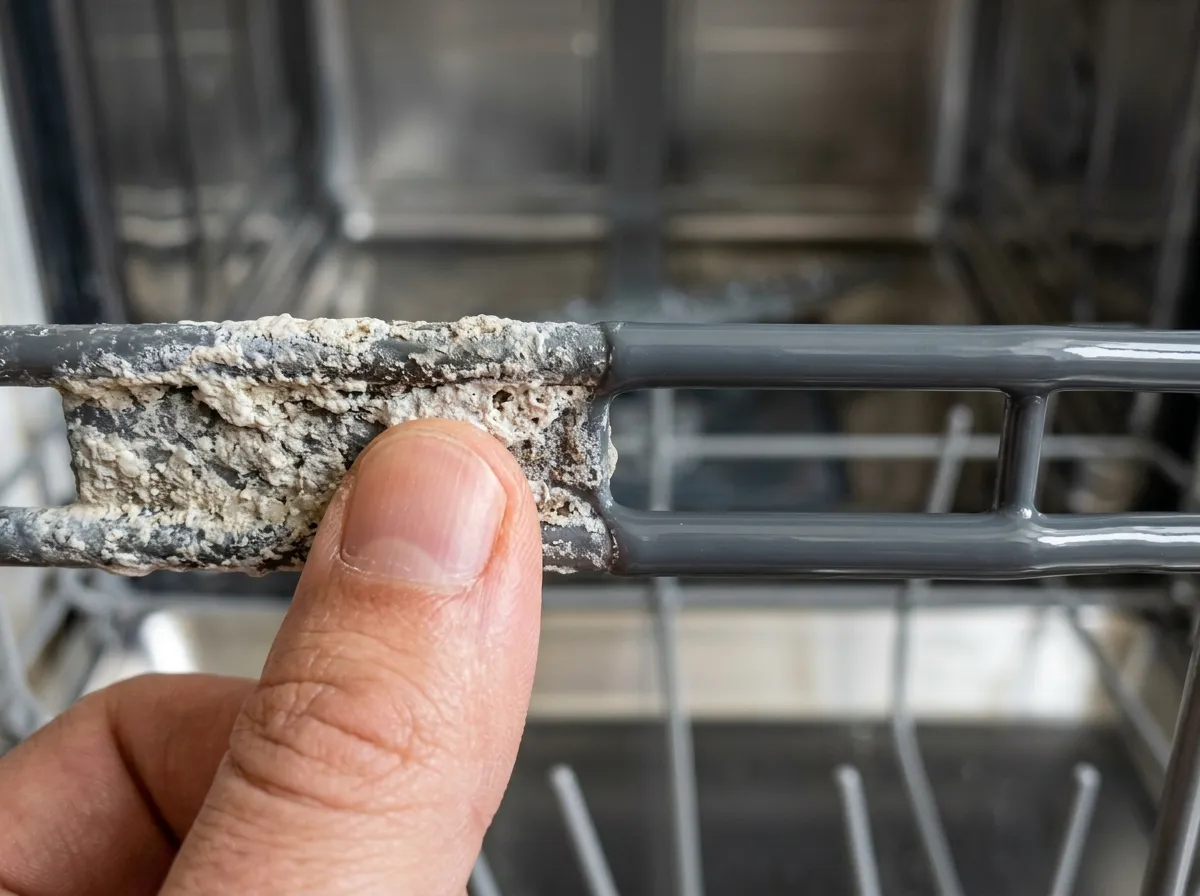
When comparing two dates, line up the same wheel and the same number of tines. A mark that appears twice as wide after a closer crop has not necessarily grown. Look for a change relative to a nearby tine tip or bend. If the water spots on other dishes also changed, describe them separately. Those observations can guide a conversation about deposits, coating damage or an appliance-wide cleaning issue without asking a photograph to settle the cause.
Take a wide view first
With the machine stopped and cool, photograph the whole rack from a comfortable position. Show which rack is affected and where the mark sits relative to the edges. This makes the close-up understandable. Keep the camera out of the appliance mechanism and avoid touching exposed sharp areas.
For the broader issue, see How to Clean Dishwasher Racks (the Hard-Water Way).
Add a close-up and context
Take a second view of the affected spot in ordinary light. If safe, include an undamaged neighboring area for comparison. Do not scrape or bend the rack to make the damage more visible. Write whether the mark appeared suddenly or gradually, whether it is spreading, and what cleaning products have already been used.
Keep observations separate from guesses
Say “white deposit near the rear left tine” or “coating appears lifted at this point,” rather than labeling every mark rust or mineral scale. Ask the service company whether it needs the model number, an inspection or a manufacturer compatibility check. A photograph may help decide the next question; it does not replace that answer.
For a companion worksheet, see Before Cleaning Dishwasher Racks: Check These Two Labels.
Photograph a rack mark worksheet
- Wide photograph
- Whole rack and location
- Detail photograph
- Affected area without filters
- Comparison photograph
- Nearby intact area, if useful
- History
- First noticed and changes
- Treatment already tried
- Exact product and date
A short caption makes a rack photo more useful
“Upper rack, second row behind the left front wheel. The pale area appears on two tines. The side-lit picture shows a raised-looking edge on one. I have not scraped it or applied a cleaner.” That description tells support what has already changed and which photo shows texture. If the mark has been treated, name the product and date so a reviewer can account for that difference.
Frequently asked questions
Should I clean the mark before sending the photo?
Photograph its current appearance first. Only clean using instructions approved for your model and surface; do not use an unknown cleaner just to improve the picture.
Can I identify hard water from the photo?
A white deposit can suggest several explanations. Record where else it appears, including on glassware, and whether the coating below looks intact. A photograph cannot establish water chemistry.
How do I photograph a recurring mark after the next normal wash?
Keep a copy of the original wide view and use its wheel, corner or tine as a landmark. Record which wash was run and whether any treatment occurred between pictures. Matching the viewpoint is more important than extreme magnification when you want to see whether a mark has expanded.
For help with this equipment, see On Point’s dishwasher repair service.
References
- GE Appliances model-specific manuals — For GE equipment, enter the complete model number to find its use, care and installation instructions. For another brand, use its equivalent manual.
- GE Appliances on dishwasher rust staining — GE distinguishes transferred stains, water-related staining and visible marks on dishwasher components.