


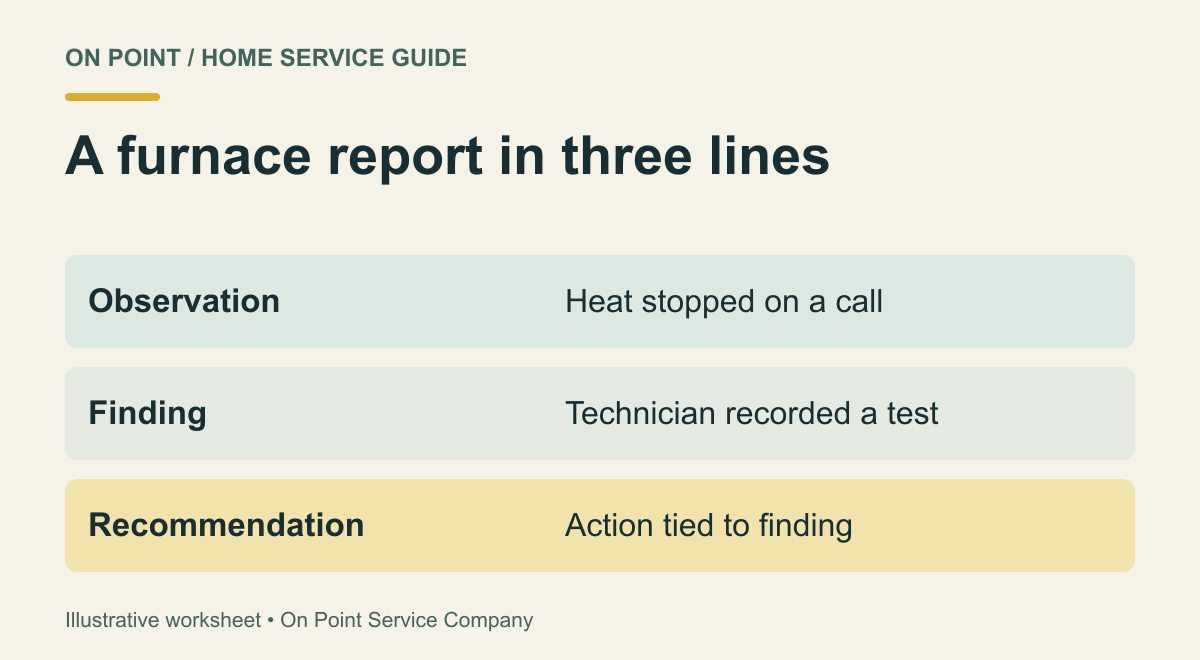
Read a furnace diagnostic report as a chain: what was observed, what was tested, what the result means and what is recommended. A report is easier to assess when those steps are visible instead of compressed into a single sentence.
A furnace report in three lines
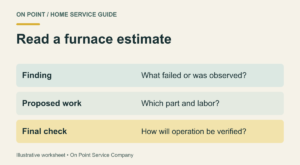
Read the report backward once. Start with the proposed work and look for the result that supports it. Then find the complaint that prompted the test. If the report names a code but never says what was checked, ask for that missing connection. If the symptom did not occur during the visit, ask which findings are confirmed and which depend on seeing the fault again.
| Observation | Heat stopped on a call |
|---|---|
| Finding | Technician recorded a test |
| Recommendation | Action tied to finding |
Read one furnace finding from symptom to follow-up
Make a four-line entry for the finding you care about most. Write the symptom the household observed, the condition during the visit, the technician’s test result and the action recommended. An intermittent shutdown that did not occur during inspection belongs in the first line. A measured result from a particular test belongs in the third. Neither entry should silently become a claim that the technician witnessed the original event.
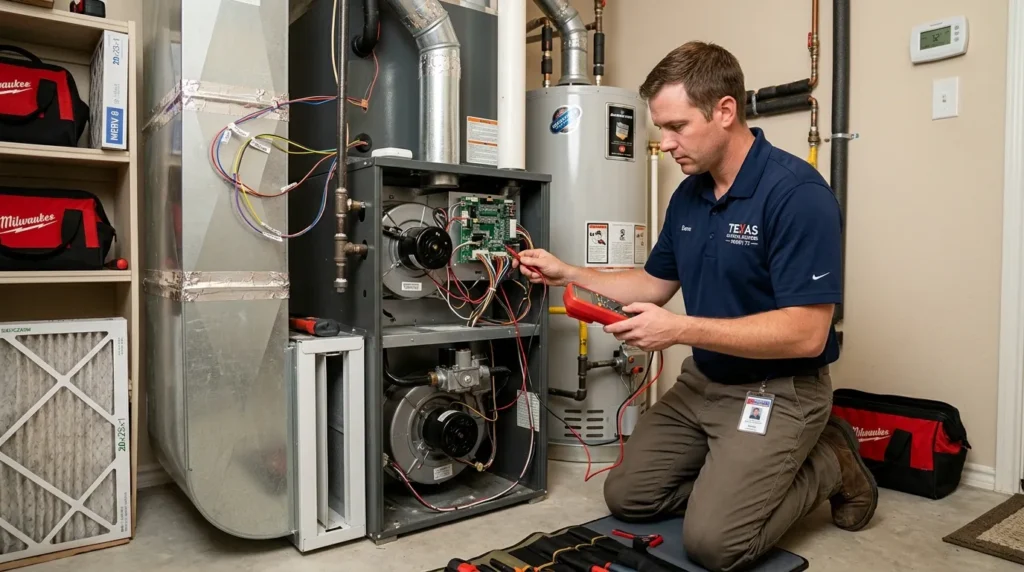
If the report includes a numerical value, copy its unit and the equipment model before comparing it with another report. Ask the technician what range applies under those operating conditions. If a repair was made, ask which check was repeated afterward and whether the original complaint could be evaluated. If no repair was recommended, record the precise sign or recurrence that should prompt a follow-up call.
Find the original complaint
Check that the report describes the issue you reported and identifies the equipment inspected. If the concern was intermittent, ask whether it occurred during the visit. “Could not reproduce” is different from “no possible fault.” Your observations can remain relevant even when the system behaves normally during an appointment.
For the broader issue, see Furnace Repair Cost in Central Texas, and the Math That Decides.
Ask for context around readings
A number without units, test conditions or a reference can be hard to interpret. Ask the technician to explain the reading in plain language and identify the applicable manufacturer guidance. Do not compare it with a number from a different furnace online. Different equipment and operating conditions can require different interpretation.
Separate urgency from options
Ask which findings require immediate action, which are recommendations and which need further investigation. Record the reason for each category and any operating restrictions. ENERGY STAR's maintenance guidance includes professional checks of heating-system components; this worksheet is for understanding the report, not performing those tests yourself.
For a companion worksheet, see A Furnace Repair Estimate Is Missing Details—What Should You Ask?.
A furnace report in three lines worksheet
- Complaint
- What prompted the visit?
- Observation
- What the technician actually saw
- Measurement
- Value, units and conditions if applicable
- Interpretation
- Why the finding matters
- Next action
- Urgency, scope and unresolved questions
A useful entry for an intermittent fault
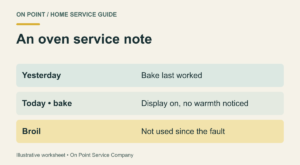
“The furnace stopped heating twice on Sunday morning. It ran during Tuesday's visit. The report lists the checks completed that day. The original shutdown did not recur, and the technician asked me to save any thermostat message if it happens again.” That leaves room for new evidence. If a symptom returns, the next person can tell which conditions were present during the inspection and which were only reported.
Frequently asked questions
Can I use this worksheet to overrule a shutdown recommendation?
No. Keep unsafe equipment off and ask a qualified professional for clarification or another assessment. The worksheet organizes evidence; it does not establish that equipment is safe.
Should every result be marked pass or fail?
Some results need a measured value and a model-specific reference. Ask the technician to interpret the reading and record the conditions under which it was taken.
What wording should I look for if the technician could not reproduce the furnace fault?
Look for the conditions during the visit, what did operate normally and what was left unresolved. A useful follow-up instruction might identify the exact thermostat message or sound to record if it recurs. Avoid rewriting “not reproduced today” in your notes as “fixed.”
For help with this equipment, see On Point’s furnace repair service.
References
- ENERGY STAR heating and cooling maintenance checklist — The checklist describes professional checks of equipment operation, controls and system components.
- Federal Trade Commission guidance on written estimates — The FTC explains which project details to request in writing before hiring a contractor.