


When an electric oven stops heating but the stove top still works, the cause is almost always one of three parts: the bake element (most likely), the thermal fuse (likely if a self-clean cycle just ran), or a control-board relay (least likely, most expensive). You can narrow it to one suspect tonight without opening anything.
Here’s how, in the order we’d check it in your kitchen.
Suspect 1: the bake element (check it with your eyes)
The bake element is the black loop across the oven floor, and it does the heavy lifting every time you bake. Elements fail the way light bulbs do: gradually, then suddenly, and usually at the worst time. We replace more of them between Thanksgiving and Christmas than the whole rest of the year combined.
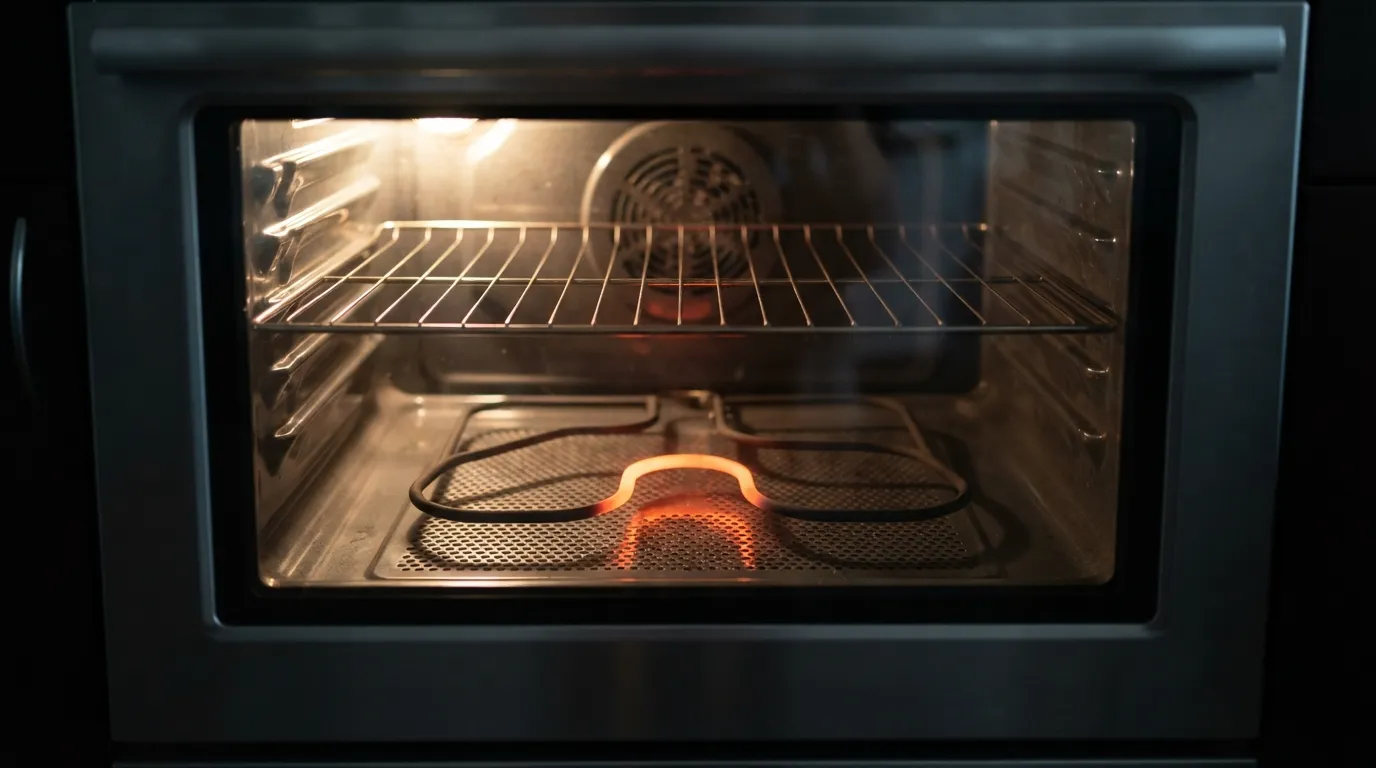
The test costs nothing. Set the oven to bake at 350°F, give it five minutes, and watch through the glass:
- Even orange glow, end to end: the element is fine. Move to suspect 2.
- Dark sections, or one side glowing: the element is failing. Found it.
- No glow at all: either a dead element or no power reaching it, which keeps the fuse and board in play.
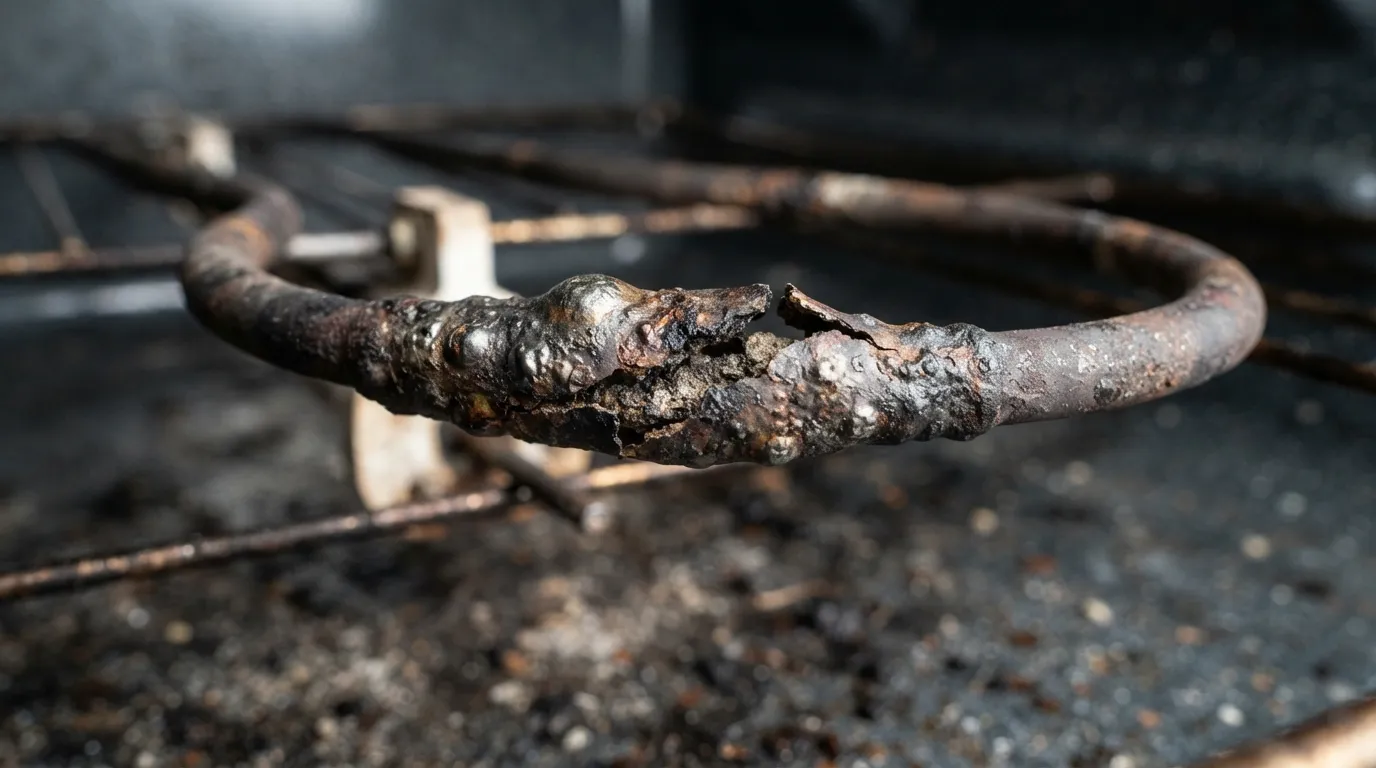
While it’s cool, look the element over for blisters, splits, or a spot that looks like a tiny meteor strike. Visible damage settles the question on the spot, and it’s worth a photo. A picture of a blistered element gets you an accurate quote over the phone instead of a guess.
One thing we’ll say plainly: if the element shows damage, that’s the repair. Don’t let anyone talk you from a $200-class fix into a $500-class board job without showing you why.
Suspect 2: the thermal fuse (ask what happened right before)
A thermal fuse is a one-shot safety device that kills power to the oven circuit if things get too hot. When it pops, the oven goes completely dead while the burners cook on, since they’re on separate circuits inside the range.
The tell is in the timeline. If the oven died during or right after a self-clean cycle, the fuse jumps to the top of the list. Self-clean pushes the cavity toward 880°F, and plenty of fuses take that personally. (It’s the main reason we tell folks to run self-clean in January, not the week before Thanksgiving.)
A popped fuse can’t be reset and there’s no kitchen-side test for it; it lives behind the back panel with the live wiring. What you can do is rule everything else in or out first, which is exactly what this list is for.
Suspect 3: the control board, by process of elimination
If the element glows clean, no self-clean cycle ran, and the oven still won’t heat (or preheats to lukewarm and stalls), the relay that feeds the element may have quit. Sometimes the board announces itself with an error code; our post on common oven and stove problems covers what those codes point at. Sometimes it just goes quiet.
Board diagnosis is meter work on live circuits, so this is where guessing stops being free. The good news: boards are the least common of the three failures by a wide margin. We replace far more elements than boards, and it isn’t close.
A fourth possibility worth naming: the temperature sensor. If your problem is “heats, but wrong” rather than “doesn’t heat,” the sensor is the likelier story. A $10 oven thermometer from any Waco hardware store will confirm a reading that’s drifted 25°F or more.
What each fix typically costs in Central Texas
| Part | Typical range (parts + labor) | How often it’s the answer |
|---|---|---|
| Bake element | $150–$350 | Most of the time |
| Thermal fuse | $150–$250 | After overheating events |
| Temperature sensor | $100–$250 | “Heats wrong” cases |
| Control board | $250–$600 | Rarely |
Industry-typical ranges for our area, not a price sheet. Every OPSC job starts with a written quote you approve first. On a range under 10 years old, three of these four repairs beat replacement easily. A board-priced repair on a 14-year-old builder-grade oven usually doesn’t, and we’ll say so; the framework in our repair-or-replace guide applies to ranges as much as refrigerators.
The honest downside of repair: if the part has to be ordered, you might be an oven-less week away from fixed. If you’re staring down hosting duties in Lorena this weekend, that changes the math, and it’s fair to weigh it.
Here’s where you stop and call a licensed tech
Everything above is looking, timing, and thermometers. On purpose.
The line sits exactly here: the moment a repair requires pulling the range out or removing a panel, you’re next to a 240-volt terminal block and sealed electrical components that hold enough current to put you down. Electrical Safety Foundation guidance is unambiguous about large-appliance circuits, and so are we. No element swaps, no fuse tests, no board pulls, even with the breaker off, we’d rather you didn’t.
What you’ve done instead is the valuable part: you’ve narrowed three suspects to one. Tell us which one when you call, and the electric oven repair visit gets faster and the written quote gets tighter. Seniors and military take 10% off the repair.
Common questions about an electric oven that won’t heat
Why is my electric oven not heating up but the stove top works?
They run on separate internal circuits. The oven depends on its own element, fuse, and relay; the burners don’t. A dead oven with live burners means the range has power and the failure is in the oven circuit: element first, fuse second, board third.
How do I know if it’s the heating element or the thermal fuse?
Watch the element on a bake cycle. Uneven glow or visible damage means element. A completely dead oven right after a self-clean cycle means fuse, most likely. No glow with no self-clean history could be either, and that’s the case worth a diagnostic visit.
How long do oven heating elements last?
Five to fifteen years, depending on use. Heavy bakers land near the low end. Elements are wear parts, like tires. Replacing one on an otherwise healthy oven is normal maintenance, not a sign the range is dying.
Is it worth fixing an electric oven that won’t heat?
Under 10 years old: almost always, because the likely fixes run $150–$350. Past 12–14 years, it depends on the part: an element still makes sense, a control board usually doesn’t. Get the diagnosis before you shop for a new range.
The five-minute version
An electric oven not heating comes down to a short list. Bake at 350°F and watch the element. Damaged or patchy glow: element. Dead oven after self-clean: fuse. Neither: board or sensor, and that one’s worth a pro’s meter. Whichever it is, tell us what you saw or call and you’ll get a straight answer and a written quote before any work starts, same-day when the schedule allows.
The On Point Team · On Point Service Company — family-owned HVAC & appliance repair, McGregor, TX · Serving Waco, Temple, Belton, and surrounding Central Texas towns · Licensed & insured, TDLR License TACLB00069239E ·