





Funky smells? Dingy clothes? Learn how to clean a washing machine the right way and restore peak performance. Save time with our expert guide and get your washer sparkling clean.
Even the most powerful washing machines can accumulate soap scum, mineral deposits, lint, and mold. This buildup can cause odors, reduce efficiency, and shorten the appliance’s lifespan. Keeping your washer clean improves performance, lowers energy consumption, and extends its life. This guide explains how to clean a washing machine, how often to do it, what supplies you need, and when to call professionals for washer repair or maintenance.
Signs Your Washing Machine Needs a Deep Clean
Many homeowners assume their washer is clean simply because it handles soap and water daily. Unfortunately, some parts of your washer need to be cleaned even if they look spotless. Here are clear indicators that it’s time to clean a washer.
- Musty smell on freshly washed clothes
- Visible black or gray mold on the rubber seal (front-loaders)
- Gray streaks or residue left on fabrics
- Soap buildup in the detergent drawer
- Slower draining or standing water
These signs point to trapped moisture and residue inside the drum, hoses, and pump system, one of the common reasons your house stinks. Over time, buildup forces your machine to work harder.
Regular appliance maintenance or regular cleaning can extend its lifespan by up to 20-30%, reducing costly repairs and premature replacement. If you’re noticing any of these issues, it’s time to follow a proper washing machine cleaning guide.
How Often Should You Clean Your Washing Machine?
A good rule of thumb is to deep clean once a month and do a quick maintenance weekly. However, cleaning frequency depends on several factors such as:
- Hard water levels – Mineral deposits accumulate faster.
- Laundry volume – Large households require more frequent cleaning.
- Detergent type – Powder detergents may leave more residue.
- Cold water washing – Cold cycles don’t dissolve residue as effectively as hot water.
Here’s a simple maintenance schedule that you can follow.
- Wipe the door seal after each load.
- Leave the door or lid open to dry.
- Run a hot empty cycle monthly.
- Clean filter every 1-2 months.
Knowing how to clean the machine prevents odor buildup and keeps internal components running smoothly.
Supplies You’ll Need
Most items in this washing machine cleaning guide are affordable and likely already in your home.
- White vinegar – Breaks down mineral deposits and soap scum.
- Baking soda – Neutralizes odors and loosens grime.
- Microfiber cloth – Gentle and absorbent.
- Old toothbrush – Ideal for tight corners.
- Spray bottle – For vinegar solution
- Commercial washer cleaner (optional) – Designed for deep sanitation
You don’t need expensive specialty products. Simple household supplies are highly effective for removing residue, mold and mildew, and buildup in your dispenser drawer.
How to Clean a Front-Loading Washing Machine
Front-loading washers or front load machines are known for their energy efficiency and water savings, but their airtight door seals and horizontal drum design make them more susceptible to trapped moisture and mold growth.
Since the door locks tightly during cycles, water and detergent residue can linger in hidden areas. That’s why regular deep cleaning with a washing machine cleaner or vinegar is essential to maintain performance and prevent odors.
Follow this guide to properly clean your front load washer and keep it running efficiently.
Step 1: Clean the Detergent Dispenser
The detergent drawer is one of the most overlooked areas. Over time, liquid detergent and fabric softener leave behind sticky residue that can harden and block proper flow.
- Remove the drawer completely (check the owner’s manual if needed).
- Soak it in warm water mixed with white vinegar for 15–20 minutes.
- Use an old toothbrush to scrub each compartment thoroughly, especially tight corners and siphon caps where buildup collects.
- Rinse well and allow it to dry completely before reinstalling.
A clogged dispenser can prevent detergent from distributing evenly, leading to incomplete washes and lingering residue on clothes. Regular cleaning of the dispenser drawer helps clean the washing machine completely.
Step 2: Clean the Door Gasket (Rubber Seal)
The rubber gasket around the door is the most common source of mold and musty smells. It traps moisture, lint, hair, and even small objects.
- Gently pull back the folds of the seal.
- Inspect carefully for black spots (mold), debris, or standing water.
- Spray a solution of equal parts vinegar and water directly onto the seal.
- Scrub gently with a toothbrush, focusing on hidden creases.
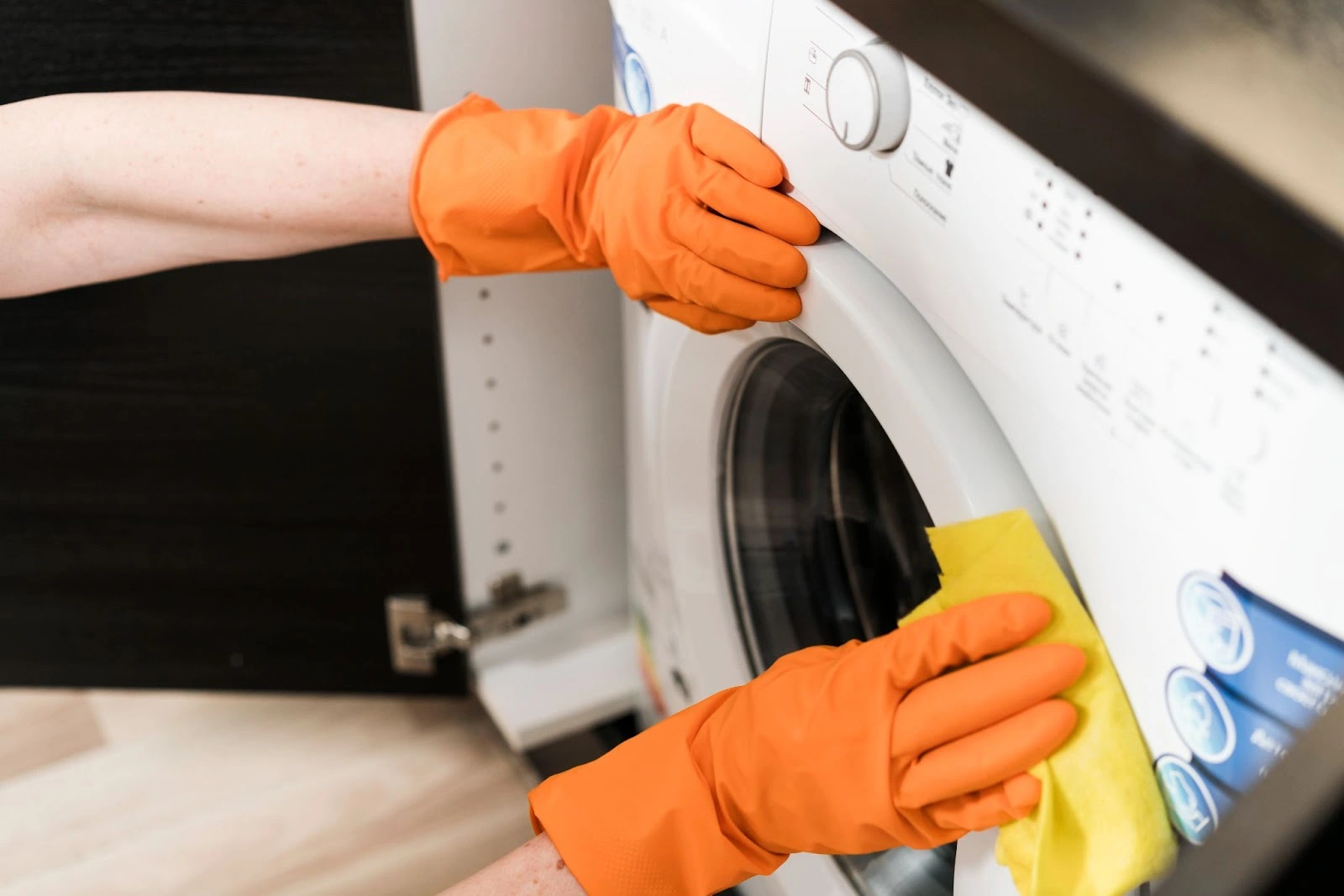
- Wipe thoroughly with a microfiber cloth and dry completely.
Moisture left inside the folds creates the perfect environment for bacteria and mildew, so drying is just as important as cleaning.
Step 3: Run a Hot Cleaning Cycle
Now it’s time to clean the interior components you can’t see.
- Set the washer to the hottest water setting and the longest cycle available.
- Add 2 cups of white vinegar directly into the drum or add 1/4 cup of baking soda (if odor is the main concern).
Do not mix vinegar and baking soda together in the same cycle, as they neutralize each other. During this process, hot water loosens soap scum and mineral deposits, while vinegar breaks down buildup and eliminates odor-causing bacteria.
The cycle flushes out internal hoses, the drum, and other hidden components. If your machine has a dedicated “clean washer” cycle, use it.
Step 4: Wipe Down the Drum and Door
Once the cycle is complete, do the following:
- Use a clean microfiber cloth to wipe the interior drum.
- Clean the inside of the door glass.
- Wipe the rubber gasket once more.
This final wipe removes any loosened residue left behind after the cleaning cycle and prevents particles from drying back onto surfaces.
Step 5: Clean the Drain Pump Filter
The drain pump filter collects lint, hair, coins, and small debris that escape from pockets. If neglected, it can cause drainage issues or leaks.
- Locate the filter panel (usually at the bottom front of the machine).
- Place towels and a shallow container underneath to catch water.
- Slowly unscrew the filter cap to release trapped water.
- Remove and clear out lint, debris, or foreign objects.
- Rinse thoroughly under running water.
- Reinstall securely.
Cleaning the filter regularly prevents clogs, improves drainage, and reduces strain on the pump motor. By following these steps carefully, you’ll eliminate hidden buildup, prevent mold growth, and keep your front-loading washer running efficiently for years to come.
How to Clean a Top-Loading Washing Machine
Top-loading washers or top load machines may not have the rubber door seal issues of front-loaders, but they are still prone to detergent buildup, mineral deposits, and grime, especially under the rim and around the agitator.
Since water drains downward, residue can collect in areas you don’t immediately see. A proper deep clean ensures your washer stays efficient and odor-free.
Step 1: Fill and Soak
Start by setting your washer to the largest load size and the hottest water setting available.
- Allow the machine to fill completely with hot water.
- Add 2-4 cups of white vinegar directly into the water.
- Let the machine agitate for 2-3 minutes to distribute the solution.
- Pause the cycle and allow it to soak for 30-60 minutes.
The hot water softens hardened detergent residue, while vinegar breaks down mineral deposits and neutralizes odor-causing bacteria. The soaking period is critical because it gives the solution time to penetrate buildup along the drum walls, beneath the agitator, and under the top rim where grime often hides.
If your washer is heavily soiled, you can extend the soak time slightly for deeper cleaning.
Step 2: Scrub Interior Components
While the machine is paused and soaking, take advantage of the loosened buildup by manually cleaning key areas. Focus on the following:
- The agitator – Scrub around its base where soap scum collects.
- Bleach dispenser – Remove and rinse if detachable; scrub any crusted residue.
- Fabric softener compartment – This area commonly traps sticky buildup.
- Under the rim – Use a cloth or toothbrush to clean beneath the upper lip of the drum.
- The underside of the lid – Wipe away splashes and detergent residue.
These hidden spots are common sources of musty smells. Cleaning them thoroughly ensures the deep-clean cycle is truly effective rather than just surface-level.
Step 3: Complete the Cycle
After scrubbing, close the lid and resume the wash cycle. Allow it to complete fully so the vinegar solution can flush away loosened grime. Once finished, do the following:
- Inspect the drum for any visible residue.
- If you still notice particles or lingering odor, run an additional hot water rinse cycle without any additives.
This second rinse helps ensure that all debris and dissolved deposits are completely washed out of the system.
Step 4: Wipe and Dry
After the water drains, do the following:
- Use a clean microfiber cloth to wipe the interior drum.
- Clean the rim, edges, and lid once more.
- Dry any remaining moisture.
- Leave the lid open for several hours to air dry completely.
Proper drying is essential. Even top-load machines can develop mildew if moisture is trapped inside.
Preventing Buildup Between Deep Cleans
Deep cleaning once a month is important, but prevention makes an even bigger difference. Simple daily habits can dramatically reduce residue and extend your washer’s lifespan. Follow these preventive practices:
- Measure detergent carefully – Using more than recommended creates excess suds and residue.
- Use HE detergent for high-efficiency machines – Regular detergent produces too many suds in HE systems.
- Remove wet laundry promptly – Letting damp clothes sit encourages mold growth.
- Leave the lid open after use – Airflow allows moisture to evaporate.
- Run occasional hot water cycles – Even if you typically wash in cold water, periodic hot cycles help dissolve buildup.
These small adjustments improve energy efficiency, protect internal components, and reduce the frequency of deep cleaning.
Common Washing Machine Cleaning Mistakes to Avoid
Even with good intentions, certain mistakes can reduce effectiveness or even cause damage. Avoid the following:
- Using excessive detergent – More soap doesn’t mean cleaner clothes. It leaves residue inside the drum and hoses, leading to buildup and odors.
- Mixing bleach and vinegar – This combination creates harmful chlorine gas. Always use one cleaning agent at a time and rinse thoroughly between different products.
- Ignoring the filter – Many top-load washers also have a lint or drain filter. Neglecting it can result in poor drainage and strain on the pump.
- Using abrasive scrubbers – Steel wool or harsh pads can scratch the drum’s finish, creating tiny grooves where bacteria can grow.
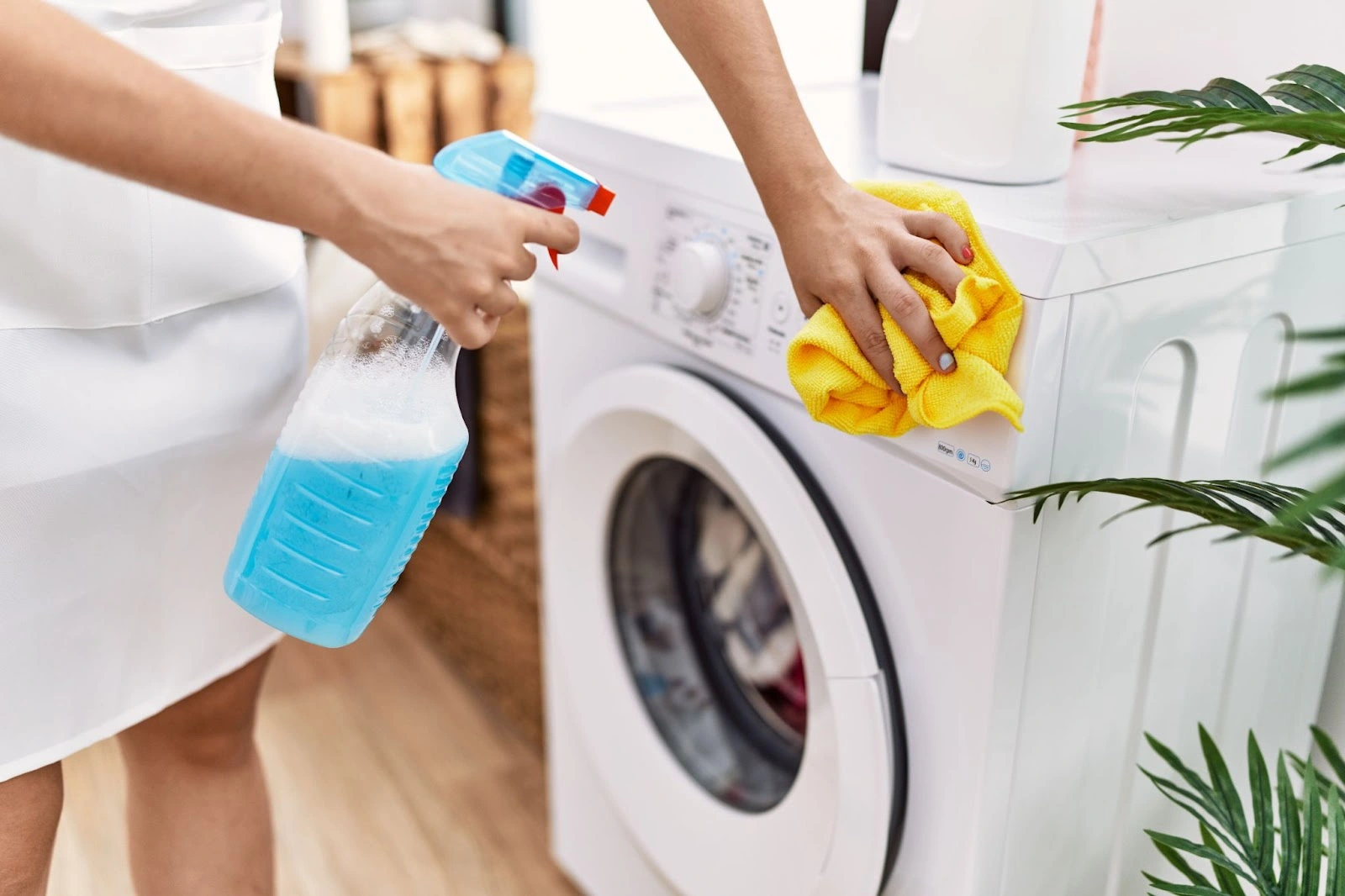
- Forgetting exterior cleaning – Dust and detergent splashes on control panels, knobs, and vents can affect performance over time. Wipe the exterior regularly with a damp cloth.
Proper cleaning protects not only your machine’s efficiency but also your safety.
Signs Your Washing Machine Needs Professional Service
While routine cleaning resolves most odor and buildup issues, some problems go beyond maintenance. You may need professional service if you notice:
- Persistent odors even after deep cleaning
- Loud banging, grinding, or squealing noises
- Water pooling around the base
- Slow or failed drainage
- Error codes on the display
These symptoms often indicate mechanical issues such as pump blockages, worn bearings, damaged belts, or internal leaks. Cleaning addresses surface-level grime, but it cannot repair failing components.
That’s where On Point Service Company can help. Our trained technicians provide expert appliance repair by thoroughly inspecting internal systems, clearing hidden blockages, diagnosing mechanical faults, and restoring your washing machine to peak operating condition.
Instead of guessing, let professionals ensure your appliance runs safely and efficiently. If routine cleaning isn’t solving the issue, expert service may save you from costly repairs down the line.
Fresh Laundry Starts with a Clean Machine
Maintaining your washer doesn’t take much time, but it delivers significant benefits. Learning how to clean your washer helps you improve efficiency, reduce energy costs, extend appliance lifespan, and enjoy fresh laundry every day.
Following this washing machine cleaning guide ensures your machine stays in excellent condition year-round. Set a monthly reminder, follow the steps carefully, and build simple maintenance habits.
Don’t wait for odors or buildup to slow down your laundry routine. Contact On Point Service Company today to schedule your first deep clean. Your washing machine and your clothes will thank you!