


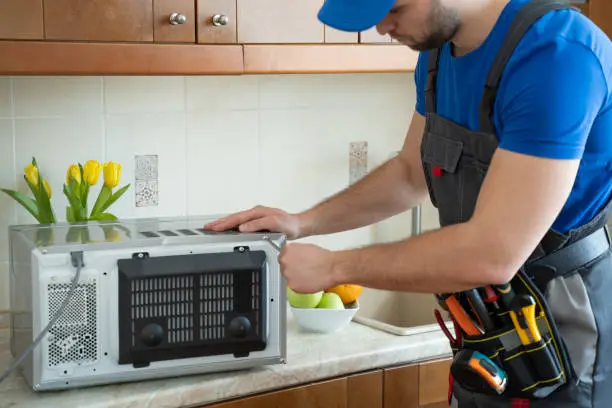
Having trouble with your microwave lately? From stubborn turntables to doors that won’t cooperate, this guide explains how to repair a microwave oven safely and when it’s time to call the pros.
Microwave ovens are a staple in our kitchens, making everything from reheating last night’s dinner to whipping up quick meals a breeze. When your trusty microwave starts acting up, it’s crucial to know how to repair a microwave oven safely and when to leave it to the pros.
Since microwaves have high-voltage parts that can hold an electrical charge even after being unplugged, safety should always come first. This blog will guide you through safe diagnosis, smart decision-making, and recognizing when it’s time to seek professional help instead of risking a DIY fix.
Common Microwave Oven Problems Homeowners Face
Many microwave issues are easy to recognize, even if they are not safe for DIY appliance repair. Here are some common problems homeowners encounter.
- Your microwave isn’t heating food, even though it seems to be running fine.
- The turntable isn’t rotating, which leads to uneven cooking.
- The door isn’t closing or latching properly, stopping it from working.
- You hear strange noises, or notice sparks or burning smells, which could signal a serious internal issue.
Each of these problems affects how well your microwave works and can pose safety risks, so it’s important to know your next steps before diving into any repairs.
Safety First – What to Know Before Microwave Oven Repair
Unlike many household devices, microwaves are not designed for casual DIY internal repair. Without proper electrical training, tools, and discharge procedures, attempting internal repairs can result in serious injury or equipment damage. For this reason, most internal microwave repairs should be left strictly to certified technicians.
Visual and External Checks vs. Internal Microwave Repairs
Not all microwave problems require opening the unit. Some issues can be identified through safe, external inspections, which pose minimal risk. Issues you can safely check externally include:
- Visible door damage or misalignment that prevents proper closure
- Food debris blocking turntable rollers, causing uneven rotation
- Cracks, gaps, or wear in the door seal, which may affect operation
These checks allow you to rule out simple causes before considering repair. Internal components such as the magnetron, capacitor, diode, and transformer are sealed within the microwave’s metal housing.
These parts operate at extremely high voltages and require professional tools, testing equipment, and safety procedures. Attempting to access them without training is dangerous and strongly discouraged.
Knowing When to Stop Troubleshooting and Call a Technician
Some problems indicate serious internal or electrical faults that should only be handled by a trained technician. Stop troubleshooting if you notice the following:
- Persistent heating failure, even though the microwave powers on
- Electrical or burning odors, which may indicate overheating or wiring damage
- Repeated sparking inside the microwave, unrelated to metal cookware
- Door problems that prevent secure closure, affecting safety interlocks
These warning signs suggest serious internal or safety-related faults. Operating under these conditions poses a fire risk and may also result in electrical shock or radiation exposure.
How to Repair a Microwave Oven Turntable That Stops Spinning
Turntable problems are among the most common and least hazardous microwave issues, making them an ideal starting point when learning how to repair a microwave oven. A properly functioning turntable ensures even heating, so when it stops spinning, food may heat unevenly or remain cold in spots.
Fortunately, many turntable-related issues can be identified and addressed without opening the microwave or exposing yourself to electrical components.
Common Causes of Turntable Problems
A microwave turntable may stop rotating for several reasons, including:
- Misaligned or dirty roller rings – Food residue, grease, or debris can prevent the roller ring from moving smoothly, causing the turntable to stick or stop completely.
- An improperly seated glass tray – If the glass tray is not aligned correctly with the drive coupler, it may wobble or fail to rotate during operation.
- A worn or failing turntable motor – The motor is located beneath the microwave cavity and drives the turntable from below. While the motor itself is an internal component, many symptoms such as intermittent movement or unusual noises can be observed externally.
When Turntable Issues Are Safe to Address
The following steps are ideal for homeowners who want to work on a microwave safely without attempting internal or high-voltage repairs:
- Remove and clean the roller ring and turntable track – Over time, food crumbs, grease, or spills can accumulate in the roller track, preventing smooth rotation. Carefully wipe the roller ring and track with a damp cloth or mild detergent to remove buildup.
- Reseat the glass tray correctly – Ensure the tray sits securely on the center coupler. A misaligned tray can cause wobbling or stop the turntable from rotating entirely.
After performing these steps, test the microwave with a cup of water to see if the turntable rotates properly. If rotation does not resume, this may indicate a worn turntable motor or an internal wiring issue. At that point, further troubleshooting becomes unsafe for untrained individuals, and professional microwave oven repair is recommended.
How to Repair Microwave Door Issues Safely
Understanding how to repair microwave door problems starts with identifying warning signs as early as possible. The microwave door is a critical safety component designed to prevent radiation exposure and ensure the appliance operates only under safe conditions. Thus, door issues should never be ignored or delayed.
Signs of a Faulty Microwave Door
Common symptoms of microwave door problems include:
- The door won’t close properly or pops open during operation
- Loose hinges, broken latches, or visible cracks in the door or frame
- The microwave won’t start, often due to faulty door sensors or interlock switches.
Even minor defects can cause the microwave to shut down completely, as the appliance is designed to stop operating when door safety mechanisms fail.
Why Door Repairs Should Never Be Ignored
The microwave door serves several critical functions:
- Blocks microwave radiation from escaping
- Activates safety interlock switches that allow the unit to operate
- Prevents the microwave from running when the door is open or unsecured
Trying to adjust hinges, latches, or interlock switches without proper training can easily compromise these built-in safety systems, potentially leading to injury or appliance damage.
Why Your Microwave Is Running but Not Heating
One of the most frustrating microwave issues occurs when the unit appears to function normally but food remains cold.
Common Heating-Related Failures
Heating problems are typically caused by failures in high-voltage internal components, including:
- Magnetron failure, which stops microwave energy production
- Faulty diode, disrupting electrical flow
- Capacitor issues, affecting voltage storage and delivery
These components operate at extremely high voltages and are dangerous to inspect or replace without professional training.
Repair vs. Replacement Considerations
When evaluating how to repair a microwave oven with heating issues, several factors should be considered. These are:
- The age of the appliance
- Repair cost versus replacement cost
- The overall condition and reliability of the unit
In many cases, especially with older models, professional repair may not be cost-effective, making replacement the safer and more practical option.
When to Call a Professional for Microwave Oven Repair
When choosing a technician, it’s a good idea to stay informed about common pricing traps. Taking a moment to research pricing expectations and common red flags can help you avoid overpaying and dodge dishonest appliance technicians. Contact a professional appliance repair service if you notice the following:
- Microwave door or latch damage
- No heat despite normal operation
- Burning smells, sparks, or smoke
- Repeated electrical or power-related issues
These warning signs indicate potentially dangerous internal faults that should never be ignored.
How to Prevent Common Microwave Problems
Taking simple preventive measures can significantly extend the life of your microwave and reduce the likelihood of issues that would require repair. By following safe usage habits, you minimize the need to frequently worry about repairing a microwave oven.
- Clean spills and food splatter regularly – Wipe down the microwave after each use to keep it clean and safe.
- Avoid metal or oversized containers – Metal can cause sparks and internal damage, while containers that are too large may block proper rotation or airflow, putting extra strain on components.
- Never run the microwave empty – Operating the microwave without food or liquid inside can damage the magnetron, one of the most critical and dangerous components to replace.
- Handle the door gently, no slamming – Rough handling can damage hinges, latches, or safety interlock switches, creating problems that usually require professional repair.
By practicing these simple habits, you help maintain the microwave’s efficiency, safety, and longevity.
Final Thoughts on How to Repair a Microwave Oven Safely
Understanding common microwave problems helps homeowners decide how to repair a microwave oven safely or when professional service is the wiser choice. While minor turntable issues may be manageable, how to repair microwave door and heating problems should always be handled with caution due to serious safety risks.
If your microwave shows signs of door damage, heating failure, or electrical issues, don’t take chances. Contact On Point Service Company today to schedule a professional microwave oven inspection and repair.